
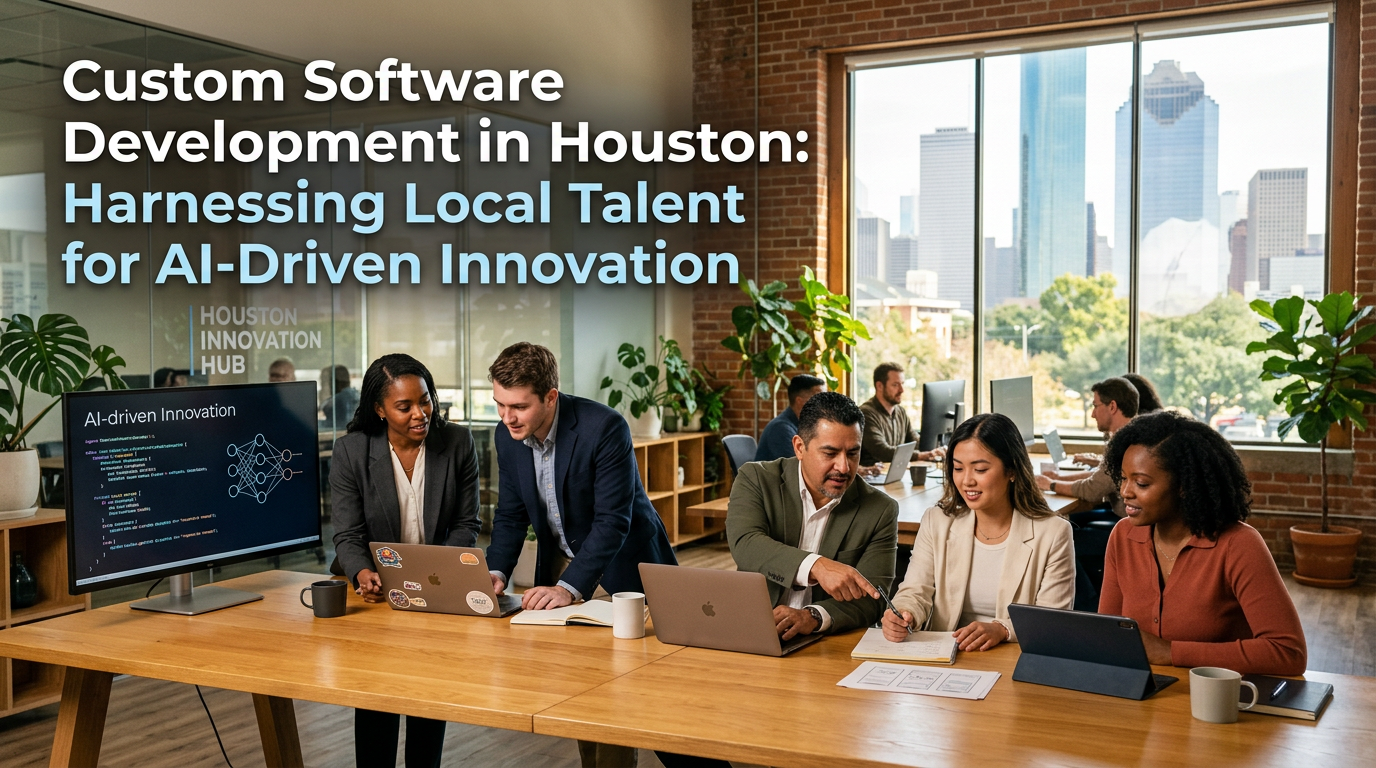
Introduction to Custom Software Development in Houston
Houston, Texas, known for its vibrant business ecosystem and diverse industries, is increasingly becoming a hub for custom software development. The city’s rich talent pool and strategic location make it an ideal environment for innovation, particularly in the realm of Artificial Intelligence (AI). As businesses seek to remain competitive in a rapidly evolving digital landscape, leveraging local expertise in custom software development has become a strategic imperative.
Practical Implementation of AI in Custom Software Development
Understanding the AI Landscape in Houston
Houston is home to a wide array of industries including energy, healthcare, manufacturing, and logistics, all of which are ripe for AI-driven transformation. Custom software development companies in the city are leveraging AI to create tailored solutions that address specific industry challenges. This involves the integration of AI technologies such as machine learning, natural language processing, and data analytics into software solutions to enhance their functionality and efficiency.
Steps to Implement AI in Custom Software Development
- Identify Business Objectives: The first step is to clearly define the business objectives and challenges that the AI solution will address.
- Data Collection and Analysis: Gather relevant data, which will be used to train AI models. This includes historical data, real-time streaming data, and any other pertinent information.
- Model Development and Testing: Develop AI models and test them within a controlled environment to ensure they meet the desired outcomes.
- Integration into Existing Systems: Seamlessly integrate the AI models into existing software systems, ensuring compatibility and functionality.
- Continuous Monitoring and Optimization: Regularly monitor the performance of AI systems and make necessary adjustments to optimize their effectiveness.
Business Value of AI-Driven Custom Software
The integration of AI into custom software development offers significant business value, enhancing decision-making, operational efficiency, and customer experience.
Enhanced Decision-Making
AI-driven software provides businesses with data-driven insights that facilitate informed decision-making. By analyzing large data sets, AI can uncover patterns and trends that human analysts might miss, leading to more strategic business decisions.
Operational Efficiency
Automation of routine tasks through AI allows businesses to reduce operational costs and improve efficiency. For instance, in the manufacturing sector, AI-powered software can optimize production schedules and predictive maintenance, reducing downtime and increasing throughput.
Improved Customer Experience
AI technologies such as chatbots and personalized recommendation engines enhance customer interaction by providing timely and relevant responses to customer queries and preferences.
Risks and Challenges of Implementing AI Solutions
While the benefits are substantial, implementing AI in custom software development comes with its own set of challenges.
Data Privacy and Security
Ensuring the privacy and security of data is a significant concern, particularly when dealing with sensitive information. Developers must implement robust security protocols to protect against data breaches and unauthorized access.
Skill Shortages
There is a growing demand for skilled professionals who can develop and manage AI systems. Companies in Houston are investing in training programs and partnerships with educational institutions to bridge this skill gap.
Workflows and KPIs in AI-Driven Software Development
Defining Effective Workflows
Establishing clear workflows is essential for the successful implementation of AI in software development. This includes collaboration between data scientists, software developers, and business analysts to ensure alignment with business goals.
Key Performance Indicators (KPIs)
To measure the success of AI-driven software, businesses must establish KPIs such as:
- Accuracy and reliability of AI models: Evaluating how often AI models produce correct results.
- Reduction in operational costs: Quantifying cost savings achieved through automation and efficiency improvements.
- Customer satisfaction levels: Measuring improvements in customer experience and retention rates.
Case Studies and Examples
Several Houston-based companies have successfully implemented AI-driven custom software solutions. For example, a healthcare provider in Houston used AI to develop a predictive analytics tool that significantly reduced patient readmission rates by analyzing patterns in patient data.
In the energy sector, a local company leveraged AI to optimize drilling operations, resulting in a 20% increase in efficiency and a substantial reduction in operational costs.
Conclusion
Custom software development in Houston, driven by AI solutions, is unlocking new levels of innovation and business performance. By effectively leveraging local talent and addressing implementation challenges, businesses can realize significant benefits, from enhanced decision-making capabilities to improved operational efficiency and customer satisfaction.
The Future of AI in Houston's Software Landscape
As AI technologies continue to evolve, the potential for innovation in Houston's software development sector is immense. The city's commitment to fostering a tech-friendly environment positions it well for future advancements.
Trends Shaping the Future
Several trends are expected to influence the future of AI in custom software development:
- Increased Automation: As AI becomes more sophisticated, the scope of tasks that can be automated will expand, leading to even greater efficiency gains.
- AI-Driven Personalization: Businesses will increasingly leverage AI to deliver highly personalized customer experiences, further enhancing customer loyalty and satisfaction.
- Integration of IoT and AI: The convergence of Internet of Things (IoT) and AI technologies will lead to smarter, more connected systems that can drive innovation across industries.
- Ethical AI Development: As AI becomes more pervasive, there will be a growing emphasis on developing ethical AI practices to ensure fairness, transparency, and accountability.
Opportunities for Local Businesses
Local businesses in Houston have a unique opportunity to capitalize on these trends by investing in AI-driven custom software development. By staying ahead of the curve, companies can gain a competitive edge in their respective industries.
Investing in ongoing training and development for employees will also be crucial in maintaining a skilled workforce capable of implementing and managing advanced AI solutions.
Building a Collaborative Ecosystem
The success of AI-driven custom software development in Houston depends on the strength of its collaborative ecosystem. Businesses, educational institutions, and government bodies all play a role in fostering innovation.
Partnerships with Educational Institutions
Collaborations with local universities and colleges can help bridge the skill gap in AI and software development. By offering specialized courses and training programs, educational institutions can equip students with the skills needed to thrive in the tech sector.
Government Support and Incentives
Government initiatives and incentives can also play a vital role in supporting the growth of AI technologies. By providing funding, tax breaks, and other forms of support, the government can encourage businesses to invest in AI research and development.
Case Study: AI-Driven Success in Houston's Healthcare Sector
One notable example of AI-driven success in Houston is seen in the healthcare sector. A local hospital implemented an AI-powered patient monitoring system that utilizes machine learning algorithms to predict patient deterioration. This system has significantly reduced emergency response times and improved patient outcomes.
Additionally, the integration of AI in administrative workflows has streamlined operations, reducing paperwork and allowing healthcare professionals to focus more on patient care.
Lessons Learned
The success of this initiative highlights several key lessons for other industries considering AI-driven custom software development:
- Data is Key: High-quality data is essential for training effective AI models. Investing in robust data collection and management systems is crucial.
- Cross-Functional Teams: Collaboration between technical experts and domain specialists is necessary to ensure AI solutions are aligned with business objectives.
- Continuous Improvement: The AI development process is iterative. Continuous monitoring and refinement of AI models ensure they remain effective over time.
Conclusion: Embracing the AI Revolution
As Houston continues to establish itself as a leader in custom software development, the integration of AI presents boundless opportunities for innovation and growth. By embracing these technologies and fostering a collaborative ecosystem, Houston's businesses can drive significant advancements across diverse industries.
The journey towards AI-driven transformation is ongoing, and those who take proactive steps to leverage these technologies will be well-positioned to thrive in the digital age. The future of custom software development in Houston is bright, and the time to act is now.