
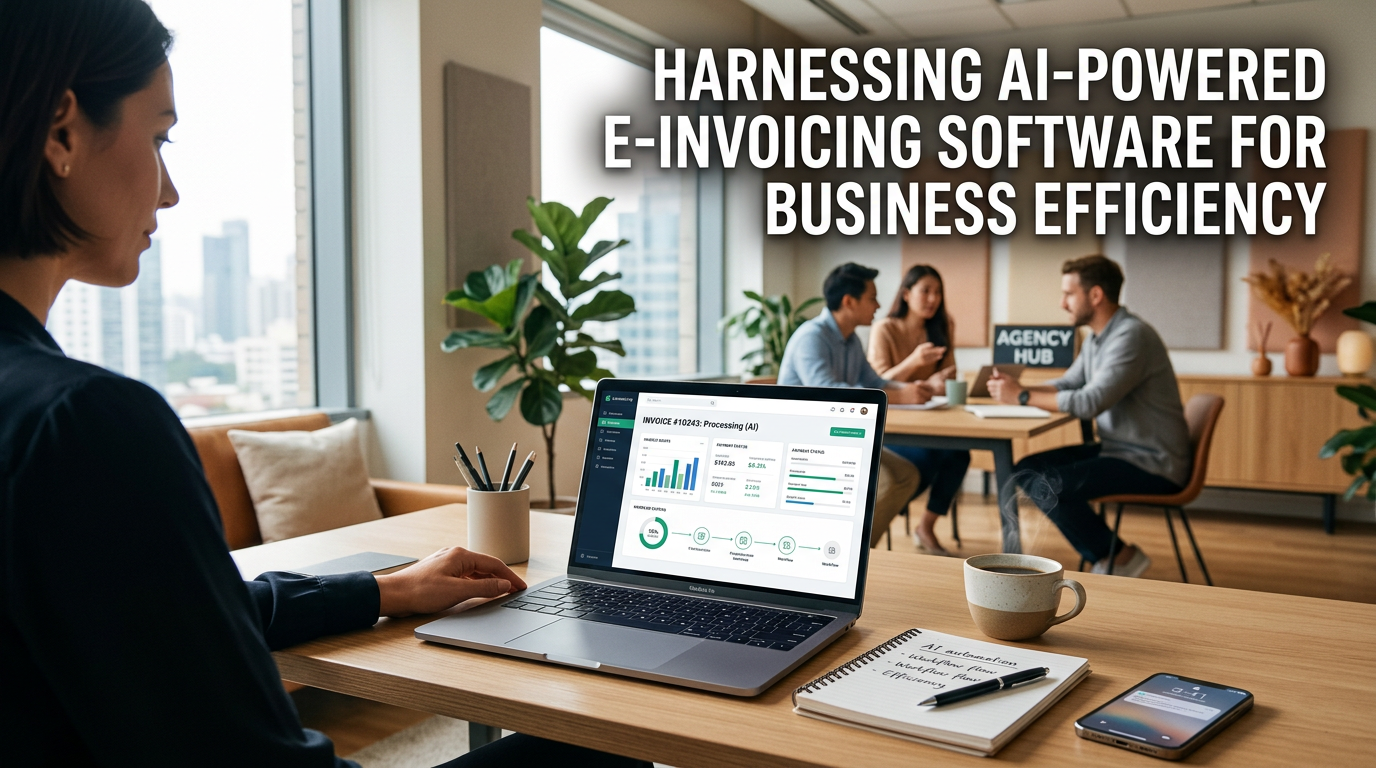
Introduction to e-Invoicing Software
In the modern business landscape, efficiency is paramount. Companies are continuously seeking ways to streamline operations, reduce costs, and improve accuracy. One technological advancement that has gained traction is e-Invoicing software, particularly those solutions enhanced by artificial intelligence (AI). This tool revolutionizes how businesses handle invoicing by automating and optimizing various processes, resulting in significant time and cost savings.
Understanding e-Invoicing Software
e-Invoicing software is a digital solution that enables businesses to send and receive invoices electronically. This innovation replaces the traditional paper-based methods, offering a secure, efficient, and environmentally friendly alternative. With AI integration, these systems can automate repetitive tasks, detect errors, and provide predictive analytics, enhancing their functionality and effectiveness.
Practical Implementation of AI in e-Invoicing
Implementing AI-powered e-Invoicing software requires careful planning and execution. The process begins with selecting the right software that aligns with the company's needs. Businesses should consider factors such as scalability, integration capabilities, user-friendliness, and cost. Once selected, the software can be integrated into existing systems with the help of IT professionals, ensuring seamless operation.
For a practical implementation, it's crucial to train employees on how to use the software effectively. This involves familiarizing them with the interface, understanding the workflow, and knowing how to troubleshoot common issues. Continuous support and updates are essential to keep the software running efficiently.
Business Value and Measurable Outcomes
The integration of AI-powered e-Invoicing software brings substantial business value. One of the most significant benefits is the reduction in processing time. By automating invoice generation and approval workflows, companies can reduce the time taken for these tasks by up to 70%, freeing up employees to focus on more strategic activities.
Another key advantage is error reduction. AI algorithms detect discrepancies and anomalies in invoices, significantly minimizing manual errors. This leads to better compliance and reduces the risk of financial discrepancies that could incur penalties or damage business relationships.
Furthermore, AI-driven insights from e-Invoicing data provide businesses with valuable analytics. Companies can assess payment patterns, cash flow trends, and forecasting, enabling better financial decision-making and strategic planning.
Risks and Challenges
Despite the advantages, implementing AI e-Invoicing software comes with its challenges. Data security is a primary concern. Businesses must ensure that their systems are protected against cyber threats, which can compromise sensitive financial information.
Additionally, a steep learning curve may be involved for some employees unfamiliar with digital tools. Investing in training and development is crucial to mitigate this risk and ensure a smooth transition from traditional methods to digital platforms.
Workflows and KPIs
The workflows within e-Invoicing software are designed to enhance productivity. A typical workflow includes generating an invoice, sending it to the appropriate party for approval, and tracking its status in real-time. AI enhances these workflows by automating routine tasks and providing real-time updates and alerts.
Key Performance Indicators (KPIs) to measure the success of e-Invoicing solutions include processing time reduction, error rate decrease, cost savings, and user satisfaction levels. These metrics help businesses evaluate the effectiveness of their e-Invoicing software and identify areas for improvement.
Real-world Examples
Several companies have successfully implemented AI-powered e-Invoicing solutions. For instance, a multinational corporation reduced its invoicing process from two weeks to just two days, resulting in a 90% improvement in efficiency. Another example is a mid-sized enterprise that achieved a 40% reduction in invoicing errors, enhancing their accuracy and compliance rates.
Conclusion
AI-powered e-Invoicing software is a transformative tool for businesses seeking to enhance efficiency and reduce costs. While implementation requires strategic planning and addressing potential risks, the benefits far outweigh the challenges. By automating invoicing processes, reducing errors, and providing valuable insights, this technology empowers businesses to focus on growth and innovation.
Integrating AI-Powered Solutions with Existing Business Systems
Integrating AI-powered e-Invoicing solutions with existing business systems is a nuanced process that necessitates a strategic approach. Businesses must ensure compatibility with current enterprise resource planning (ERP) systems, accounting software, and customer relationship management (CRM) tools. Seamless integration promotes a unified workflow, enhancing overall business efficiency.
One approach is to use API connections that allow different software systems to communicate and share data automatically. This ensures that invoicing data is synchronized across various platforms, reducing the risk of discrepancies and manual data entry errors. Additionally, businesses may need to consult with IT specialists to customize the software to meet specific business requirements, ensuring optimal functionality.
Steps for Successful Integration
- Assessment of Current Systems: Evaluate existing software and hardware infrastructure to understand compatibility needs and potential bottlenecks.
- Choose the Right e-Invoicing Solution: Select software that offers robust integration capabilities, ideally with built-in APIs that facilitate seamless data exchange.
- Customization and Testing: Work with IT specialists to tailor the software to specific business processes, followed by thorough testing to ensure all components operate efficiently.
- Employee Training: Conduct comprehensive training sessions to familiarize staff with new workflows, emphasizing the benefits of integrated systems.
Future Trends in e-Invoicing Software
The future of e-Invoicing software is bright, with AI playing an increasingly pivotal role. Emerging technologies and trends are set to further revolutionize this field, offering even greater capabilities and efficiencies.
Blockchain Integration
Blockchain technology is expected to enhance security and transparency in e-Invoicing processes. By providing a decentralized ledger, blockchain can help verify transactions and prevent fraud, ensuring the authenticity and integrity of invoices.
Enhanced Predictive Analytics
AI-powered e-Invoicing solutions will increasingly leverage predictive analytics to forecast cash flow trends and payment behaviors. This advanced capability will allow businesses to make more informed financial decisions and optimize their financial strategies.
Greater Personalization
As AI continues to evolve, e-Invoicing solutions will offer more personalized experiences. AI algorithms can analyze transaction histories and customer preferences to tailor invoicing processes, improving customer satisfaction and fostering stronger client relationships.
Overcoming Resistance to Change
One of the common challenges businesses face when transitioning to AI-powered e-Invoicing solutions is resistance to change. Employees accustomed to traditional methods may be hesitant to adopt new technologies. To overcome this resistance, businesses can implement several strategies.
Strategies to Facilitate Adoption
- Communicate Benefits: Clearly articulate the advantages of e-Invoicing, such as increased efficiency, cost savings, and reduced error rates, to gain buy-in from employees.
- Offer Incentives: Provide incentives for employees who successfully transition to the new systems, encouraging a positive attitude toward change.
- Continuous Support: Establish a dedicated support team to assist employees during the transition phase, addressing concerns and troubleshooting issues promptly.
- Highlight Success Stories: Share examples of other businesses that have benefited from e-Invoicing solutions, demonstrating tangible outcomes and motivating employees to embrace the change.
Customizing e-Invoicing for Industry-Specific Needs
Different industries have unique requirements and challenges when it comes to invoicing. AI-powered e-Invoicing solutions can be customized to address these industry-specific needs, offering tailored functionalities that enhance business operations.
Examples of Industry-Specific Customizations
- Retail Industry: Solutions can integrate with point-of-sale systems to automate invoice generation and track inventory levels in real-time.
- Healthcare Sector: e-Invoicing software can be customized to handle complex billing codes and insurance claims, ensuring compliance with industry regulations.
- Manufacturing: Customized solutions can manage supply chain invoicing, track production costs, and optimize procurement processes.
By tailoring e-Invoicing solutions to meet specific industry needs, businesses can achieve greater efficiencies, reduce errors, and improve overall operational effectiveness.