
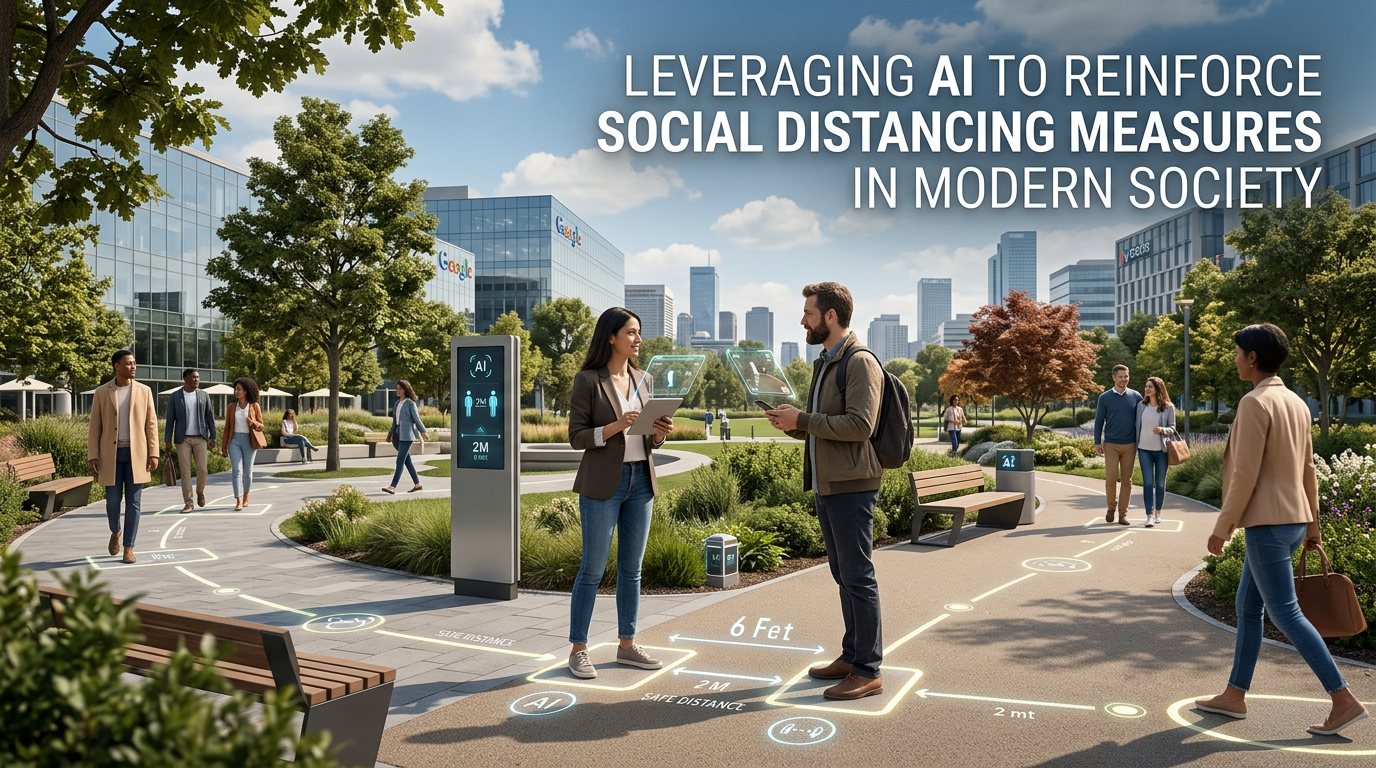
Understanding the Role of AI in Social Distancing Measures
In recent years, the concept of social distancing has become crucial in safeguarding public health. The need to maintain physical space between individuals to prevent disease transmission has been underscored by global health crises. However, traditional methods of enforcing and monitoring social distancing have limitations in terms of scalability and accuracy. Here, Artificial Intelligence (AI) steps in as a transformative solution, offering innovative ways to monitor, predict, and enforce social distancing measures effectively.
Practical Implementation of AI for Social Distancing
AI solutions for social distancing primarily rely on computer vision and data analytics. These technologies can be integrated into existing surveillance systems to monitor crowd density and individual spacing in real-time. Retail environments, for example, can implement AI-driven cameras that analyze foot traffic and ensure compliance with social distancing guidelines. Similarly, AI can be deployed in workplaces to manage the flow of employees, utilizing sensors and wearable devices to alert individuals when they are too close to one another.
Moreover, AI can enhance contact tracing efforts by processing large datasets to identify potential exposures quickly. Machine learning algorithms can predict future outbreak hotspots by analyzing patterns in social behavior and movement, enabling authorities to proactively implement measures to mitigate risks.
Business Value and Measurable Outcomes
The implementation of AI in social distancing provides significant business value. For businesses, maintaining a safe environment reassures customers and employees, fostering trust and confidence. The automation of monitoring processes reduces labor costs associated with manual enforcement, while AI’s predictive capabilities help in resource allocation and operational planning. Measurable outcomes include reduced transmission rates, improved compliance with health regulations, and enhanced public safety.
Retailers, for example, can track customer flow and optimize store layouts to ensure natural social distancing, enhancing the customer experience while adhering to safety protocols. In the workplace, AI-driven solutions can help reduce the likelihood of outbreaks, minimizing disruptions and maintaining productivity.
Risks and Challenges Associated with AI Implementation
Despite the clear benefits, the integration of AI in social distancing measures does carry certain risks. Privacy concerns are at the forefront, as the use of surveillance technology raises questions about data security and individual rights. Companies must adhere to strict data protection regulations and ensure transparency in their use of AI technologies.
Another challenge lies in the adaptability of AI systems. They require continuous updates and training to handle new data and evolving scenarios effectively. Businesses must invest in skilled personnel to manage these systems and ensure they are aligned with current guidelines and standards.
Critical Workflows for AI Solutions in Social Distancing
Implementing AI solutions for social distancing involves several critical workflows. First, data collection is essential, utilizing sensors and cameras to gather real-time information. Next, data processing is conducted using machine learning algorithms to analyze and interpret the information accurately. Finally, actionable insights are generated, enabling decision-makers to implement timely interventions and adjustments.
Companies must also establish feedback loops to continuously refine AI models based on outcomes and user feedback. Regular assessments and updates will ensure the solutions remain effective and relevant.
Key Performance Indicators (KPIs) to Measure Success
To evaluate the success of AI solutions in social distancing, specific KPIs should be monitored. These include the rate of compliance with social distancing guidelines, the reduction in transmission rates, and the efficiency of contact tracing efforts. Additionally, customer and employee satisfaction surveys can provide valuable insights into the perceived safety and effectiveness of the measures implemented.
Organizations should also track the cost savings achieved through automation and the reduction in operational disruptions due to illness or outbreaks.
Real-World Examples of AI in Social Distancing
Several industries have successfully implemented AI for social distancing. In the retail sector, companies like Walmart have used AI-driven analytics to monitor store occupancy and manage customer flow. In the corporate world, Google has adopted AI solutions to enhance workplace safety by regulating office capacity and ensuring adequate spacing among employees.
These examples highlight the versatility and effectiveness of AI in adapting to the unique challenges posed by social distancing, reinforcing its importance in modern society.
Conclusion
AI solutions play a pivotal role in enhancing social distancing measures, offering substantial business value through improved safety, operational efficiency, and customer trust. As society continues to navigate the challenges of maintaining public health, AI stands out as a critical tool, providing innovative solutions to ensure compliance and mitigate risks. By understanding the practical implementation, business value, and measurable outcomes of AI in social distancing, organizations can effectively leverage these technologies to protect their communities and ensure sustainable operations.
Emerging Technologies Supporting AI in Social Distancing
Beyond AI, several emerging technologies are complementing efforts to enhance social distancing protocols. The Internet of Things (IoT) can integrate with AI systems, providing a comprehensive network of connected devices that monitor and manage spaces more effectively. For instance, IoT-enabled smart badges can track employee movements within a workplace, seamlessly interfacing with AI algorithms to assess and ensure compliance with distancing guidelines.
Augmented Reality (AR) is another technology with potential applications in facilitating social distancing. Retailers can use AR to create virtual fitting rooms, allowing customers to try on clothes digitally, thereby reducing physical interactions and maintaining safe distances.
Impact on Public Spaces and Urban Planning
AI's role in social distancing extends beyond individual businesses to impact public spaces and urban planning. Cities are exploring AI to optimize the use of public transport by monitoring passenger density in real-time, thereby reducing overcrowding during peak hours. Parks and recreational areas utilize AI-driven analytics to manage visitor flow and maintain safe distancing.
Urban planners are incorporating AI insights to design cities that inherently promote social distancing. This includes wider footpaths, pedestrianized zones, and reorganized public spaces that naturally encourage safe interactions and movement patterns.
Ethical Considerations and Governance
While AI presents substantial promise in delivering effective social distancing solutions, it also raises ethical concerns that must be addressed. Ensuring fairness, accountability, and transparency in AI systems is crucial. Governance frameworks need to be established to regulate the deployment of AI technologies, ensuring they are used responsibly and do not infringe on civil liberties.
- Data Privacy: Clearly define what data is collected, how it is used, and who has access to it. Implement robust data protection measures to safeguard personal information.
- Bias Mitigation: AI systems should be regularly audited for biases to prevent any form of discrimination or inequality in their applications.
- Public Engagement: Foster public awareness and understanding of AI technologies, encouraging community involvement in discussions and decision-making processes.
Future Prospects and Innovations
The future of AI in social distancing is ripe with innovation and potential. Advances in machine learning and natural language processing could lead to the development of more sophisticated systems that predict social behavior patterns more accurately. AI could eventually enable environments that autonomously adjust their configurations based on real-time data to maintain optimal distancing protocols.
Furthermore, AI may catalyze the creation of new business models centered around social distancing. For example, businesses could offer AI-driven health and safety certification services, helping other companies demonstrate their commitment to maintaining safe environments.
Conclusion: A Sustainable Path Forward
As we continue to navigate the complexities of modern society, the integration of AI in social distancing measures provides a sustainable path forward. Through careful implementation and ongoing refinement, AI can not only enhance public health and safety but also promote economic resilience and innovation. By addressing ethical considerations and fostering collaboration across sectors, AI will remain an indispensable tool in shaping a more secure and adaptive future for all.