
Introduction
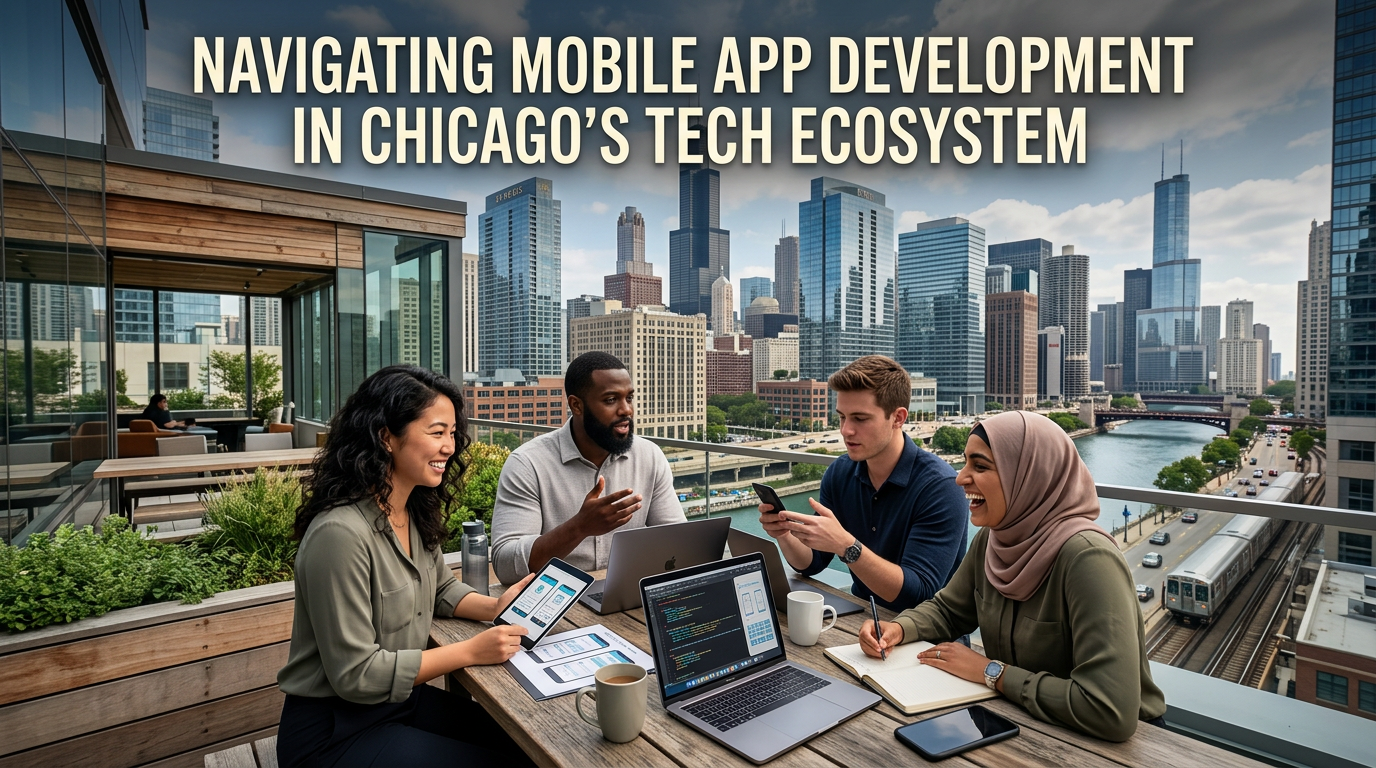
Chicago, a bustling metropolis known for its architectural grandeur and diverse economy, is rapidly becoming a hub for technological innovation. At the forefront of this transformation is mobile app development, an industry that leverages advanced technologies like Artificial Intelligence (AI) to deliver cutting-edge solutions. This article delves into the dynamics of mobile app development within Chicago's tech ecosystem, focusing on AI solution use cases, implementation strategies, business value, and measurable outcomes.
The Role of AI in Mobile App Development
Artificial Intelligence is revolutionizing mobile app development, providing developers with tools to create more intuitive, responsive, and personalized applications. In Chicago, the integration of AI into app development is not just a trend but a necessity driven by the city's competitive tech environment. AI facilitates the creation of apps that learn from user interactions, adapt to user preferences, and provide tailored experiences, ultimately enhancing user engagement and satisfaction.
Practical Implementation of AI Solutions
Implementing AI in mobile app development involves several key steps, each vital to ensuring the application's success. The process begins with the identification of business objectives and user needs, which guide the development team in selecting appropriate AI technologies. In Chicago's tech scene, collaboration between developers, data scientists, and business analysts is crucial. This interdisciplinary approach ensures that AI solutions align with business goals and user expectations.
Machine learning algorithms, natural language processing, and predictive analytics are commonly used AI technologies in mobile app development. For instance, in Chicago's competitive retail market, apps utilize AI to predict consumer behavior, enabling businesses to offer personalized recommendations and promotions. Such implementations not only enhance user experience but also drive sales and customer loyalty.
Business Value and Measurable Outcomes
The integration of AI in mobile app development presents significant business value. For companies in Chicago, AI-driven apps offer competitive advantages by improving operational efficiency, reducing costs, and increasing revenue. One notable outcome is the enhancement of decision-making processes through data-driven insights, enabling businesses to respond swiftly to market changes.
Measurable outcomes of AI implementation include increased user engagement, higher retention rates, and improved conversion metrics. These KPIs (Key Performance Indicators) allow businesses to quantify the impact of their mobile applications. For example, a Chicago-based e-commerce company reported a 30% increase in user engagement and a 20% boost in sales after integrating AI-driven recommendations into their mobile app.
Risks and Challenges
While the benefits of AI in mobile app development are substantial, there are inherent risks and challenges. Data privacy concerns are paramount, as AI systems rely on large volumes of user data. Companies must ensure compliance with regulations such as the General Data Protection Regulation (GDPR) and implement robust security measures to protect user information.
Additionally, the complexity of AI technologies can pose challenges for development teams. Proper training and ongoing support are essential to successfully implement and maintain AI-driven solutions. In Chicago, partnerships with local universities and tech organizations can provide valuable resources and expertise to overcome these challenges.
Workflow for AI-Driven Mobile App Development
The workflow for developing AI-driven mobile apps in Chicago involves several stages. It begins with the discovery phase, where business needs and user requirements are analyzed. This is followed by designing the app architecture, selecting suitable AI technologies, and developing prototypes for testing. Iterative testing and feedback loops ensure the app meets performance standards and user expectations.
Once the app is validated, it moves to the deployment phase, where it is launched to the market. Post-launch, continuous monitoring and updates are crucial to maintaining app performance and user engagement. In Chicago, the fast-paced tech environment necessitates agile development methodologies to adapt quickly to technological advancements and market demands.
Conclusion
Mobile app development in Chicago is at the intersection of innovation and practicality, with AI playing a transformative role. The successful implementation of AI solutions provides significant business value, from enhancing user experiences to driving revenue. Despite the challenges, the Chicago tech ecosystem offers a fertile ground for companies looking to leverage AI in mobile app development. By understanding the local dynamics and effectively navigating the tech landscape, businesses can capitalize on the opportunities presented by AI-driven mobile applications.
Case Studies: Successful AI-Driven Mobile Apps in Chicago
To better understand the impact of AI in mobile app development within Chicago, it's helpful to explore some real-world examples where businesses have successfully integrated AI technologies. These case studies highlight the tangible benefits and unique solutions AI brings to the table.
AI-Powered Fitness App
One standout example is a Chicago-based fitness app that employs machine learning algorithms to offer personalized workout and nutrition plans. By analyzing user data such as fitness goals, current health metrics, and lifestyle habits, the app provides customized recommendations that adjust as users progress. This level of personalization has resulted in a 40% increase in user retention and significant positive feedback from users who appreciate the tailored approach.
Smart City Transport Solutions
Another innovative application of AI is in smart city transportation apps. A notable project in Chicago has leveraged AI to optimize public transportation routes and reduce congestion. The app uses predictive analytics to anticipate peak travel times and adjust routes accordingly, improving efficiency and reducing commuter frustration. This initiative has not only enhanced user satisfaction but also contributed to a decrease in citywide traffic congestion by an estimated 15%.
Exploring AI Technologies in Depth
Understanding the various AI technologies that drive mobile app development can provide deeper insights into their applications and benefits. Here, we delve into some of the core AI technologies that are shaping the mobile app landscape in Chicago.
Natural Language Processing (NLP)
NLP is a technology that enables machines to understand and interpret human language. In mobile app development, NLP is used to power chatbots and virtual assistants, offering users a more interactive and conversational experience. Chicago-based apps are utilizing NLP to enhance customer support services, allowing for 24/7 assistance and faster query resolution.
- Chatbots: Implementing chatbots in customer service can reduce response times and free up human resources for more complex tasks.
- Voice Recognition: Apps are increasingly using voice recognition to facilitate hands-free operation, catering to users on the go.
Machine Learning and Predictive Analytics
Machine learning and predictive analytics are key drivers in creating apps that evolve based on user behavior. These technologies allow apps to anticipate user actions and preferences, offering proactive solutions and recommendations.
- Personalization: By analyzing user behavior, apps can offer personalized content, improving user satisfaction and engagement.
- Fraud Detection: In sectors like fintech, ML algorithms can detect fraudulent activities by analyzing transaction patterns, offering enhanced security for users.
Future Trends in Mobile App Development
As the Chicago tech ecosystem continues to evolve, several future trends are emerging in the realm of mobile app development. These trends are set to redefine how businesses and consumers interact with mobile technologies.
Increased Use of Augmented Reality (AR)
AR is poised to become a significant component of mobile apps in industries such as retail, real estate, and education. By overlaying digital information onto the physical world, AR enhances the user experience, making applications more interactive and engaging.
Expansion of IoT Integration
The Internet of Things (IoT) is increasingly being integrated into mobile apps, allowing for seamless connectivity across devices. In Chicago, IoT-enabled apps are helping businesses streamline operations and improve efficiency through real-time data collection and analysis.
With these advancements, Chicago-based developers are well-positioned to lead innovative projects that leverage the full potential of AI and emerging technologies, setting a precedent for mobile app development nationwide.