
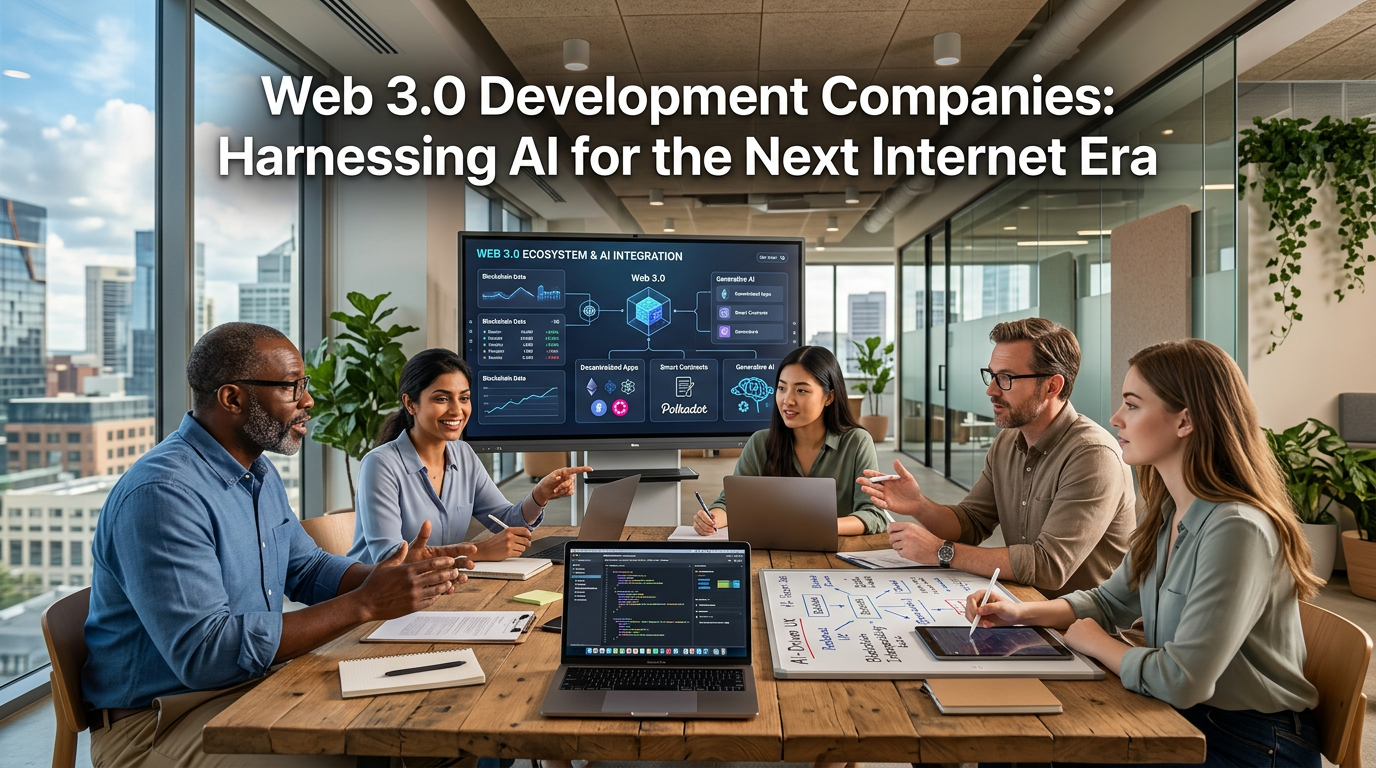
Introduction to Web 3.0
Web 3.0, often described as the decentralized web, represents the next generation of internet evolution, promising significant advancements in digital interactions, data ownership, and security. Unlike its predecessor, Web 2.0, which focused on user-generated content and social networking, Web 3.0 emphasizes decentralization, transparency, and enhanced user control. This transformation is primarily driven by blockchain technology and AI solutions, which together facilitate a more intelligent and automated web environment.
AI Solutions in Web 3.0 Development
AI solutions play a crucial role in the development and optimization of Web 3.0 environments. Web 3.0 development companies are increasingly leveraging AI to enhance user experiences, streamline operations, and create robust, scalable applications. AI algorithms help in processing large volumes of data, ensuring privacy through encryption, and enabling decentralized applications (DApps) to function seamlessly.
Practical Implementation of AI in Web 3.0
AI is implemented in Web 3.0 through various methodologies, including machine learning algorithms, natural language processing, and intelligent automation. In practice, these technologies allow Web 3.0 platforms to offer personalized content delivery, predictive analytics, and efficient data management. For instance, AI can analyze user behavior to provide tailored recommendations, thereby enhancing engagement and user satisfaction.
Enhancing Business Value
The integration of AI within Web 3.0 frameworks offers substantial business value. Companies can achieve improved decision-making capabilities through AI-driven insights, which are critical for strategic planning and competitive advantage. Moreover, AI enables cost savings by automating routine processes and reducing the need for manual intervention, leading to increased operational efficiency.
Risks and Challenges
Despite the promising prospects, implementing AI solutions in Web 3.0 is not without challenges. One of the primary concerns is the potential risk associated with data privacy and security. As AI systems process vast amounts of user data, ensuring that this data is protected from breaches and unauthorized access is paramount. Additionally, there's a need for rigorous testing and validation of AI models to prevent biases and ensure fair outcomes.
Workflow and Processes
The workflow within a Web 3.0 development company typically involves several stages, beginning with the identification of business needs and objectives. Following this, AI and blockchain specialists collaborate to design and develop decentralized applications that meet these requirements. Post-development, these applications undergo thorough testing to ensure functionality and security before deployment. Continuous monitoring and updates are also part of the workflow to adapt to changing technology trends and user needs.
Measuring Success: KPIs and Outcomes
Key Performance Indicators (KPIs) are critical for measuring the success of Web 3.0 AI implementations. These may include metrics such as user engagement rates, transaction volumes, application performance, and the level of decentralization achieved. Business outcomes, on the other hand, can be measured in terms of revenue growth, market expansion, and customer satisfaction. Real-world examples, such as companies successfully leveraging AI to optimize supply chains or enhance customer service, illustrate the tangible benefits of these technologies.
Case Studies and Examples
Several companies have already begun to showcase the potential of AI in Web 3.0. For example, a leading tech firm might use AI to enhance smart contracts, ensuring they execute under specific conditions without human intervention. Another example could be a startup that employs AI to create personalized user experiences on decentralized social networks, driving higher engagement and loyalty. These implementations not only demonstrate the versatility of AI in Web 3.0 but also highlight the strategic advantage it provides in fostering innovation and growth.
Conclusion
As Web 3.0 continues to evolve, the role of AI in this new digital landscape becomes increasingly significant. Development companies that harness these technologies are well-positioned to lead the next wave of internet innovation, offering enhanced functionality, security, and user engagement. While challenges remain, the potential business value and transformative impact of AI in Web 3.0 are undeniable, paving the way for a more intelligent and connected digital future.
Decentralized Finance (DeFi) and AI
One of the most promising aspects of Web 3.0 is its potential to revolutionize finance through decentralized finance, or DeFi. AI solutions integrated into DeFi platforms can enhance security, predict market trends, and automate trading processes. For example, AI algorithms can analyze historical data to provide insights into market movements, helping investors make informed decisions. Additionally, AI can identify fraudulent activities by monitoring transactions in real-time, ensuring a secure and trustworthy financial ecosystem.
Smart Contract Optimization
AI plays a crucial role in optimizing smart contracts, which are self-executing contracts with the terms of the agreement directly written into code. By incorporating AI, smart contracts can become more intelligent and adaptable, automatically adjusting terms based on real-time data and predefined conditions. This capability enhances the reliability and efficiency of smart contracts in various applications, from supply chain management to real estate transactions.
AI-Driven Decentralized Applications
Decentralized applications (DApps) are a cornerstone of Web 3.0, offering users greater control over their data and interactions. AI enhances DApps by providing advanced analytics and decision-making capabilities. For instance, in the realm of e-commerce, AI-powered DApps can offer personalized shopping experiences, recommend products based on user preferences, and even predict future buying trends. This not only improves the user experience but also drives sales and customer loyalty.
Challenges in AI Integration
While the integration of AI into Web 3.0 offers numerous benefits, several challenges must be addressed. One significant issue is the scalability of AI solutions within decentralized networks, as these networks often face limitations in processing power and bandwidth. Additionally, ensuring the transparency and fairness of AI algorithms is crucial to prevent biases and maintain user trust. Development companies must invest in research and innovation to overcome these challenges and unlock the full potential of AI in Web 3.0.
Regulatory Considerations
The decentralized nature of Web 3.0 poses unique regulatory challenges. As AI systems handle sensitive user data and facilitate financial transactions, ensuring compliance with global data protection regulations becomes essential. Web 3.0 development companies must stay informed about evolving regulatory landscapes and implement solutions that prioritize user privacy and security. Collaborating with regulatory bodies and industry experts can help navigate these complexities effectively.
Future Prospects of AI in Web 3.0
The future of AI in Web 3.0 is full of potential. As technology continues to advance, AI solutions will become more sophisticated, enabling new use cases and applications. We can expect to see AI-driven platforms that offer seamless interoperability between different blockchain networks, enhanced AI interfaces for virtual and augmented reality experiences, and more autonomous and intelligent DApps reshaping industries across the board.
- Interoperability: AI can facilitate seamless communication and data exchange between disparate blockchain networks, enhancing the usability and reach of decentralized applications.
- Enhanced User Interfaces: AI-driven interfaces can provide more intuitive and engaging experiences in virtual and augmented reality environments, expanding the scope of Web 3.0 applications.
- Autonomous DApps: With AI, DApps can become more autonomous, managing complex operations and making decisions with minimal human intervention, thereby increasing efficiency and reducing operational costs.
The integration of AI into Web 3.0 is not just a possibility; it is an inevitability. Companies that embrace this technological evolution will be at the forefront of innovation, shaping the future of the internet and redefining how we interact with digital environments. The journey toward a fully decentralized, AI-driven web is just beginning, and the possibilities are limitless.