
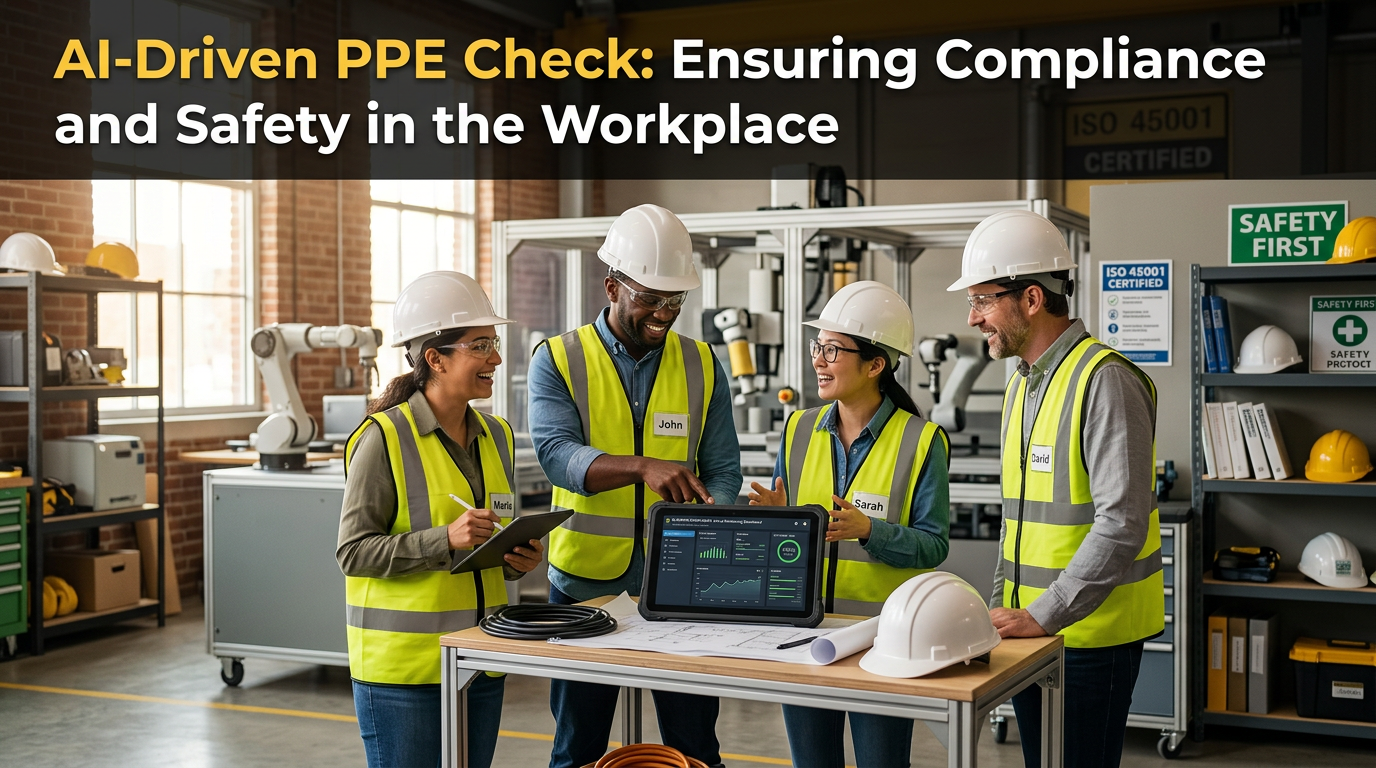
Introduction to AI-Driven PPE Checks
In today’s fast-paced industrial and manufacturing environments, ensuring the safety and compliance of personal protective equipment (PPE) is critical. The integration of Artificial Intelligence (AI) into PPE checks offers a transformative approach to maintaining high safety standards. This article delves into the practical implementation of AI-driven PPE checks, exploring their business value, potential risks, and measurable outcomes.
The Role of AI in PPE Compliance
AI technologies have proliferated across various sectors, offering innovative solutions to age-old challenges. In the realm of workplace safety, AI-driven PPE checks stand out by automating and enhancing the accuracy of compliance assessments. These systems utilize computer vision and machine learning algorithms to monitor and verify the correct usage of PPE by employees, ensuring adherence to safety regulations without the continuous need for manual oversight.
Use Cases and Examples
Consider a manufacturing plant where workers are required to wear helmets, gloves, and safety goggles. An AI-driven PPE check system can be installed at entry and exit points to automatically scan and validate if workers are equipped with the necessary gear. In another scenario, a construction site can use drones equipped with AI vision capabilities to survey large areas, ensuring all personnel are compliant with PPE requirements in real-time. These examples underscore the versatility and broad applicability of AI in various settings.
Practical Implementation of AI-Driven PPE Checks
Implementing AI-driven PPE checks involves several critical steps, each designed to ensure the system's effectiveness and adaptability to specific environments.
Step 1: Assessing the Workplace Environment
The initial step involves conducting a comprehensive assessment of the workplace to identify potential hazards and PPE requirements. This assessment helps in tailoring the AI solution to the specific needs of the environment, ensuring it accurately recognizes the required PPE gear.
Step 2: Integration of AI Systems
The next step is to integrate AI systems with existing safety protocols. This involves setting up cameras and sensors at strategic locations and configuring the AI software to recognize specific PPE items. Collaboration with IT and safety teams is crucial to ensure seamless integration without disrupting current operations.
Step 3: Training the AI Models
AI models must be trained using data sets that include images and scenarios of correct and incorrect PPE usage. This training enables the system to differentiate between compliance and non-compliance effectively.
Step 4: Implementing Feedback Loops
Implementing feedback loops is essential for continuous improvement. The AI system should be capable of learning from false positives and negatives, refining its accuracy over time through regular updates and feedback.
Business Value of AI in PPE Checks
Integrating AI-driven PPE checks presents significant business value by enhancing safety, improving operational efficiency, and reducing compliance costs.
Improving Safety and Compliance
AI systems provide real-time monitoring and alerts, ensuring immediate corrective actions can be taken. This proactive approach minimizes the risk of accidents and injuries, safeguarding both employees and the organization’s reputation.
Operational Efficiency
By automating routine compliance checks, businesses can allocate human resources to more strategic tasks, thereby increasing overall productivity. The integration of AI also reduces the manual burden on safety officers, allowing for more strategic oversight and intervention.
Reduction in Compliance Costs
AI-driven PPE checks help in reducing compliance costs by minimizing the need for constant manual inspections and audits. Over time, this results in significant cost savings and a more streamlined approach to workplace safety.
Risks and Challenges
Despite the clear advantages, the implementation of AI-driven PPE checks is not without risks. Potential challenges include data privacy concerns, the initial cost of system deployment, and the need for continuous system updates to maintain accuracy.
Data Privacy Concerns
Organizations must ensure that the use of AI complies with data protection regulations, safeguarding the privacy of employees while monitoring PPE compliance.
Initial Deployment Costs
While AI systems can reduce costs in the long run, the initial investment for hardware, software, and training can be significant. Companies need to carefully evaluate their budgets and expected return on investment before proceeding.
Continuous System Updates
AI systems require ongoing updates to adapt to changes in PPE standards and work environments. Regular maintenance and updates are crucial to ensure the system remains effective and reliable.
Key Performance Indicators (KPIs) for Measuring Success
To gauge the effectiveness of AI-driven PPE checks, organizations should establish clear KPIs, such as:
- Compliance Rate Improvement: Measures the increase in PPE compliance rates before and after AI implementation.
- Incident Reduction Rate: Tracks the decrease in workplace incidents related to PPE non-compliance.
- Cost Savings: Quantifies the reduction in compliance and operational costs achieved through automation.
- System Accuracy: Monitors the precision of the AI system in identifying compliance versus non-compliance.
Conclusion
AI-driven PPE checks represent a significant advancement in workplace safety, offering a robust solution to ensure compliance and protect employees. Through practical implementation and careful monitoring, businesses can leverage these systems to enhance safety, boost efficiency, and reduce costs. As AI technology continues to evolve, its role in safeguarding workplaces will undoubtedly expand, presenting new opportunities for innovation and improvement.
Advanced AI-Driven PPE Monitoring Techniques
Beyond basic compliance checks, AI technology can employ advanced monitoring techniques to further enhance workplace safety. These include predictive analytics, anomaly detection, and integration with IoT devices for more comprehensive safety management.
Predictive Analytics for Safety
By leveraging large datasets, AI systems can predict potential safety risks even before they happen. This involves analyzing patterns and trends in PPE usage and identifying potential non-compliance or failure points. Such predictive capabilities enable proactive interventions, potentially preventing incidents before they occur.
Anomaly Detection
AI systems equipped with anomaly detection can identify unusual patterns in workers' behavior or PPE usage. For instance, if a worker continuously fails to wear a required piece of equipment, the system can flag this for immediate action, allowing safety officers to address the issue before it leads to an accident.
Integration with IoT Devices
Integrating AI-driven PPE checks with IoT devices can create a more interconnected and responsive safety ecosystem. Wearable devices can provide real-time data on workers' physical conditions, such as heart rate or exposure to hazardous substances, allowing the AI system to make more informed compliance checks.
AI-Driven PPE in Diverse Industries
The application of AI-driven PPE checks is not limited to manufacturing and construction. Various industries can benefit from tailored AI solutions that address their unique safety challenges.
Healthcare
In healthcare settings, AI systems can ensure that medical staff adhere to strict PPE protocols, particularly in high-risk areas such as operating rooms or infectious disease wards. By doing so, they help prevent the spread of infections and protect both staff and patients.
Oil and Gas
The oil and gas industry, known for its high-risk environments, can leverage AI to monitor PPE compliance on rigs and refineries. Ensuring workers are properly equipped with flame-resistant clothing and other protective gear is crucial to preventing severe accidents.
Food Processing
In the food processing industry, maintaining hygiene standards is paramount. AI-driven PPE checks can help ensure compliance with sanitary clothing and equipment usage, reducing contamination risks and ensuring food safety.
Future Trends in AI-Driven PPE Solutions
As AI technology advances, several trends are poised to shape the future of PPE compliance solutions, offering even greater enhancements in workplace safety.
Increased Automation and Autonomy
Future AI systems will likely offer greater levels of automation and autonomy, reducing the need for human intervention even further. Fully autonomous drones or robots equipped with AI could patrol work areas, conducting compliance checks without human oversight.
Enhanced User Interfaces
The development of more intuitive user interfaces will make AI-driven PPE systems more accessible to non-technical users. This can lead to wider adoption across various sectors, as the systems become easier to deploy and manage.
Integration with Augmented Reality (AR)
AR technology could be integrated into AI-driven PPE systems, providing workers with real-time compliance feedback through smart glasses or helmets. This could include visual cues or alerts when PPE is worn incorrectly, thereby enhancing training and adherence.
Conclusion
The integration of AI into PPE compliance checks is revolutionizing workplace safety across multiple industries. By understanding and leveraging the advanced capabilities of AI, businesses can ensure a safer, more compliant, and more efficient work environment, ultimately benefiting employees and organizational success.