
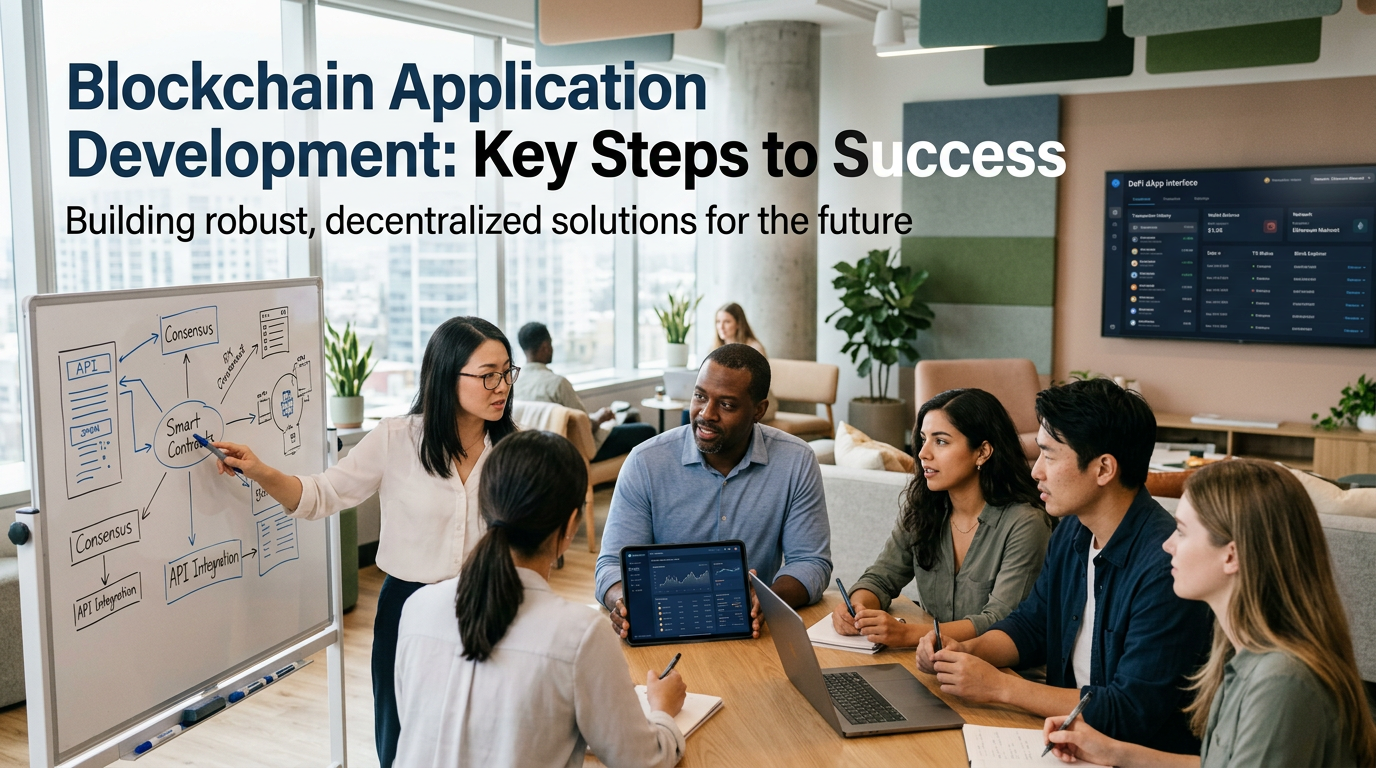
Introduction to Blockchain Application Development
The advent of blockchain technology has revolutionized various industries by offering a decentralized and secure method of data handling. Blockchain application development, when integrated with AI solutions, becomes even more powerful, providing robust, efficient, and innovative solutions to complex business challenges. This article delves into the key steps for successful blockchain application development, emphasizing AI solution use cases, implementation, business value, and measurable outcomes.
Understanding Blockchain and AI Integration
Blockchain and AI together create a formidable synergy where blockchain enhances data security and transparency, while AI analyzes and interprets this data to provide actionable insights. The integration of these technologies can dramatically improve the efficiency and effectiveness of different business operations, from supply chain management to financial services and healthcare.
AI Solution Use Cases in Blockchain
Several AI-driven blockchain applications have emerged across various sectors:
- Supply Chain Management: AI can optimize the logistics and inventory management processes by predicting demand and supply trends. Blockchain ensures data integrity and traceability, reducing fraud and errors.
- Healthcare: AI algorithms can be used to analyze patient data securely stored on the blockchain, providing personalized medicine and improved healthcare outcomes.
- Financial Services: Fraud detection and risk management are enhanced by AI's ability to analyze transaction patterns stored on the blockchain, offering increased security and efficiency.
Practical Implementation Steps
Implementing a blockchain application involves several critical steps that ensure the project's success:
1. Define Business Objectives
Clearly outline the problem you aim to solve and how a blockchain solution can address it. This step involves understanding the specific business needs and aligning them with blockchain's capabilities.
2. Choose the Right Blockchain Platform
Selecting the appropriate blockchain platform is crucial. Consider factors such as scalability, security, cost, and ease of integration with existing systems. Popular choices include Ethereum, Hyperledger Fabric, and Corda.
3. Design the Architecture
Develop a detailed architecture that integrates blockchain with AI components. This involves deciding on data storage mechanisms, consensus algorithms, and the role of AI in data processing.
4. Develop Smart Contracts
Smart contracts are self-executing contracts with the terms of the agreement directly written into code. They automate and secure transactions, reducing the need for intermediaries.
5. Testing and Optimization
Conduct thorough testing to identify and fix any issues. Optimization ensures the application is efficient and effective, ready for deployment in a real-world environment.
Business Value of Blockchain Applications
The strategic implementation of blockchain applications can offer significant business value:
Enhanced Security
Blockchain's immutable ledger and cryptographic encryption provide superior data security, reducing the risks of data breaches and fraud.
Increased Transparency and Trust
Every transaction is recorded on a public ledger, allowing for complete transparency and fostering trust among stakeholders.
Cost Efficiency
By eliminating intermediaries and automating processes through smart contracts, businesses can significantly reduce operational costs.
Risks and Challenges
Despite the benefits, blockchain application development poses certain risks and challenges:
Scalability Issues
As blockchain networks grow, scalability becomes a challenge, potentially slowing down transaction times and increasing costs.
Regulatory Concerns
The regulatory landscape for blockchain technology is still evolving, leading to uncertainties and legal challenges.
High Initial Costs
The initial setup and integration costs for blockchain applications can be high, which might be a barrier for smaller organizations.
Workflows and Measurable Outcomes
To ensure the success of blockchain applications, it is important to establish clear workflows and KPIs:
Workflows
Define clear processes for data input, transaction management, smart contract execution, and AI analysis. This ensures all system components work seamlessly together.
Key Performance Indicators (KPIs)
Measure success through KPIs such as transaction speed, cost savings, user adoption rates, and error reduction rates. These metrics provide insight into the effectiveness and ROI of the blockchain solution.
Conclusion
Blockchain application development, enhanced with AI solutions, offers immense potential to transform business operations by providing increased security, transparency, and efficiency. By understanding the key steps, challenges, and business value, organizations can effectively implement and benefit from these cutting-edge technologies. As the landscape of blockchain continues to evolve, staying informed and adaptive will be crucial for maintaining a competitive edge.
Exploring Real-World Examples
Real-world examples of successful blockchain and AI integration can illustrate the transformative potential of these technologies across various sectors.
Global Trade and Logistics
In the global trade industry, companies like IBM and Maersk have developed a blockchain-based platform called TradeLens. By utilizing blockchain for secure and transparent tracking of shipments, and AI for predicting delays and optimizing routes, TradeLens significantly enhances efficiency in logistics management.
Insurance Industry Innovations
Insurance companies are leveraging blockchain to streamline claims processing and reduce fraud. AI algorithms analyze claims data stored on the blockchain to detect anomalies and predict fraudulent activities, resulting in faster claims settlements and improved customer satisfaction.
Energy Sector Transformation
The energy sector benefits from blockchain and AI by enabling decentralized energy trading platforms. AI optimizes energy consumption patterns, while blockchain ensures secure and transparent peer-to-peer transactions, facilitating the transition to a more sustainable energy future.
Advanced Strategies for Blockchain Application Success
To maximize the benefits of blockchain applications, organizations can employ advanced strategies alongside the basic implementation steps.
Continuous Integration and Deployment
Adopt a continuous integration and deployment (CI/CD) approach to frequently update and improve the blockchain application. This ensures the system remains robust, secure, and responsive to changing business needs.
Stakeholder Engagement and Education
Engage stakeholders throughout the development process to gather valuable feedback and foster a sense of ownership. Additionally, provide education and training to stakeholders to facilitate smooth adoption and integration of the new application.
Leveraging Data Analytics
Utilize AI-driven data analytics to extract insights from blockchain data. This can aid in decision-making, identify new business opportunities, and further optimize operational processes.
Overcoming Common Challenges
Tackling common challenges in blockchain application development can pave the way for more effective solutions.
Addressing Scalability
To address scalability issues, consider implementing layer-2 solutions that offer faster transaction processing times without compromising security. Off-chain data storage solutions can also alleviate the data load on the blockchain network.
Navigating Regulatory Landscapes
Stay informed about regulatory changes and work with legal experts to ensure compliance. Engaging in industry forums and contributing to the development of standards can also help shape favorable regulatory environments.
Managing Initial Investment
To manage high initial costs, consider phased implementation strategies, starting with pilot projects to demonstrate value before scaling up. This approach can secure stakeholder buy-in and attract additional investments.
Future Trends in Blockchain and AI
Looking forward, several trends are poised to shape the future of blockchain and AI integration.
Interoperability Solutions
The development of interoperability solutions between different blockchain networks will facilitate seamless data exchange and collaboration, unlocking new use cases and efficiencies.
Increased Decentralization
Decentralized finance (DeFi) and decentralized autonomous organizations (DAOs) represent a shift towards more decentralized systems, where blockchain and AI play key roles in governance and decision-making processes.
AI-Driven Smart Contracts
The evolution of smart contracts to include AI capabilities will allow for more complex decision-making processes, enabling adaptive and intelligent contract execution based on real-time data analysis.
Conclusion: The Way Forward
As blockchain and AI technologies continue to evolve, they will offer even greater opportunities for innovation and transformation across industries. By staying abreast of technological advancements and adopting a proactive approach to integration, businesses can unlock the full potential of these technologies to drive growth, efficiency, and competitive advantage. Collaboration among industry players and continuous learning will be essential to navigate the dynamic landscape of blockchain application development successfully.