
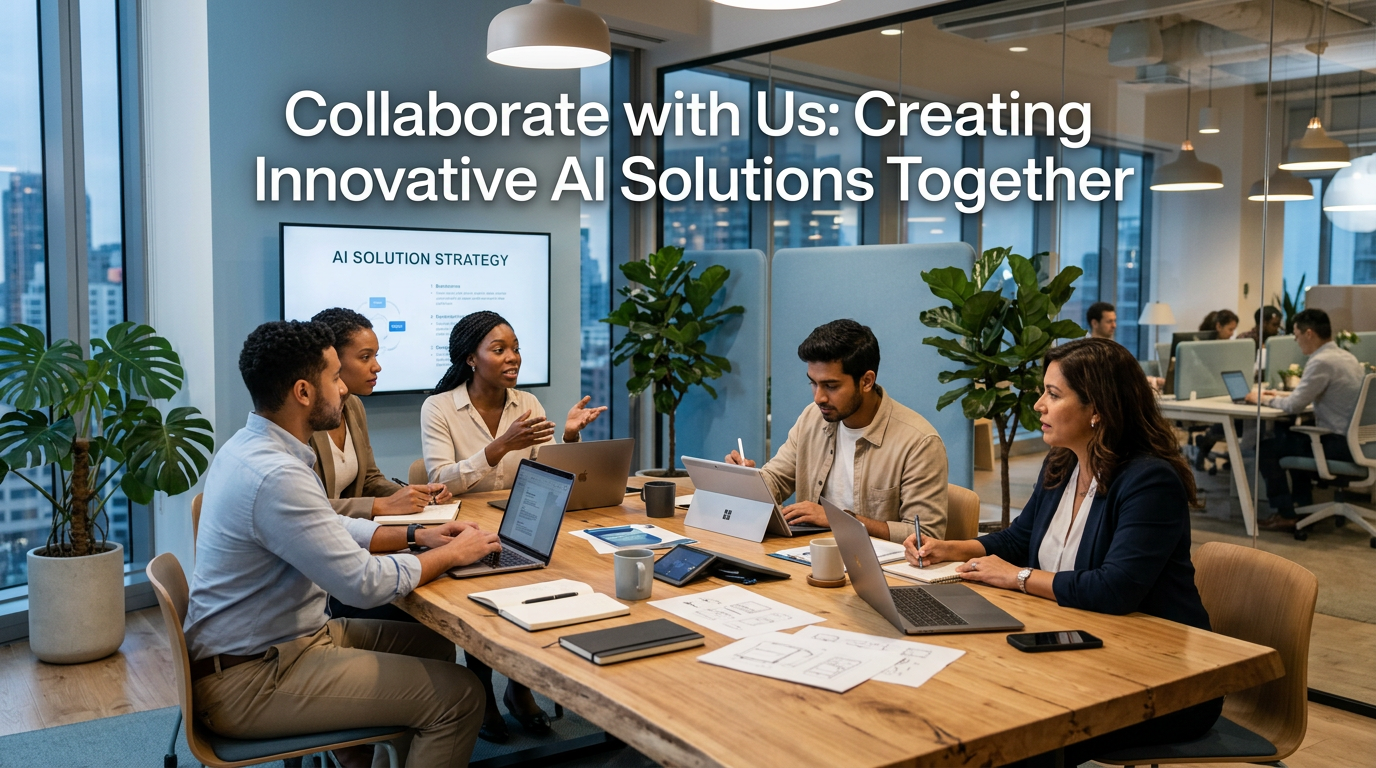
Introduction: The Power of Collaboration in AI
In today's rapidly evolving technological landscape, collaboration has become a cornerstone for success, especially in the realm of Artificial Intelligence (AI). Partnering with experts to create innovative solutions not only accelerates development but also enhances the quality and applicability of AI technologies across various industries. At 4A Labs, we specialize in collaborating with businesses to craft AI solutions that are tailored to their unique challenges and objectives. This article explores the practical implementation, business value, risks, workflows, and measurable outcomes of partnering to develop AI solutions.
The Practical Implementation of AI Solutions
AI Use Cases Across Industries
AI technologies have permeated numerous sectors, from healthcare to finance, retail, and beyond. For instance, in healthcare, AI can be used to predict patient outcomes and optimize treatment plans. In finance, AI-driven algorithms are utilized for fraud detection and risk management. Retailers leverage AI for personalized marketing strategies and supply chain optimization. These diverse applications illustrate the versatility of AI solutions when implemented effectively.
Steps for Successful AI Implementation
- Define Objectives: Clearly outline what the AI solution aims to achieve. This involves understanding the specific problems faced by the business and how AI can address them.
- Data Collection and Preparation: Gather relevant data that will be used to train AI models. This step is crucial as the quality of data directly impacts the AI's effectiveness.
- Model Development and Testing: Develop AI models using appropriate machine learning techniques and test them for accuracy and reliability.
- Integration: Seamlessly integrate the AI solution into existing systems and workflows, ensuring minimal disruption to ongoing operations.
- Monitoring and Maintenance: Continuously monitor the AI system's performance and make necessary adjustments to maintain its efficacy over time.
Business Value of AI Solutions
Enhancing Efficiency and Productivity
AI solutions can significantly enhance operational efficiency by automating routine tasks and processes, thus freeing up human resources to focus on more strategic initiatives. This automation leads to increased productivity and reduced operational costs.
Driving Innovation and Competitive Advantage
By integrating AI into their operations, businesses can unlock new capabilities, drive innovation, and gain a competitive edge. AI provides insights that enable companies to make data-driven decisions, develop new products, and improve customer experiences.
Measurable Outcomes and KPIs
To quantify the impact of AI solutions, businesses must establish Key Performance Indicators (KPIs) that reflect their objectives. Common KPIs include:
- Time Savings: Reduction in time taken to complete tasks.
- Cost Reduction: Decrease in operational expenses.
- Increased Revenue: Growth in sales and market share.
- Improved Customer Satisfaction: Higher customer retention and satisfaction scores.
Risks and Challenges of AI Collaboration
Data Privacy and Security
One of the primary concerns in AI implementation is ensuring data privacy and security. Businesses must comply with regulations and safeguard sensitive information to prevent data breaches.
Bias and Ethical Concerns
AI systems can inadvertently perpetuate biases present in training data. It is critical to address these biases during model development to ensure fair and equitable outcomes.
Change Management
Introducing AI into an organization requires effective change management strategies to ensure smooth adoption. This involves training employees and fostering a culture of collaboration and innovation.
Workflows for Collaborative AI Development
Effective collaboration between AI experts and businesses is essential for successful AI solution development. A typical workflow includes:
- Initial Consultation: Discuss project goals and identify potential AI applications.
- Feasibility Study: Assess technical and financial feasibility of proposed AI solutions.
- Solution Design: Develop a detailed project plan and design AI models tailored to specific needs.
- Implementation: Execute the project plan, develop AI models, and integrate them into business processes.
- Evaluation: Measure performance against KPIs and make necessary adjustments.
Case Study: Successful AI Implementation
Consider a retail company that partnered with 4A Labs to implement an AI-driven inventory management system. By integrating AI, the company was able to predict stock demand with 95% accuracy, resulting in a 30% reduction in overstock costs and a 20% increase in sales.
Conclusion
Collaborating on AI projects offers businesses a powerful avenue to innovate and transform their operations. By leveraging AI's potential, companies can enhance efficiency, drive growth, and maintain a competitive edge. The key to a successful AI collaboration lies in clear objectives, robust implementation strategies, and ongoing evaluation. With the right partner, businesses can navigate the complexities of AI and create solutions that deliver tangible business value.
Strategies for Effective AI Collaboration
Building Cross-Functional Teams
Successful AI collaboration requires assembling cross-functional teams that combine diverse expertise. This might include data scientists, IT professionals, business analysts, and industry specialists. Each team member brings unique insights that contribute to a well-rounded AI solution. Encouraging open communication and continuous learning within these teams ensures that different perspectives are considered, leading to more innovative and effective AI solutions.
Establishing Clear Communication Channels
Clear and consistent communication is vital to keep all stakeholders aligned with the project's goals. Regular meetings, updates, and collaborative tools can facilitate information sharing, ensuring everyone is on the same page. These practices help in promptly addressing any issues and adapting strategies as needed.
Overcoming Barriers in AI Implementation
Technical Challenges
One of the significant barriers in AI implementation is the technical complexity involved. Developing and deploying AI solutions require advanced technical skills and infrastructure. Businesses must invest in training their workforce and upgrading their technological resources to overcome these challenges. Collaborating with experienced AI partners can also help mitigate technical hurdles and provide access to cutting-edge technologies.
Cultural Resistance
Another common barrier is resistance to change within an organization. Employees may feel threatened by AI technologies, fearing job displacement or increased scrutiny. To address this, businesses should focus on change management strategies that emphasize the value AI brings to human roles. Highlighting AI as a tool to augment human capabilities rather than replace them can foster a more accepting environment.
Scaling AI Solutions Across the Organization
Pilot Programs and Gradual Rollouts
To ensure successful scaling of AI solutions, businesses can start with pilot programs that test the solution's effectiveness in a controlled environment. These pilot programs allow for experimentation and refinement before a full-scale rollout. Gradual implementation helps manage risks and ensures the organization is prepared for larger-scale adoption.
Continuous Learning and Adaptation
AI solutions must evolve with changing business needs and technological advancements. This requires a commitment to continuous learning and adaptation. Businesses should encourage ongoing training for employees and maintain a flexible approach to AI development. Regularly revisiting and updating AI models ensures they remain relevant and effective.
Future Trends in AI Collaboration
AI and IoT Integration
The integration of AI with the Internet of Things (IoT) is a growing trend that presents new opportunities for innovation. By combining AI's analytical power with IoT's data-generation capabilities, businesses can develop smarter, interconnected systems that enhance operational efficiency and decision-making.
AI for Sustainability
As sustainability becomes a priority, AI is increasingly being used to optimize resource management and reduce environmental impact. From energy-efficient operations to waste reduction strategies, AI-driven solutions offer businesses the tools to achieve their sustainability goals.
Realizing the Full Potential of AI Collaboration
To realize the full potential of AI collaboration, businesses must adopt a proactive approach that embraces innovation and strategic partnerships. By doing so, they can unlock new opportunities, enhance their operations, and contribute to broader technological advancements. The journey toward effective AI collaboration is ongoing, requiring dedication, adaptability, and a clear vision for the future.