
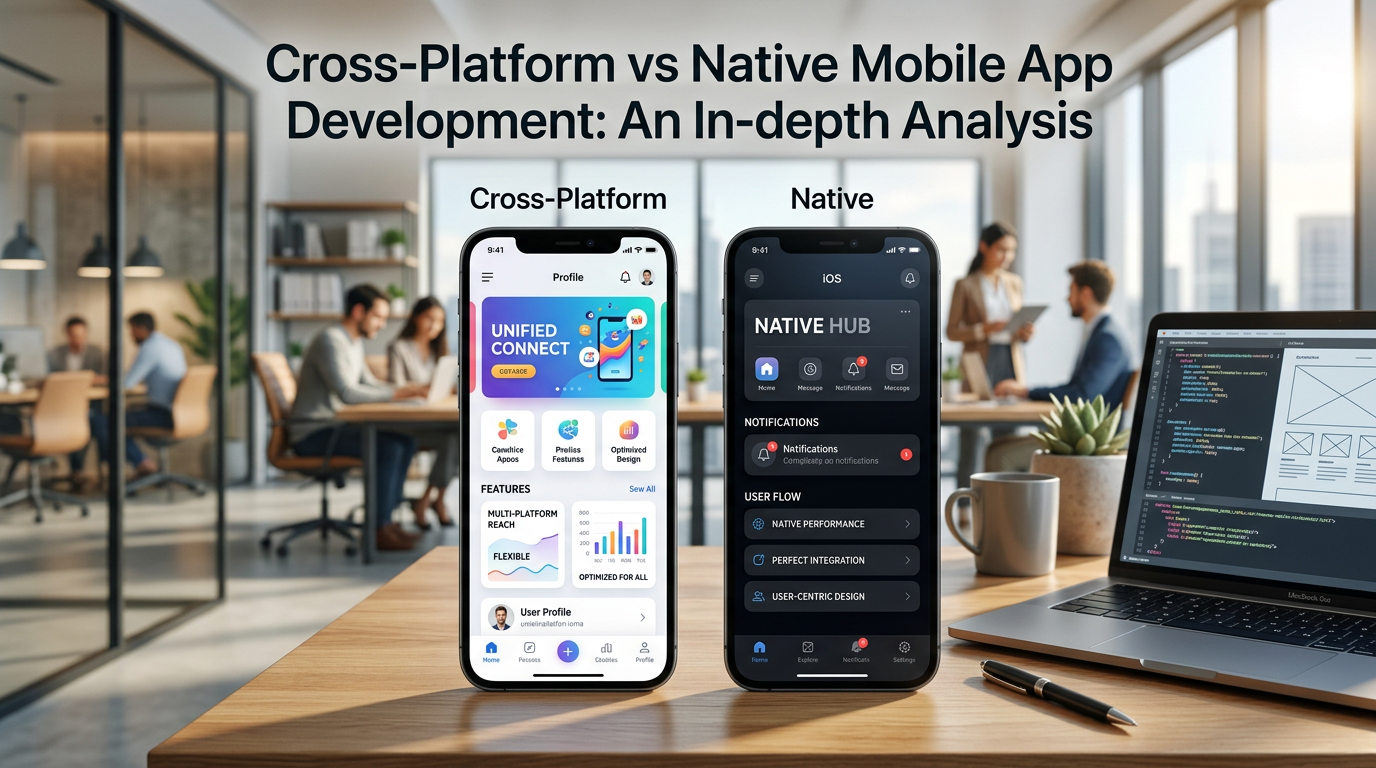
Introduction to Mobile App Development
In today's digital landscape, mobile applications are pivotal for businesses seeking to enhance user engagement and streamline operations. With the proliferation of smartphones, companies face a crucial decision: should they develop cross-platform or native mobile apps? Each approach has unique advantages and challenges, often influenced by emerging technologies such as Artificial Intelligence (AI). This article delves into the intricacies of cross-platform and native app development, examining the roles of AI solutions, implementation strategies, business value, and measurable outcomes.
Understanding Cross-Platform Mobile App Development
What is Cross-Platform Development?
Cross-platform development refers to creating mobile applications that work seamlessly across multiple operating systems, such as iOS and Android, using a single codebase. Popular frameworks include React Native, Flutter, and Xamarin. These frameworks enable developers to write code once and deploy it across various platforms, significantly reducing development time and cost.
AI Solutions in Cross-Platform Development
AI technologies offer innovative solutions in cross-platform development by enhancing user interfaces and providing personalized experiences. For instance, AI-driven chatbots can be integrated into cross-platform apps to deliver real-time customer support, irrespective of the device or operating system. Moreover, machine learning algorithms can analyze user behavior to optimize app performance across platforms.
Exploring Native Mobile App Development
What is Native Development?
Native mobile app development involves building applications specifically for a single platform, such as iOS or Android, using platform-specific languages like Swift or Kotlin. This approach allows developers to fully leverage the device’s features, offering superior performance and user experience.
AI Implementation in Native Applications
AI can significantly enhance native applications by providing advanced functionalities such as voice recognition, image processing, and personalized content recommendations. For example, an AI-powered fitness app can use the device's sensors to monitor user activities and provide customized workout plans based on individual progress.
Key Implementation Steps
Cross-Platform Development Workflow
The workflow for cross-platform development typically involves:
- Requirement Analysis: Understanding the project scope, target audience, and platform requirements.
- Design: Creating a unified UI/UX design that works across all targeted platforms.
- Development: Utilizing cross-platform frameworks to write a single codebase.
- Testing: Conducting rigorous testing to ensure compatibility and performance across devices.
- Deployment: Publishing the app on multiple app stores simultaneously.
Native Development Workflow
For native app development, the process includes:
- Requirement Gathering: Defining platform-specific features and functionalities.
- Design: Crafting a design that aligns with platform guidelines for optimal user experience.
- Development: Writing code using platform-specific languages and tools.
- Testing: Performing comprehensive testing for functionality, usability, and performance.
- Launch: Releasing the app on the respective app store, followed by continuous updates.
Business Value and Measurable Outcomes
Evaluating Business Value
Both approaches offer distinct business values. Cross-platform development is cost-efficient and accelerates time-to-market, making it ideal for startups and businesses with limited budgets. In contrast, native development offers unparalleled performance and security, crucial for applications requiring complex functionalities or handling sensitive data.
Measuring Success with KPIs
Key Performance Indicators (KPIs) are essential for measuring the success of mobile app development projects. Common KPIs include:
- User Retention Rate: Indicates how well the app maintains user engagement over time.
- App Load Time: Assesses the app's speed and efficiency, influencing user satisfaction.
- Crash Analytics: Evaluates the app's stability and performance reliability.
- Conversion Rate: Measures how effectively the app converts users into customers.
- Customer Satisfaction Score: Reflects user satisfaction and overall app experience.
Conclusion
The decision between cross-platform and native mobile app development depends on various factors, including budget, target audience, and desired functionalities. While cross-platform development offers cost savings and broad reach, native development provides superior performance and user experience. AI technologies can enhance both approaches by introducing intelligent features and personalized experiences. Ultimately, choosing the right development path requires a strategic evaluation of business goals, technological requirements, and market demands.
Future Trends in Mobile App Development
As technology continues to evolve, mobile app development is poised to undergo significant transformations. Several emerging trends are likely to shape the future landscape, influencing how developers approach both cross-platform and native applications.
Integration of Augmented Reality (AR)
Augmented Reality (AR) is gaining traction as a powerful tool for enhancing user experience. By overlaying digital information onto the real world, AR can provide immersive experiences that engage users in novel ways. Whether it's for retail, education, or entertainment, integrating AR into mobile apps can lead to more interactive and engaging applications.
5G Technology
The rollout of 5G networks promises faster data speeds and reduced latency, unlocking new possibilities for mobile applications. Developers can leverage 5G to create feature-rich apps that offer real-time data processing and high-quality media streaming. This will be particularly beneficial for applications in fields such as gaming, healthcare, and remote collaboration.
Enhanced Security Measures
As mobile applications handle increasing amounts of sensitive data, security remains a top priority. Future app development will likely focus on integrating advanced security measures such as biometric authentication, encryption, and AI-powered threat detection. Ensuring user privacy and data protection will be critical to maintaining trust and compliance with regulations.
Choosing the Right Development Approach
Determining whether to pursue cross-platform or native app development involves careful consideration of several factors:
- Budget Constraints: Companies must evaluate their financial resources and allocate them efficiently. Cross-platform development could offer a more economical solution if budget limitations exist.
- Target Audience: Understanding the demographics and preferences of the app's intended users can guide the choice of development approach. Native apps may be favorable if the audience predominantly uses one platform.
- App Complexity: The desired functionalities and complexity of the app play a significant role. Native development might be more suitable for apps requiring intricate features and superior performance.
- Time-to-Market: Businesses looking to quickly launch their app might benefit from the expedited timelines of cross-platform development.
Case Studies and Real-World Applications
Successful Cross-Platform Apps
Several well-known companies have harnessed the power of cross-platform development to reach broader audiences. For instance, Instagram initially leveraged React Native to ensure a seamless experience across devices, allowing them to quickly iterate and update features.
Examples of Native App Excellence
On the other hand, Spotify exemplifies the strengths of native app development. By utilizing platform-specific capabilities, Spotify delivers a high-performance audio streaming experience with robust offline functionality and integration with various device hardware.
The Role of Community and Ecosystem Support
The success of app development frameworks often hinges on the strength of their community and ecosystem. Both cross-platform and native development approaches benefit from active developer communities that contribute plugins, libraries, and support resources. Engaging with these communities can provide valuable insights, accelerate problem-solving, and drive innovation.
In conclusion, the choice between cross-platform and native app development should be guided by strategic goals, technical requirements, and user needs. As technologies like AI, AR, and 5G continue to evolve, they will further influence the development landscape, offering new opportunities for creating high-quality and impactful mobile applications.
Balancing User Experience and Development Efficiency
When contemplating the choice between cross-platform and native mobile app development, businesses must weigh the importance of user experience against the efficiency of development processes. While each approach offers distinct advantages, the ultimate goal is to deliver an app that meets users' expectations while optimizing resources.
User Experience Considerations
Providing an exceptional user experience (UX) is paramount in mobile app development. Native apps often have an edge in this area, as they are designed with platform-specific guidelines, ensuring seamless integration with the operating system. This can result in a more intuitive and responsive interface, which is crucial for user satisfaction. However, advances in cross-platform frameworks have significantly narrowed this gap, allowing developers to create apps that feel native.
Development Efficiency and Cost-Effectiveness
On the flip side, cross-platform development is generally more efficient regarding time and cost. With a single codebase, developers can target multiple platforms simultaneously, reducing the overall development effort. This approach is particularly advantageous for startups and small businesses that need to conserve resources while maximizing reach.
- Scalability: Cross-platform apps can be easily scaled and adapted to new platforms as they share a unified code structure.
- Maintenance: Maintaining a single codebase simplifies updates and bug fixes, ensuring consistency across platforms.
- Resource Allocation: By using cross-platform development, organizations can allocate their resources more effectively, focusing on enhancing features and marketing efforts.
In conclusion, the decision on which development approach to take should consider both user experience and development efficiency, aligning with the overall business strategy and goals. As technology evolves, the lines between these two approaches continue to blur, providing more flexibility and options for developers and businesses alike.