
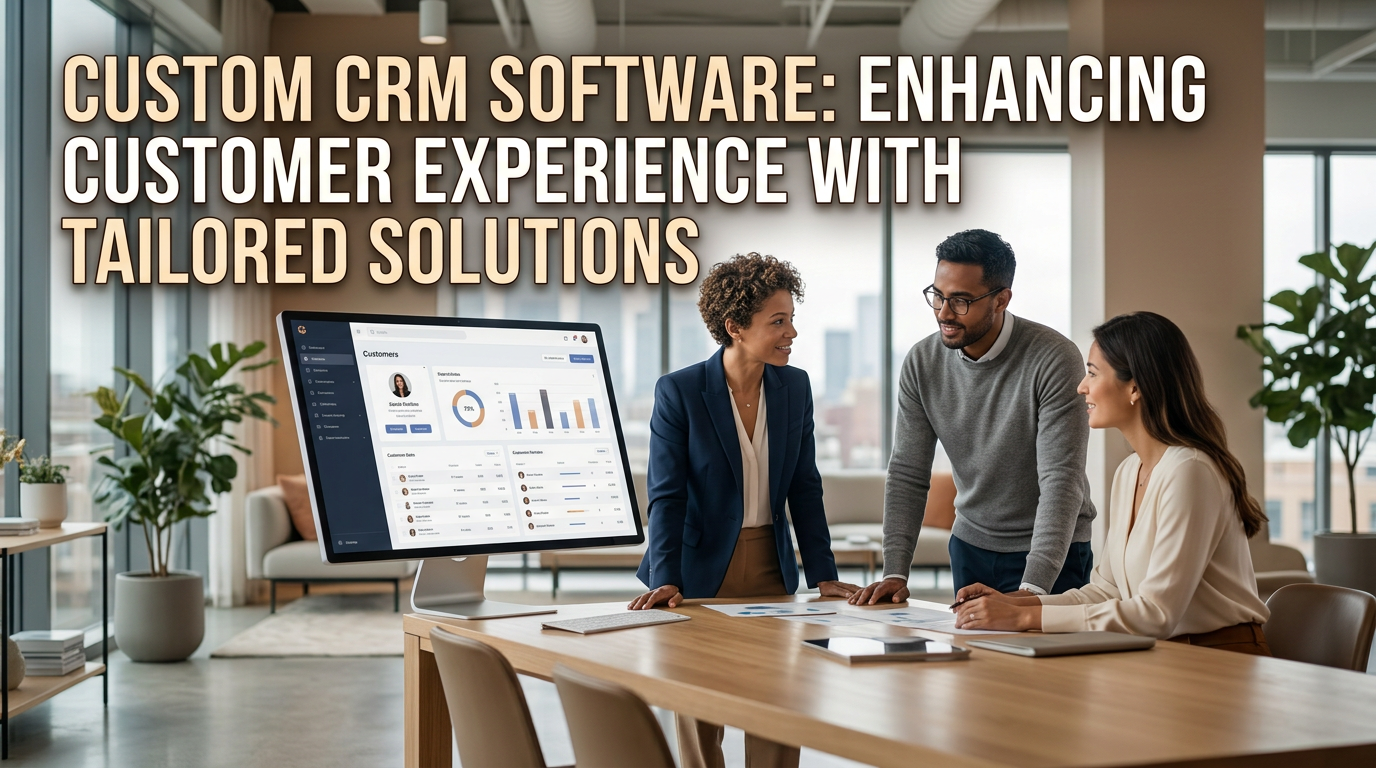
Understanding Custom CRM Software
In today's competitive market, businesses strive to provide exceptional customer experiences to outperform their rivals. Custom CRM (Customer Relationship Management) software emerges as a pivotal tool in achieving this goal. Unlike generic CRM systems, custom CRM software solutions are specifically designed to meet the unique needs of a business, incorporating AI-driven insights to enhance customer interactions and streamline operations.
The Role of AI in Custom CRM Solutions
Artificial Intelligence (AI) plays a crucial role in the evolution of custom CRM software. By integrating AI, businesses can obtain deeper insights into customer behavior, preferences, and trends. AI algorithms analyze vast amounts of data to offer predictive analytics and personalized recommendations, enabling companies to tailor their marketing strategies and improve customer engagement.
For instance, AI can automate routine tasks, such as data entry and customer segmentation, allowing teams to focus on strategic initiatives. Additionally, AI-powered chatbots and virtual assistants enhance customer support by providing instant responses and resolving queries efficiently.
Implementation of Custom CRM Software
Implementing custom CRM software involves several key steps. Initially, businesses must conduct a thorough needs assessment to identify specific requirements and objectives. This process ensures that the CRM solution aligns with business goals and customer expectations.
The next phase involves designing the CRM architecture, which includes integrating existing systems and databases. A seamless integration ensures a unified view of customer data, enabling more informed decision-making.
Once the design is finalized, the development team works on building and customizing the CRM platform. This stage may include coding bespoke functionalities, setting up automation workflows, and incorporating AI features. Rigorous testing follows to ensure the system operates smoothly and meets performance benchmarks.
Training and support are vital components of successful CRM implementation. Employees must be equipped with the knowledge to navigate and utilize the software effectively, maximizing its potential to enhance customer experience.
Business Value of Custom CRM Software
Custom CRM software offers significant business value by fostering stronger customer relationships and driving revenue growth. With its tailored approach, companies can deliver personalized experiences that resonate with customers, increasing satisfaction and loyalty.
The automation capabilities of custom CRM solutions reduce operational costs and boost efficiency. By streamlining processes, businesses can allocate resources more strategically and focus on core activities that drive growth.
Additionally, the data-driven insights provided by AI enable proactive decision-making. Companies can anticipate customer needs, identify opportunities, and mitigate risks, ultimately enhancing their competitive edge.
Measuring Success: Key Performance Indicators (KPIs)
Successful implementation of custom CRM software can be measured through various key performance indicators (KPIs). Customer satisfaction scores and Net Promoter Scores (NPS) provide insights into the quality of customer experience. A higher NPS indicates increased customer loyalty and advocacy.
Other KPIs include customer retention rates, sales conversion rates, and the average time to resolve customer issues. These metrics highlight the effectiveness of the CRM system in improving customer interactions and driving business outcomes.
Potential Risks and Mitigation Strategies
While custom CRM software offers numerous advantages, it is essential to acknowledge potential risks. Implementation challenges, such as data integration issues and user resistance, may arise. To mitigate these risks, businesses should engage in thorough planning and involve stakeholders in the decision-making process.
Data security is another critical consideration. Ensuring robust security measures and compliance with data protection regulations is paramount to safeguarding customer information and maintaining trust.
Real-world Examples of Custom CRM Success
Several companies have successfully leveraged custom CRM software to enhance customer experience and achieve business objectives. For example, a retail brand implemented a custom CRM solution with AI-powered recommendations, resulting in a 25% increase in sales conversion rates. Similarly, a financial services firm enhanced customer support through AI-driven chatbots, reducing response times by 40% and improving customer satisfaction.
Conclusion
In summary, custom CRM software equipped with AI capabilities is a game-changer for businesses aiming to enhance customer experience. By implementing tailored solutions, companies can harness the power of data-driven insights to deliver personalized interactions, optimize operations, and drive growth. As the digital landscape continues to evolve, investing in custom CRM solutions will be paramount to maintaining a competitive edge and fostering long-term customer relationships.
Workflow Optimization with Custom CRM Software
Custom CRM software not only enhances customer experience but also plays a pivotal role in optimizing internal workflows. By automating routine tasks, such as lead management, follow-up scheduling, and customer segmentation, it frees up valuable time for employees to focus on more strategic activities. A well-designed CRM workflow streamlines processes, reduces redundancies, and ensures that every customer interaction is efficient and effective.
Streamlining Customer Interactions
Custom CRM systems can be tailored to automatically route customer inquiries to the appropriate departments, ensuring that issues are resolved swiftly and accurately. This level of automation minimizes human error and enhances the overall customer experience. Furthermore, CRM software can track customer interactions across multiple touchpoints, providing a comprehensive view of each customer journey.
- Lead Management: Automate the process of capturing, nurturing, and converting leads into customers, ensuring no opportunity is missed.
- Task Automation: Set up reminders and task assignments to ensure timely follow-ups and customer engagement.
- Data Synchronization: Seamlessly integrate data from various sources to provide a unified customer profile, enabling personalized service delivery.
Key Performance Indicators in Depth
While initial KPIs such as customer satisfaction scores and sales conversion rates provide an overview, a deeper analysis of specific metrics can offer more granular insights into CRM performance. For instance, tracking the Customer Lifetime Value (CLV) helps businesses understand the long-term value of each customer, guiding strategic decisions on customer acquisition and retention efforts.
Advanced Metrics for CRM Success
- Customer Churn Rate: Measure the percentage of customers who discontinue their relationship with the business over a given period. A low churn rate indicates effective customer retention strategies.
- Employee Productivity: Monitor how CRM tools enhance employee efficiency by reducing time spent on manual data entry and report generation.
- Time to First Response: Assess the speed at which customer inquiries are initially addressed, as prompt service is crucial for customer satisfaction.
Expanding Business Value with Custom CRM
Custom CRM software is not limited to enhancing customer interactions; it also significantly boosts overall business performance. By fostering data-driven decision-making, businesses can uncover new growth opportunities and align their strategies with market demands. Moreover, the scalability of custom CRM solutions allows companies to adapt to changing business environments and customer expectations over time.
Enhancing Marketing Strategies
With access to in-depth customer data and behavior analytics, marketing teams can craft more targeted campaigns that resonate with specific audience segments. Personalized marketing messages lead to higher engagement rates and a stronger return on investment (ROI).
Driving Innovation and Growth
Through continuous feedback loops and data analysis, businesses can innovate their product or service offerings, addressing emerging customer needs and staying ahead of industry trends.
Mitigating Risks: A Strategic Approach
While the benefits of custom CRM software are substantial, a proactive risk management strategy is crucial. Businesses must anticipate potential challenges, such as system downtime or integration complexities, and have contingency plans in place. Regular system audits and updates ensure the CRM software remains secure and functional.
Training and Change Management
Investing in comprehensive training programs and change management initiatives can help mitigate user resistance. By demonstrating the tangible benefits of CRM adoption, companies can foster a culture of acceptance and enthusiasm among employees.
Case Studies: Success Stories in Different Industries
Custom CRM software has been successfully implemented across various industries, each with unique challenges and objectives. For instance, in the healthcare sector, a custom CRM system was developed to streamline patient scheduling and follow-up care, resulting in a 30% reduction in administrative workload and improved patient satisfaction scores.
- Retail Industry: A fashion retailer implemented a custom CRM to personalize customer outreach, leading to a 20% increase in repeat purchases and a substantial boost in brand loyalty.
- Travel and Hospitality: A travel agency utilized CRM analytics to tailor vacation packages based on customer preferences, achieving a 15% rise in bookings and positive customer feedback.