
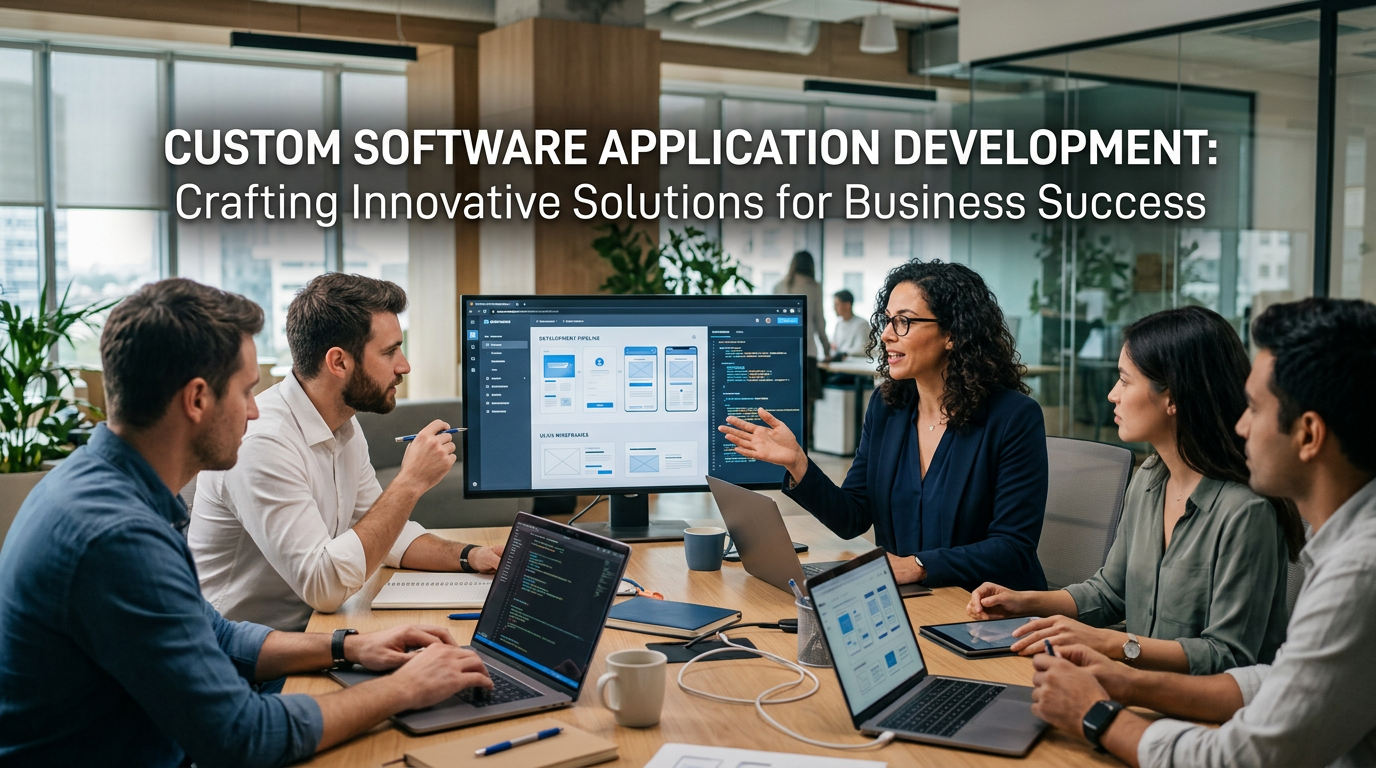
Introduction to Custom Software Application Development
In today's rapidly evolving digital landscape, businesses are increasingly turning to custom software application development to gain a competitive edge. By leveraging cutting-edge technologies, organizations can craft unique solutions tailored to their specific needs, ultimately driving efficiency, innovation, and growth. One of the most impactful technologies in this arena is Artificial Intelligence (AI), which offers a myriad of use cases and benefits for businesses.
AI in Custom Software Application Development
AI has the potential to revolutionize custom software development through automation, predictive analytics, and enhanced decision-making. By integrating AI into applications, businesses can streamline processes, reduce human error, and uncover insights that were previously inaccessible. Examples of AI-driven applications include intelligent chatbots, predictive maintenance systems, and personalized recommendation engines.
Practical Implementation of AI Solutions
Implementing AI solutions in custom software requires a strategic approach. Initially, businesses must identify key areas where AI can add value. This involves conducting a thorough needs assessment and defining specific objectives, such as improving customer service, optimizing supply chain operations, or enhancing data analysis capabilities.
The development process typically involves several stages, starting with the design and prototyping phase, where developers work closely with stakeholders to create a blueprint of the software. Next, the actual development phase occurs, during which developers code the software, integrate AI algorithms, and conduct initial testing. The deployment phase follows, where the solution is implemented into the business environment. Finally, ongoing maintenance and updates ensure the software remains effective and relevant.
Business Value of Custom AI Solutions
Custom AI solutions offer significant business value by enabling companies to optimize their operations and deliver superior customer experiences. For instance, AI-powered analytics can provide actionable insights into consumer behavior, allowing businesses to fine-tune their marketing strategies and improve sales conversions. Furthermore, AI-driven automation reduces operational costs by minimizing manual intervention in routine tasks.
An example of AI's business value can be seen in the retail sector, where predictive analytics helps manage inventory levels efficiently. By predicting demand fluctuations, businesses can reduce excess stock, lowering storage costs, and ensuring product availability.
Risks and Challenges
Despite the myriad benefits, implementing AI in custom software development is not without risks. One primary concern is data security, as AI systems often require access to sensitive information. Businesses must ensure robust security measures are in place to protect data integrity. Additionally, there is the challenge of integrating AI solutions with existing systems, which can be complex and time-consuming.
Another risk is the potential for AI bias, which can lead to inaccurate predictions and unfair decision-making. To mitigate this, businesses should implement measures to regularly audit and refine AI algorithms, ensuring they are equitable and accurate.
Workflows and Key Performance Indicators (KPIs)
Effective workflows are essential for successful AI implementation in custom software development. Typically, these workflows involve cross-departmental collaboration, with IT, operations, and management teams working together to define project objectives and timelines. Agile methodologies are often employed to facilitate adaptive planning and continuous improvement.
Key Performance Indicators (KPIs) play a crucial role in measuring the success of AI implementations. Common KPIs include return on investment (ROI), user adoption rates, system uptime, and the reduction of operational costs. By tracking these metrics, businesses can assess the effectiveness of their custom software solutions and make informed decisions about future enhancements.
Examples of Successful AI-Driven Custom Software Solutions
Several companies have successfully harnessed AI-driven custom software to achieve significant business outcomes. For example, a leading e-commerce platform implemented an AI-based recommendation engine, resulting in a 20% increase in sales conversions. In another case, a manufacturing company deployed an AI-powered predictive maintenance system, reducing equipment downtime by 30% and saving substantial costs on repairs.
These examples illustrate the transformative potential of AI in custom software application development, highlighting the importance of strategic implementation and ongoing optimization.
Conclusion
Custom software application development, powered by AI, offers businesses a pathway to innovation and success. By carefully planning and executing AI integrations, organizations can unlock new efficiencies, enhance customer experiences, and achieve measurable outcomes. As technology continues to evolve, the role of AI in custom software development will only grow, making it an indispensable tool for forward-thinking businesses.
Strategic Planning for AI Integration
For businesses to fully leverage AI in custom software applications, a strategic plan is crucial. This plan should encompass a clear understanding of the AI technologies available and how they align with the company's goals. It often begins with setting up a dedicated team that includes IT specialists, data scientists, and business analysts. This team will be responsible for evaluating potential AI tools and determining the best fit for the organization's needs.
Moreover, organizations should outline a roadmap for AI adoption, which includes pilot testing and gradual scaling. This phased approach allows businesses to assess the impact of AI solutions on a smaller scale before committing to full implementation, minimizing risks and ensuring resources are effectively utilized.
Training and Change Management
Introducing AI into custom software also requires a focus on change management and employee training. Employees must be adequately trained to work with new AI-driven tools to maximize their potential. Training sessions should cover the basics of AI, its benefits, and practical workshops to familiarize staff with the new software functionalities.
Change management strategies are essential to address potential resistance from employees who may be apprehensive about AI replacing human roles. Clear communication about the purpose of AI—augmenting human capabilities rather than replacing them—can help alleviate these concerns. Engaging employees early in the AI adoption process and soliciting their feedback can also foster a more receptive atmosphere.
Innovative AI Technologies to Consider
- Machine Learning (ML): Enables software to learn from data and improve its performance over time without explicit programming.
- Natural Language Processing (NLP): Allows software applications to understand and respond to human languages, making interactions more intuitive.
- Computer Vision: Provides the ability for systems to interpret and make decisions based on visual data from the world.
- Robotic Process Automation (RPA): Automates routine tasks such as data entry, allowing employees to focus on more strategic activities.
Each of these technologies offers distinct advantages that can be tailored to meet specific business requirements, enhancing the functionality and user experience of custom software applications.
Long-Term Considerations and Future Trends
As businesses adopt AI-driven custom software solutions, it's crucial to consider long-term implications and stay updated with future trends. One emerging trend is the integration of AI with Internet of Things (IoT) devices, which creates new opportunities for real-time data processing and decision-making. Businesses should also be aware of advancements in AI ethics and governance, ensuring that their use of AI aligns with ethical standards and complies with regulatory requirements.
Moreover, as AI technology continues to evolve, organizations should be prepared to adapt and iterate their AI solutions. This might involve regular updates to AI algorithms, expanding data sources, or even exploring new AI capabilities that could provide a competitive advantage.
Case Study: AI in Healthcare Custom Software
One notable example of successful AI integration in custom software is in the healthcare sector. A healthcare provider implemented an AI-driven patient management system that utilizes predictive analytics to forecast patient admissions and optimize resource allocation. This system improved patient care by reducing wait times and ensuring that medical staff and equipment were available as needed.
The implementation of this AI solution led to a 25% increase in operational efficiency and a significant enhancement in patient satisfaction scores. This case underscores the potential for AI to transform healthcare delivery and highlights the importance of targeted AI applications in achieving tangible business outcomes.
Conclusion
The journey toward AI-driven custom software application development is one filled with potential and challenges. By strategically planning, involving stakeholders, and embracing innovative technologies, businesses can unlock immense value. The future of custom software lies in its ability to seamlessly integrate AI, providing scalable, intelligent, and user-friendly solutions that drive success in a digital-first world.