
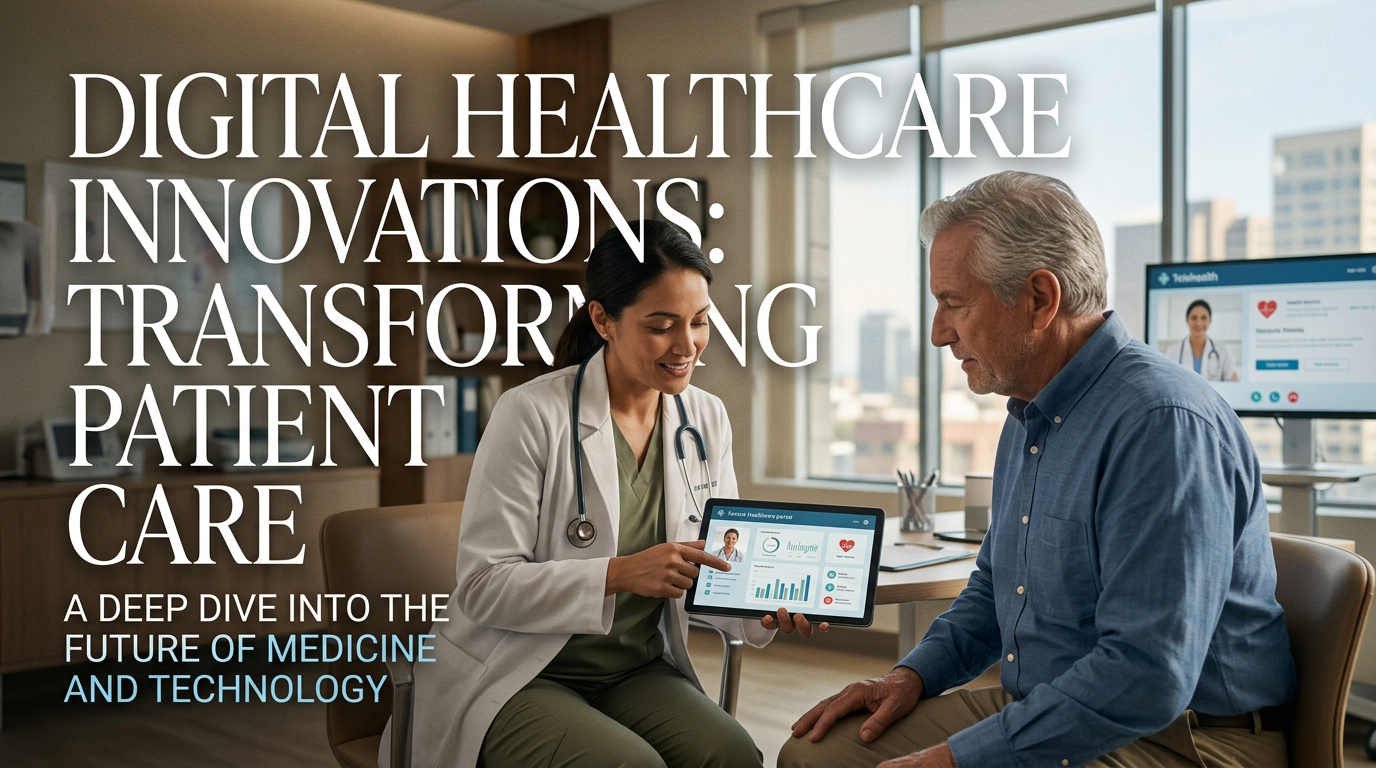
Introduction to Digital Healthcare Innovations
The digital healthcare sector has witnessed a significant transformation, primarily driven by the integration of Artificial Intelligence (AI) technologies. These innovations are radically altering patient care, improving clinical outcomes, and enhancing operational efficiencies in healthcare settings. AI solutions are being deployed to streamline workflows, enhance diagnostic accuracy, and personalize treatment plans, thereby reshaping the landscape of modern medicine.
AI Solution Use Cases in Digital Healthcare
Enhancing Diagnostic Precision
AI algorithms are being used to analyze complex medical data, including imaging results, to improve diagnostic accuracy. For instance, AI systems can detect patterns in radiology images that may be imperceptible to the human eye, enabling early detection of conditions like cancer. These capabilities are critical in reducing diagnostic errors and providing timely interventions.
Predictive Analytics for Patient Outcomes
Predictive analytics driven by AI can forecast patient outcomes based on historical data. Hospitals use these insights to identify patients at risk of complications, allowing for preemptive care and resource allocation. This not only improves patient outcomes but also optimizes hospital operations.
Virtual Health Assistants
AI-powered virtual health assistants are transforming patient engagement by providing real-time support and information. These digital assistants can answer patient queries, manage appointments, and monitor chronic conditions, facilitating continuous patient care outside traditional healthcare settings.
Implementation of AI in Healthcare Workflows
Implementing AI solutions in healthcare requires a strategic approach that involves several key steps:
Needs Assessment
The first step is to conduct a comprehensive needs assessment to identify specific areas where AI can add value. This involves analyzing current workflows and pinpointing inefficiencies that AI can address.
Data Integration and Management
Successful implementation demands seamless integration of AI with existing healthcare IT systems. This includes ensuring AI systems have access to high-quality, standardized data for training and analysis.
Training and Change Management
Healthcare professionals must be trained to use AI tools effectively. Change management strategies should be employed to facilitate the transition and encourage adoption across the organization.
Continuous Monitoring and Evaluation
Once implemented, AI solutions must be continuously monitored to ensure they deliver the desired outcomes. Feedback mechanisms should be established to refine and improve AI applications over time.
Business Value and Measurable Outcomes
AI in healthcare delivers significant business value, reflected in both qualitative and quantitative outcomes:
Cost Reduction and Efficiency Improvement
Automating routine tasks through AI reduces operational costs and improves efficiency. For example, AI can handle administrative tasks like scheduling and billing, allowing staff to focus on patient-centered activities.
Improved Patient Satisfaction
AI-driven solutions enhance patient experiences by providing personalized care and reducing wait times. This leads to higher patient satisfaction scores and improved retention rates.
Enhanced Clinical Decision-Making
AI provides clinicians with evidence-based insights that support decision-making, improving treatment outcomes. This is particularly beneficial in managing complex cases where data-driven insights can guide therapy choices.
Risks and Challenges of AI in Healthcare
Despite the benefits, there are inherent risks and challenges associated with AI implementation in healthcare:
Data Privacy and Security
Healthcare data is sensitive, and AI systems must comply with stringent data protection regulations. Ensuring data privacy and security is paramount to prevent breaches and maintain patient trust.
Bias and Ethical Concerns
AI algorithms can inadvertently perpetuate biases present in training data, leading to inequitable care. It is crucial to design AI systems that are fair and transparent, with mechanisms to identify and rectify biases.
Integration Complexity
The integration of AI into existing healthcare infrastructure can be complex and resource-intensive. It requires significant investment in technology and human capital to ensure seamless implementation.
Key Performance Indicators (KPIs) for AI in Healthcare
Monitoring the effectiveness of AI applications in healthcare can be achieved through specific KPIs:
Diagnostic Accuracy Rate
Assessing the accuracy of AI-aided diagnoses compared to traditional methods helps measure clinical effectiveness.
Time to Diagnosis
Reducing the time taken to reach a diagnosis is a critical KPI, indicating improved efficiency in patient care delivery.
Patient Satisfaction Scores
Patient feedback and satisfaction scores post-AI implementation offer insights into the perceived quality of care.
Conclusion
Digital healthcare innovations, powered by AI, are transforming patient care by enhancing diagnostic precision, improving operational efficiencies, and personalizing treatment plans. While the integration of AI in healthcare presents challenges, the potential benefits in terms of improved patient outcomes and operational performance are compelling. As the healthcare industry continues to embrace these technologies, careful implementation and continuous monitoring will be essential to maximize their impact.
Case Studies and Examples of AI in Action
Several healthcare institutions have successfully integrated AI technologies to transform patient care. These case studies exemplify the practical benefits and challenges of AI implementation.
AI-Driven Radiology in Action
At XYZ Hospital, AI software has been integrated into the radiology department to assist radiologists in analyzing mammograms. After one year of implementation, the hospital reported a 20% increase in early detection of breast cancer cases, demonstrating the efficacy of AI in enhancing diagnostic precision.
Predictive Analytics in Chronic Disease Management
An innovative use of AI predictive analytics can be seen at ABC Medical Center where algorithms analyze patient data to predict the likelihood of chronic disease exacerbation. This proactive approach has reduced hospital readmission rates by 15%, showcasing the potential of AI in improving patient outcomes and optimizing healthcare resources.
The Future of AI in Healthcare
The continuous evolution of AI technologies promises to further revolutionize healthcare. Emerging trends and technologies are poised to address current limitations and unlock new possibilities.
AI in Genomics
The integration of AI in genomics enables the analysis of vast genetic datasets to identify risk factors for diseases at an individual level. This personalized approach to medicine holds promise for more effective prevention and treatment strategies.
Advanced Robotics in Surgery
AI-powered robotic systems are being developed to assist surgeons in performing complex procedures with greater precision and reduced recovery times. These advancements represent a significant leap forward in surgical care.
Natural Language Processing (NLP) for Better Communication
NLP technologies are refining how healthcare providers interact with patients and document care. By converting spoken language into structured data, NLP facilitates more efficient information exchange and enhances the accuracy of medical records.
Addressing Challenges in AI Implementation
To fully realize the benefits of AI in healthcare, it is essential to address the current challenges and barriers to widespread adoption.
Regulatory Compliance and Standards
- Development of comprehensive regulatory frameworks to ensure AI systems meet safety and efficacy standards.
- Adoption of industry-wide standards for data exchange and interoperability.
Building Trust and Transparency
- Creating transparent AI models that stakeholders can understand and trust.
- Engaging patients and providers in discussions about AI applications and their implications.
Investing in Workforce Development
- Training healthcare professionals in AI technologies to enhance their skills and adaptability.
- Encouraging interdisciplinary collaboration between AI developers and healthcare practitioners.
Measuring Success: Advanced KPIs for AI in Healthcare
Beyond traditional KPIs, advanced metrics can offer deeper insights into the success of AI initiatives in healthcare.
Algorithmic Transparency Index
This KPI assesses how understandable and transparent AI algorithms are to end-users, contributing to increased trust and adoption.
AI Utilization Metrics
Measuring the frequency and context of AI tool usage helps gauge their integration into daily clinical practice and operational workflows.
Long-Term Patient Outcomes
Evaluating patient health outcomes over extended periods provides insights into the true impact of AI on patient care quality and longevity.
Conclusion and Future Directions
The journey of AI integration in healthcare is ongoing, with numerous opportunities and challenges ahead. The collaboration between technology developers, healthcare providers, and policymakers will be crucial in navigating this landscape. By focusing on transparency, trust, and continuous improvement, the healthcare industry can harness AI's transformative potential to deliver superior patient care.