
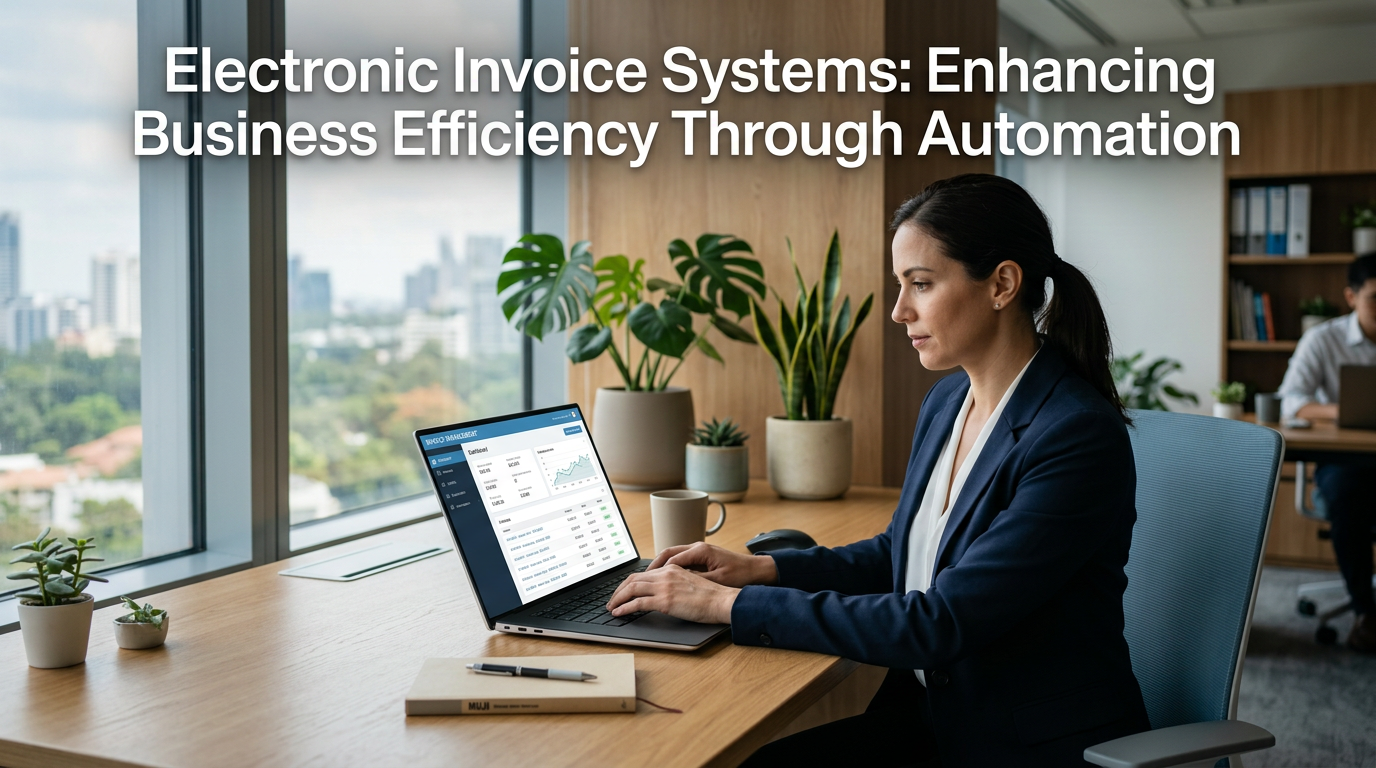
Introduction to Electronic Invoice Systems
In today's digital era, businesses are constantly seeking ways to improve efficiency and reduce operational costs. One significant advancement in this regard is the implementation of Electronic Invoice Systems (EIS). These systems leverage artificial intelligence (AI) to automate the invoicing process, providing businesses with a streamlined and efficient method of managing their financial transactions.
Understanding the Electronic Invoice System
An Electronic Invoice System is a digital solution that automates the creation, sending, and management of invoices. By replacing traditional paper-based methods, EIS allows businesses to process invoices faster, reduce errors, and enhance compliance with financial regulations. The integration of AI into these systems further enhances their capabilities by enabling intelligent data extraction, anomaly detection, and predictive analytics.
Key Features of Electronic Invoice Systems
- Automated Data Entry: AI algorithms extract data from invoices and input it into the system, reducing manual entry errors.
- Real-time Processing: Invoices are processed in real-time, ensuring timely payments and improved cash flow.
- Compliance Management: Systems are regularly updated to comply with local and international financial regulations.
- Secure Transactions: Enhanced security measures prevent unauthorized access and data breaches.
Implementing Electronic Invoice Systems
Steps for Successful Implementation
- Assess Business Needs: Evaluate current invoicing processes and identify specific pain points that an EIS can address.
- Select the Right Solution: Choose an EIS provider that offers the features required to meet your business needs.
- Integrate with Existing Systems: Ensure that the EIS integrates seamlessly with existing accounting and ERP systems.
- Train Staff: Provide comprehensive training to employees to ensure they can effectively use the system.
- Monitor and Optimize: Continuously monitor the system’s performance and make necessary adjustments to optimize its efficiency.
Business Value of Electronic Invoice Systems
The adoption of Electronic Invoice Systems offers numerous advantages for businesses, ranging from cost savings to improved operational efficiency.
Cost Reduction
By automating the invoicing process, businesses can significantly reduce costs associated with paper, printing, and postage. Additionally, the reduction in manual errors minimizes costly rework and penalties associated with non-compliance.
Improved Cash Flow
With real-time invoice processing, payments are accelerated, improving cash flow management. This efficiency ensures that businesses maintain healthy liquidity and can reinvest in growth opportunities.
Enhanced Accuracy and Compliance
AI-driven data extraction ensures high accuracy levels, reducing discrepancies and disputes. Furthermore, compliance management features ensure that businesses adhere to financial regulations, avoiding costly fines and legal issues.
Risks and Challenges
While the benefits are significant, businesses must be aware of potential risks when implementing EIS.
Data Security
As with any digital solution, data security is a critical concern. Ensuring that the EIS provider has robust security measures in place is essential to protect sensitive financial information.
Integration Issues
Integrating the EIS with existing systems can be challenging. It requires careful planning and execution to ensure smooth data flow across platforms.
Workflows and KPIs for Electronic Invoice Systems
Standard Workflow
- Invoice Generation: Automatically create invoices based on sales data.
- Approval Process: Route invoices for approval via predefined workflows.
- Delivery: Send invoices electronically to customers.
- Payment Tracking: Monitor payment status and send reminders as necessary.
- Reconciliation: Automatically match invoices with payments and update the financial records.
Key Performance Indicators (KPIs)
- Invoice Processing Time: Measure the time taken to process an invoice from creation to payment.
- Accuracy Rate: Track the percentage of invoices processed without errors.
- Cost Per Invoice: Calculate the total cost associated with processing each invoice.
- Payment Cycle Time: Monitor the average time to receive payment following invoice issuance.
Case Study: Successful EIS Implementation
To illustrate the benefits of EIS, consider a case study of a mid-sized manufacturing company that implemented electronic invoicing to replace its manual process. Within six months, the company reported a 30% reduction in processing costs and a 40% improvement in payment cycle time. These improvements allowed the company to redirect savings towards strategic initiatives, further boosting its competitive edge.
Conclusion
Electronic Invoice Systems represent a substantial evolution in financial management within businesses. By automating and optimizing the invoicing process, EIS not only enhances operational efficiency but also provides significant cost savings. While challenges exist, particularly related to data security and system integration, the benefits far outweigh the risks. As more companies adopt these systems, the role of AI in streamlining financial operations will continue to grow, leading to smarter, more efficient business practices.
Future Trends in Electronic Invoice Systems
As technology continues to evolve, Electronic Invoice Systems are poised to incorporate even more advanced features. These enhancements will further streamline processes and provide deeper insights into financial data.
Integration with Blockchain Technology
One emerging trend is the integration of blockchain technology with EIS. Blockchain offers a secure, immutable ledger for transactions, which can enhance transparency and traceability in the invoicing process. This integration can further reduce the risk of fraud and improve trust between business partners.
Machine Learning for Predictive Analytics
Machine learning is set to play a crucial role in Electronic Invoice Systems by providing predictive analytics capabilities. These systems can analyze historical data and predict payment patterns, helping businesses anticipate cash flow needs and make informed financial decisions.
Global Adoption and Regulatory Considerations
With globalization, businesses are increasingly engaging in international transactions. The adoption of EIS on a global scale requires understanding and adherence to diverse regulatory environments.
Adapting to Local Regulations
EIS providers must ensure their systems are adaptable to comply with various local and international financial regulations. This adaptability is critical to avoid legal pitfalls and ensure seamless cross-border transactions.
Standardization Efforts
Efforts are being made towards standardizing electronic invoicing formats and practices. Such standardization can facilitate smoother integration across different markets and reduce barriers to global trade.
Additional Case Studies
Case Study: Retail Industry
A leading retail chain implemented an Electronic Invoice System to streamline its invoicing process across multiple locations. By adopting EIS, the company achieved a 25% reduction in invoice processing time and improved supplier relationships due to faster payment cycles.
Case Study: Healthcare Sector
In the healthcare sector, a hospital network utilized EIS to manage its complex billing system. The automation of invoicing reduced errors associated with manual billing, leading to a 20% decrease in claim rejections and speeding up the revenue cycle.
Building a Business Case for EIS
Before implementing an Electronic Invoice System, businesses must develop a solid business case to justify the investment. This involves analyzing current workflows, estimating potential cost savings, and projecting efficiency gains.
Identifying Key Stakeholders
Engaging key stakeholders such as finance teams, IT departments, and senior management is crucial for gaining buy-in and ensuring successful implementation. Their input can help tailor the system to meet specific business needs.
Measuring Return on Investment (ROI)
Tracking the ROI of an Electronic Invoice System involves evaluating both tangible and intangible benefits. These include reduced processing costs, improved payment cycles, and enhanced compliance, which all contribute to a positive financial impact.
User Experience and Interface Design
The design of an Electronic Invoice System's user interface plays a significant role in user adoption and satisfaction.
User-Friendly Design
A clean and intuitive interface ensures that employees can easily navigate the system, minimizing the learning curve and reducing the need for extensive training.
Customization and Flexibility
Offering customizable features allows businesses to tailor the EIS to their specific workflows and preferences, enhancing overall efficiency and user satisfaction.
Conclusion: The Road Ahead
The future of Electronic Invoice Systems looks promising as businesses continue to embrace digital transformation. By leveraging advancements such as blockchain and machine learning, EIS will become even more integral to financial operations. As companies navigate this evolving landscape, those that successfully integrate these technologies will likely see enhanced efficiency, compliance, and profitability, solidifying their competitive position in the marketplace.