
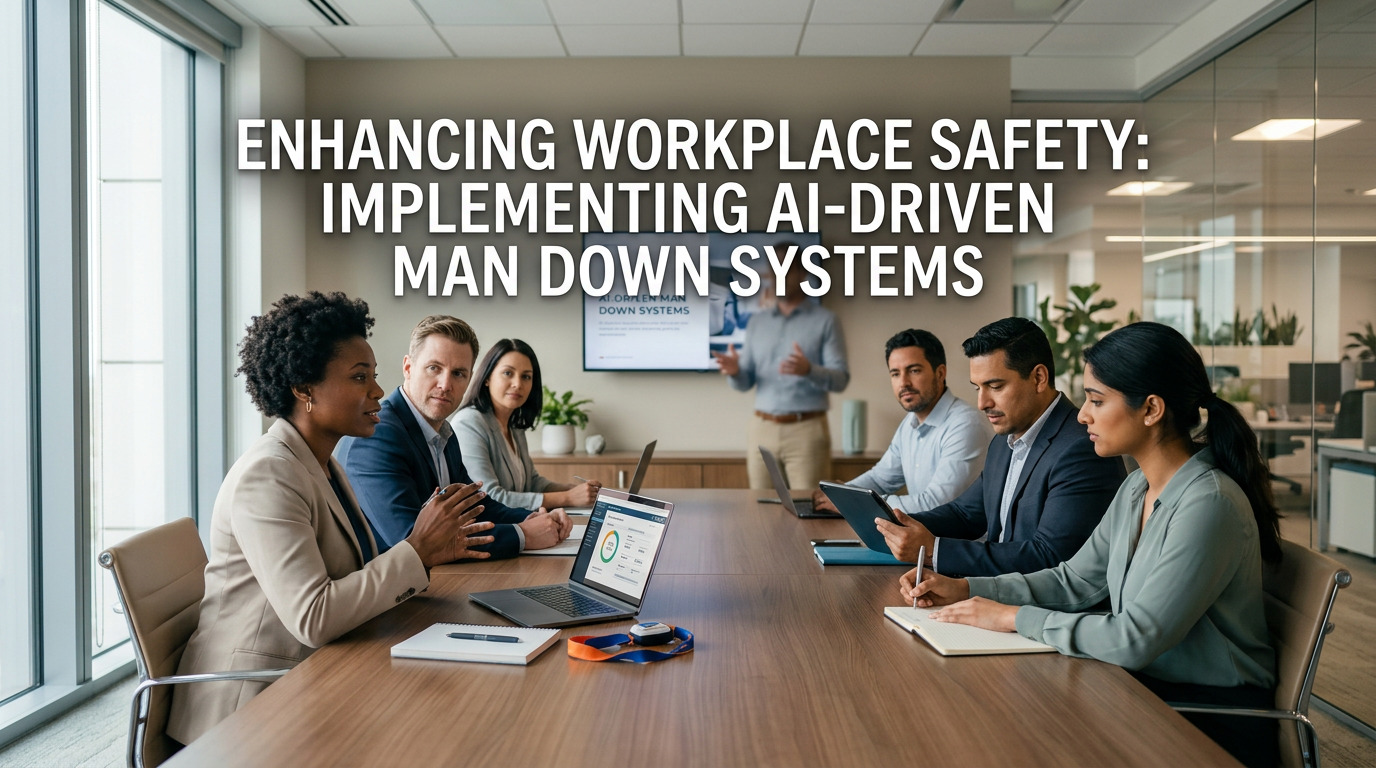
Introduction to AI-Driven Man Down Systems
In today's fast-paced industrial environment, ensuring workplace safety is paramount. The integration of AI-driven Man Down systems has revolutionized the way organizations approach safety protocols, particularly in industries with high-risk environments such as construction, mining, and manufacturing. These systems are designed to detect when an employee is incapacitated or has fallen, triggering immediate alerts to initiate emergency responses.
The Role of AI in Man Down Systems
Artificial Intelligence plays a crucial role in enhancing the capabilities of Man Down systems. By utilizing machine learning algorithms, these systems can differentiate between normal and abnormal movement patterns, ensuring that alerts are raised only when necessary. This minimizes false alarms and ensures that emergency resources are deployed efficiently. AI algorithms can also be trained to recognize patterns that precede an incident, providing predictive insights that can prevent accidents before they occur.
Practical Implementation of Man Down Systems
Implementing Man Down systems involves several key steps. First, organizations must conduct a thorough risk assessment to identify areas where such systems would be most beneficial. Next, the selection of appropriate technology is critical. Wearable devices equipped with sensors are commonly used, capable of monitoring an individual's motion, orientation, and vital signs. These devices communicate with a centralized system that leverages AI to analyze data in real-time.
Once the technology is in place, integration with existing safety protocols is necessary. This involves configuring the system to align with emergency response procedures, ensuring seamless communication between the Man Down system and response teams. Training employees on how to use the devices and respond to alerts is also a vital component of successful implementation.
Business Value of Man Down Systems
The business value of implementing AI-driven Man Down systems is substantial. Firstly, they significantly enhance employee safety, which is a critical priority for any organization. By reducing the incidence of workplace accidents, companies can avoid costly legal liabilities and compensation claims. Additionally, a safer work environment leads to improved employee morale and productivity, as workers feel more secure in their roles.
From a financial perspective, these systems can lead to reduced insurance premiums due to a lower risk profile. Furthermore, the data collected by Man Down systems can provide valuable insights into workplace conditions and employee behavior, informing future safety improvements and operational efficiencies.
Key Performance Indicators (KPIs) for Man Down Systems
To measure the effectiveness of Man Down systems, organizations should establish clear KPIs. These may include the number of incidents detected and responded to, the time taken to respond to alerts, and the number of false alarms. Monitoring the reduction in workplace accidents and near-misses provides a direct metric of system impact. Additionally, employee feedback on system usability and perceived safety improvements can offer qualitative data to complement quantitative measures.
Risks and Challenges
While the benefits of Man Down systems are clear, organizations must be aware of potential risks and challenges. The initial cost of implementation can be significant, requiring investment in technology and training. Additionally, the reliance on technology raises concerns about system failures and data privacy. Ensuring robust cybersecurity measures and regular system maintenance is essential to mitigate these risks.
Moreover, it is crucial to manage the change process effectively. Employees may be resistant to adopting new technologies, necessitating comprehensive training and communication to ensure buy-in and compliance.
Case Study: Successful Implementation of Man Down Systems
Consider the example of a multinational mining company that implemented AI-driven Man Down systems across its operations. After conducting a risk assessment, the company deployed wearable sensors that monitored workers' movements and vital signs. The data collected was analyzed by AI algorithms, which successfully reduced false alarms by 30% and improved emergency response times by 40%.
The company reported a 25% decrease in workplace accidents, leading to significant cost savings on insurance premiums and legal fees. Employee surveys indicated a 15% increase in perceived safety, illustrating the system's positive impact on workplace culture.
Conclusion
Implementing AI-driven Man Down systems offers organizations a robust solution to enhance workplace safety. By leveraging advanced technologies and integrating them into existing safety protocols, companies can protect their workforce while realizing substantial business value. As technology advances, the capabilities of these systems will only improve, offering even greater opportunities for ensuring employee safety in high-risk environments.
Innovative Workflows for Optimized Safety Management
Developing efficient workflows around Man Down systems is essential for maximizing their effectiveness. Organizations should design a comprehensive workflow that includes regular system checks, real-time monitoring, and a clear escalation process. Continuous monitoring allows safety managers to identify potential hazards and respond proactively. These workflows should be revisited periodically to incorporate lessons learned and technological advancements.
Integration with Emergency Protocols
Successful implementation requires seamless integration with an organization's existing emergency protocols. This includes setting up predefined alert hierarchies and ensuring that response teams are well-versed in the procedures. Regular drills and simulations can help maintain readiness and ensure that all personnel understand their roles in an emergency situation.
Incorporating Predictive Analytics
An advanced workflow can be enhanced by incorporating predictive analytics, allowing organizations to foresee potential incidents and take preventive measures. By analyzing historical data, AI can identify patterns or trends that suggest an increased risk of a Man Down event, allowing preemptive adjustments in staffing, shifts, or operational procedures.
- Routine System Audits: Regular audits are essential for verifying system reliability and accuracy, ensuring data integrity, and identifying areas for improvement.
- Continuous Training Programs: Ongoing training sessions keep staff updated on system functionalities and best practices, ensuring preparedness and swift response.
- Feedback Loop Mechanism: Establishing a feedback loop helps in gathering insights from employees, which can be used to refine system settings and improve user experience.
Enhancing Business Resilience Through AI-Driven Systems
Beyond safety, Man Down systems contribute to broader business resilience. By safeguarding human resources and minimizing downtime due to accidents, organizations can ensure continuity in operations. This resilience is particularly crucial in industries like construction and mining, where workforce availability directly impacts project timelines and profitability.
Strategic Decision-Making and Risk Mitigation
Data generated by Man Down systems can inform strategic decision-making, helping organizations to better allocate resources and design safer work environments. Risk mitigation strategies can be developed by analyzing incident trends and identifying high-risk areas within operations. This proactive approach not only enhances safety but also optimizes operational efficiency.
Enhanced Stakeholder Confidence
Implementing robust safety measures like Man Down systems can significantly enhance the confidence of investors, clients, and regulatory bodies. Demonstrating a commitment to employee safety and advanced technological adoption can differentiate a company in competitive industries, fostering trust and strengthening stakeholder relationships.
Future Trends in Man Down Technology
The field of Man Down technology is continuously evolving, with advancements opening new possibilities for workplace safety. Emerging trends include the integration of IoT devices, enhanced wearable technology, and smarter algorithms capable of more accurate predictive analyses.
IoT Integration
As IoT technology becomes more sophisticated, its integration with Man Down systems is expected to accelerate. IoT-enabled devices can offer more granular data collection and real-time connectivity, enhancing the system's overall responsiveness and accuracy.
Evolution of Wearable Technology
Wearable devices are becoming lighter, more comfortable, and capable of capturing a broader range of biometric data. Future developments may include non-invasive monitoring of stress levels or fatigue, providing additional layers of protection for workers in demanding environments.
Advanced AI Capabilities
With the continuous advancement of AI, future Man Down systems will likely feature more sophisticated algorithms that can handle complex datasets, offering even greater predictive insights and reducing the rate of false positives.
- Augmented Reality (AR) Interfacing: Adding AR interfaces could provide real-time guidance to workers during emergencies, enhancing situational awareness and decision-making.
- Blockchain for Data Integrity: Utilizing blockchain could improve data security and integrity, ensuring that all safety data is verified and immutable.
- Collaborative Robotics: Collaborative robots equipped with AI could assist in emergency scenarios by providing immediate aid or facilitating communication with remote teams.
As Man Down technology progresses, its potential to transform workplace safety continues to grow, promising ever more innovative ways to protect employees and enhance organizational resilience.