
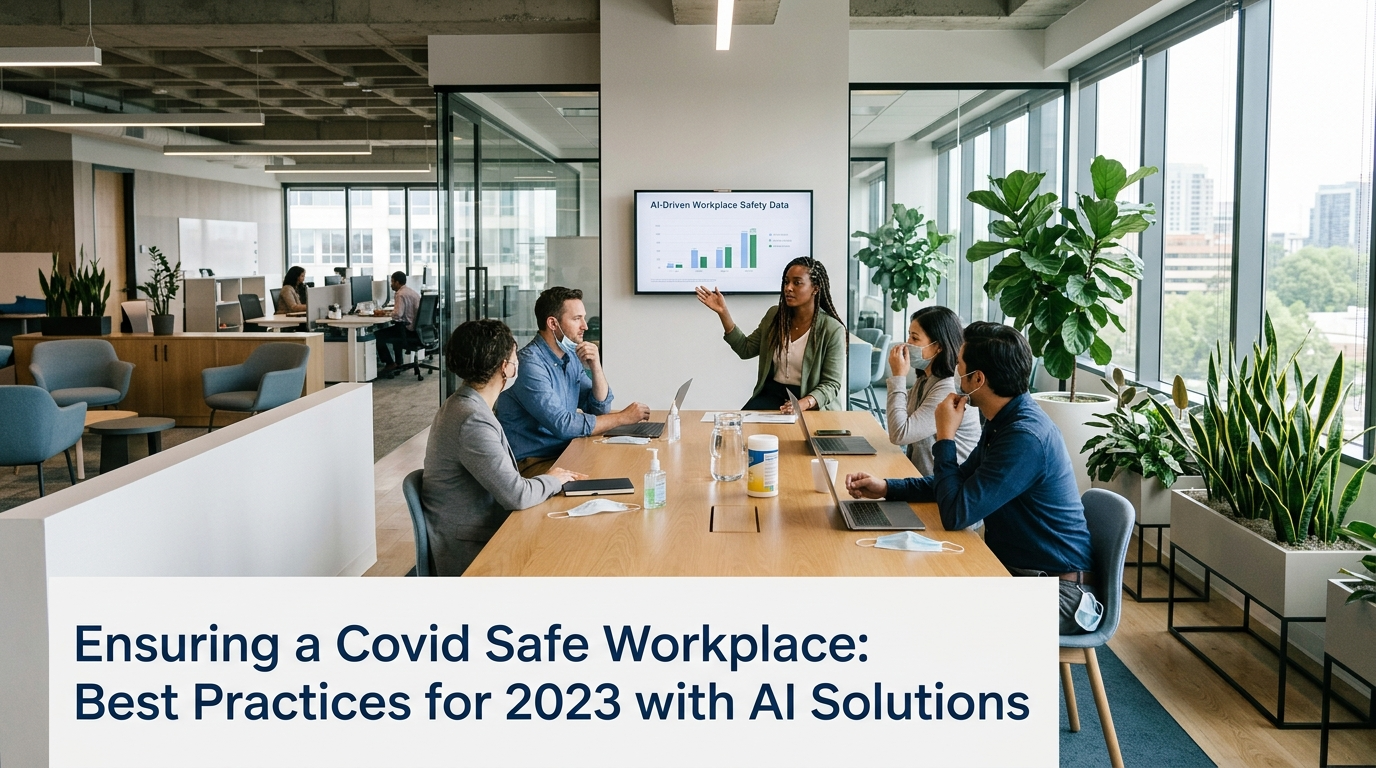
Introduction to AI-Driven Covid Safety Solutions
The Covid-19 pandemic has reshaped the way businesses operate, highlighting the need for enhanced safety measures in the workplace. As 2023 unfolds, organizations continue to seek effective strategies to ensure a Covid-safe environment for their employees, customers, and stakeholders. Artificial Intelligence (AI) has emerged as a pivotal tool in this endeavor, offering innovative solutions that enhance safety protocols and streamline operations. This article delves into the practical implementation of AI solutions for creating a Covid-safe workplace, examining their business value, potential risks, workflows, key performance indicators (KPIs), and real-world examples.
AI Solution Use Cases for a Covid-Safe Workplace
AI-powered solutions can be leveraged across various facets of workplace safety. One primary use case is the deployment of AI-enabled thermal cameras to monitor body temperatures of employees and visitors. These cameras can quickly identify individuals with elevated temperatures, triggering alerts for further health checks. Additionally, AI algorithms can analyze video feeds for social distancing compliance, ensuring that employees adhere to spacing guidelines within shared spaces.
Another critical application of AI is in contact tracing. By integrating AI with employee badges or mobile apps, companies can effectively track interactions and potential exposure risks. This not only curtails the spread of the virus but also provides invaluable data for health authorities if contact tracing becomes necessary.
Implementation Strategies
Implementing AI solutions requires careful planning and integration with existing systems. Organizations should begin by identifying the specific areas where AI can augment safety measures. For instance, integrating sensor data with AI analytics platforms can provide real-time insights into workplace safety dynamics.
The next step involves selecting the right AI tools and technologies. Businesses should assess the scalability and compatibility of AI solutions with their current infrastructure. Collaborating with AI vendors can further ensure that the implementation aligns with business objectives and safety regulations.
Employee training is also crucial for successful implementation. Providing staff with the necessary skills to operate and interpret AI tools ensures seamless adoption and maximizes the technology's potential benefits.
Business Value and Measurable Outcomes
AI-driven Covid safety solutions offer significant business value by enhancing workplace safety, boosting employee confidence, and reducing operational disruptions. By minimizing health risks, companies can maintain productivity and avoid costly shutdowns due to Covid outbreaks.
The financial benefits of adopting AI solutions are also notable. While initial investment costs may be significant, the long-term savings from preventing virus transmission and maintaining business continuity are substantial. Moreover, businesses can leverage AI-generated data to optimize resource allocation and improve overall operational efficiency.
Potential Risks and Mitigation Strategies
Despite the advantages, implementing AI solutions comes with potential risks. Privacy concerns are paramount, as AI systems often require access to sensitive employee health data. To mitigate these risks, organizations must establish robust data protection policies and ensure compliance with relevant regulations, such as GDPR.
There is also the risk of over-reliance on AI systems. While AI provides valuable insights, it should complement, not replace, human judgment. Maintaining a balanced approach ensures that AI tools enhance decision-making without undermining human oversight.
Workflows and KPIs for a Safe Workplace
Establishing clear workflows is essential for integrating AI solutions into workplace safety protocols. A typical workflow might involve the following steps: data collection (e.g., thermal imaging or contact tracing), data analysis (using AI algorithms), alert generation (notifying relevant personnel of potential risks), and response coordination (implementing necessary health checks or safety measures).
Key performance indicators (KPIs) for measuring the success of AI solutions include the reduction in Covid-related incidents, employee compliance with safety protocols, and the speed and accuracy of AI-generated risk alerts. Tracking these KPIs enables businesses to assess the effectiveness of their AI implementations and make data-driven improvements.
Real-World Examples
Several organizations have successfully implemented AI-driven Covid safety measures. For instance, a multinational corporation integrated AI-powered thermal cameras at its office entrances, reducing the risk of infected individuals entering the premises. The company also used AI to analyze employee movement within office spaces, ensuring adherence to social distancing guidelines.
Another example is a healthcare facility that utilized AI for contact tracing and risk assessment. By analyzing staff and patient interactions, the facility was able to swiftly identify potential exposure incidents and implement targeted health interventions, thereby preventing widespread transmission.
Conclusion
As businesses navigate the complexities of maintaining a Covid-safe workplace in 2023, AI solutions offer a powerful toolkit for enhancing safety protocols and sustaining operational continuity. Through strategic implementation and continuous refinement, organizations can harness the full potential of AI to protect their workforce, bolster confidence, and drive business success in a post-pandemic world.
Employee Engagement and Communication
Effective employee engagement and communication are crucial when incorporating AI solutions for a Covid-safe workplace. Transparent communication helps employees understand the purpose and benefits of AI tools, thereby increasing acceptance and compliance. Regular updates through newsletters, virtual town halls, or internal communication platforms ensure that employees remain informed about new safety measures and any changes to existing protocols.
Moreover, involving employees in the decision-making process can enhance buy-in and provide valuable insights for refining AI implementations. Feedback mechanisms, such as surveys or focus groups, allow employees to express concerns and suggest improvements, fostering a collaborative environment.
Training Programs
To complement AI systems, organizations must invest in comprehensive training programs. These programs should focus on educating employees about the functionality and benefits of AI tools, as well as the importance of data privacy and security. Training can be delivered through online modules, workshops, or hands-on sessions, tailored to different roles and proficiency levels.
- Technical Training: For employees directly involved with AI systems, technical training ensures they understand how to operate and troubleshoot AI tools efficiently.
- Awareness Sessions: General awareness sessions for all staff members can demystify AI technologies and highlight their role in enhancing workplace safety.
Integration with Other Technologies
Integrating AI solutions with existing workplace technologies can amplify their effectiveness. For example, combining AI with IoT devices, such as smart sensors and wearable technology, can provide more granular data for monitoring workplace conditions and employee health. Cloud-based platforms facilitate seamless data sharing and real-time analysis, enabling swift responses to potential threats.
Interoperability among various technologies ensures a cohesive system where AI insights inform broader business strategies and safety policies. Organizations should work closely with technology partners to ensure that integration processes align with their overall digital transformation goals.
Future Trends in AI-Driven Safety
Looking forward, advancements in AI technology will continue to shape workplace safety strategies. Predictive analytics and machine learning models will become more sophisticated, enabling organizations to anticipate and mitigate risks before they materialize. Additionally, AI-driven personalization will allow safety protocols to be tailored to individual employee needs, enhancing both effectiveness and satisfaction.
- Predictive Analytics: By analyzing historical data and identifying patterns, predictive analytics can forecast potential outbreaks or high-risk situations, allowing proactive measures.
- Personalized Safety Protocols: AI can tailor safety measures to individual needs, considering factors such as job roles, health conditions, and work environments.
As these trends evolve, businesses must remain agile, continuously evaluating and adapting their AI strategies to leverage new capabilities and maintain a safe and productive workplace.
Addressing Ethical Considerations
As AI technologies become more integrated into workplace safety, addressing ethical considerations is paramount. Organizations must ensure that their AI implementations respect employee rights and freedoms. This includes safeguarding against potential biases in AI algorithms that could lead to unfair treatment or discrimination.
Moreover, transparency in how AI systems operate and the data they collect can help build trust. Employees should have access to information about what data is being collected, how it is used, and who has access to it. Clear policies and guidelines should be established to govern the ethical use of AI tools in the workplace.
Ensuring Inclusivity
Ensuring that AI-driven safety protocols are inclusive is another important aspect. AI solutions should be designed to accommodate diverse needs, ensuring accessibility for all employees, including those with disabilities. For instance, AI systems should offer multiple avenues for interaction, such as voice commands or screen readers, to facilitate ease of use for everyone.
- Bias Mitigation: Regular audits of AI algorithms can help identify and rectify biases, ensuring fair and equitable treatment for all employees.
- Inclusive Design: Involve a diverse group of stakeholders in the design and testing phases to ensure that AI solutions cater to a wide range of needs and preferences.
Future-Proofing AI Solutions
Future-proofing AI solutions involves staying ahead of technological advancements and regulatory changes. Organizations should continuously monitor the evolving landscape of AI technologies and associated regulations to ensure compliance and relevance.
Building a flexible AI infrastructure that can adapt to new developments is crucial. This might involve implementing modular AI systems that can be easily upgraded or expanded as new capabilities and requirements emerge. By staying proactive and adaptable, businesses can ensure their AI-driven workplace safety measures remain robust and effective.
Collaborative Innovation
Collaborative innovation with industry peers, technology partners, and regulatory bodies can drive the development of cutting-edge AI solutions. Engaging in industry forums and partnerships can provide valuable insights into emerging trends and best practices, fostering a culture of continuous improvement.
- Industry Partnerships: Collaborate with other organizations to share knowledge and resources, accelerating the development and adoption of innovative AI solutions.
- Regulatory Engagement: Work with regulatory bodies to ensure that AI implementations align with current and future legal requirements, minimizing compliance risks.