
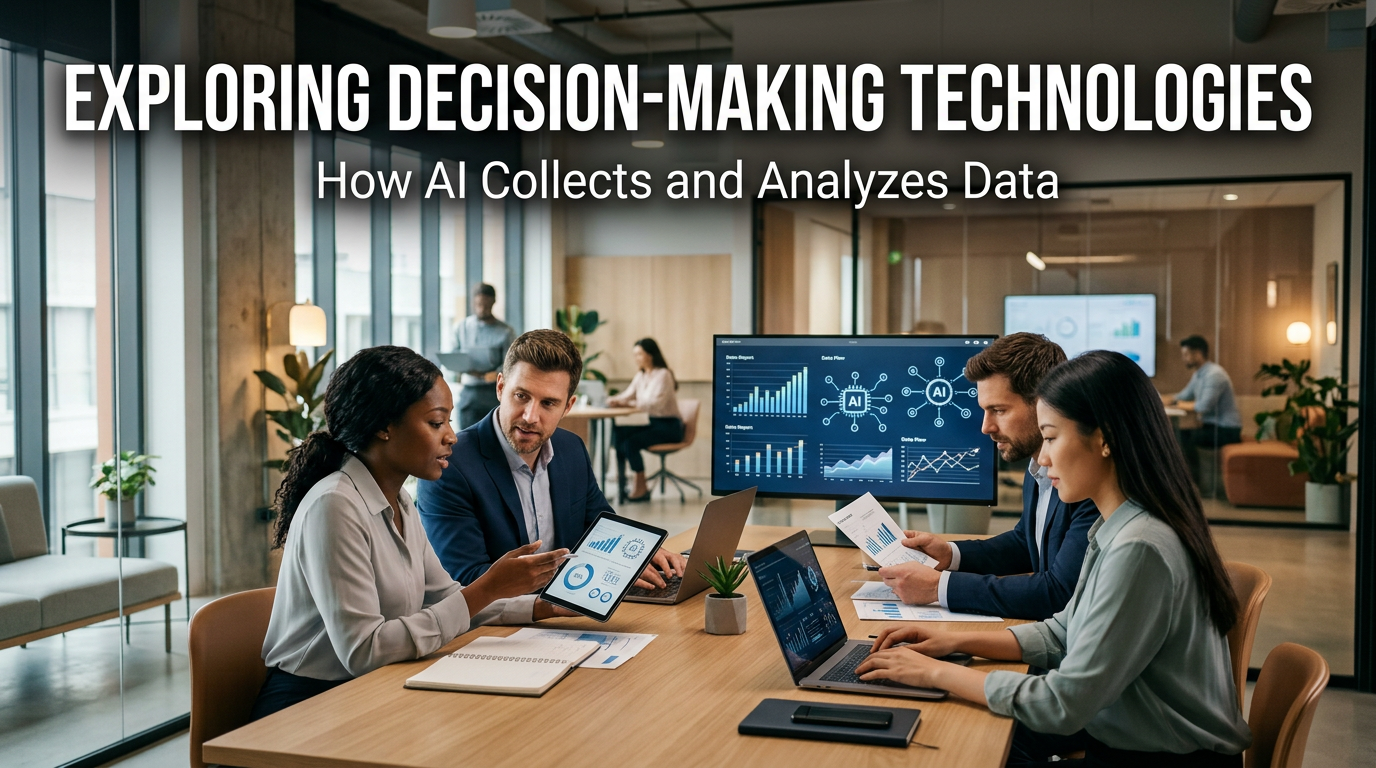
Introduction to Decision-Making Technologies
In today’s rapidly evolving business landscape, decision-making technologies have become pivotal. Companies need to harness data-driven insights to stay competitive and relevant. Artificial Intelligence (AI) is at the forefront of these technologies, enabling businesses to collect, analyze, and leverage data effectively. This article explores the use cases, implementation processes, business value, and potential risks associated with AI-driven decision-making solutions.
Understanding AI Data Collection and Analysis
AI technologies are designed to mimic human intelligence, enabling machines to perform tasks such as data collection and analysis autonomously. This ability is crucial for decision-making processes as it allows organizations to sift through vast amounts of data efficiently and accurately. AI systems utilize machine learning algorithms, neural networks, and natural language processing to gather insights from structured and unstructured data sources.
Practical Implementation of AI Solutions
To implement AI solutions effectively, businesses must follow a structured approach. The process typically begins with identifying the decision-making challenges and the specific data needs. Next, organizations should evaluate their existing data infrastructure and integrate AI technologies that align with their strategic objectives. Companies often employ cloud-based AI platforms to ensure scalability and flexibility in data management.
For instance, a retail company might use AI to analyze customer purchasing patterns to optimize inventory management. By deploying AI algorithms, the company can predict demand fluctuations and adjust stock levels accordingly.
Workflows in AI-Driven Decision-Making
AI-driven decision-making involves a series of workflows that streamline data processing and enhance decision accuracy. The typical workflow includes data acquisition, data preprocessing, model training, and results interpretation.
- Data Acquisition: AI systems collect data from various sources such as databases, sensors, and external APIs. The quality and relevance of the data are crucial for accurate analysis.
- Data Preprocessing: This step involves cleaning, transforming, and organizing data into a usable format. AI algorithms rely on high-quality data to function effectively.
- Model Training: Machine learning models are trained using historical data to identify patterns and make predictions.
- Results Interpretation: The final output is analyzed and interpreted to provide actionable insights that inform decision-making.
Business Value of AI in Decision-Making
The integration of AI in decision-making processes enhances business value in several ways. Firstly, AI improves operational efficiency by automating routine tasks and reducing the likelihood of human error. Additionally, AI enables real-time analytics, providing businesses with up-to-date insights that facilitate quicker and more informed decisions.
Moreover, AI-driven solutions can lead to significant cost savings. By optimizing resource allocation and reducing waste, companies can achieve higher profitability. For example, in the financial sector, AI can be used to detect fraudulent activities, thereby reducing losses and improving compliance with regulatory standards.
Measurable Outcomes and KPIs
To assess the effectiveness of AI-driven decision-making technologies, businesses must establish Key Performance Indicators (KPIs) that align with their strategic goals. Common KPIs include:
- Accuracy of Predictions: The precision of AI-generated forecasts compared to actual outcomes.
- Reduction in Decision Time: The time saved in making strategic decisions due to automated data analysis.
- Operational Cost Savings: The decrease in costs associated with improved efficiency and reduced errors.
- Customer Satisfaction: Improvements in customer experience as a result of personalized and timely solutions.
Risks and Challenges of AI Implementation
While AI offers significant advantages, it also presents certain risks and challenges. One major concern is data privacy and security, as AI systems often require access to sensitive information. Businesses must ensure compliance with data protection regulations and implement robust security measures.
Additionally, there is the risk of algorithmic bias, where AI systems may produce biased outcomes due to inherent biases in the training data. Companies must adopt ethical AI practices to mitigate these risks and ensure fairness in decision-making.
Conclusion
AI-driven decision-making technologies are transforming how businesses operate, offering unparalleled opportunities for growth and efficiency. By effectively collecting and analyzing data, AI enables organizations to make informed, data-driven decisions that enhance competitive advantage. However, successful implementation requires careful planning, a focus on data quality, and a commitment to ethical practices. As AI continues to evolve, it will undoubtedly play an increasingly integral role in shaping the future of decision-making across industries.
Real-World Examples of AI in Decision-Making
AI's impact on decision-making is evident across various industries, each leveraging its capabilities to solve complex challenges and improve outcomes. Here are some notable examples:
Healthcare Sector
In healthcare, AI technologies are used to enhance patient care and operational efficiency. AI algorithms analyze medical records and imaging data to assist in diagnosing diseases more accurately and swiftly. For example, AI systems can identify early signs of conditions like cancer by comparing new images with vast datasets of past cases.
Manufacturing Industry
Manufacturers use AI to optimize production lines, predict maintenance needs, and improve product quality. AI-driven predictive maintenance systems analyze data from machinery sensors to forecast equipment failures before they occur, reducing downtime and repair costs.
Financial Services
AI is transforming the financial services industry by enhancing fraud detection, personalizing customer experiences, and automating trading processes. Machine learning models analyze transaction patterns to identify anomalies that may indicate fraudulent activities, ensuring security and trust.
Integrating AI into Existing Systems
Successful integration of AI into existing business systems requires careful planning and execution. Organizations should follow these key steps:
- Assessment and Alignment: Evaluate current processes and technology infrastructure. Ensure that AI solutions align with business goals and can integrate seamlessly with existing systems.
- Change Management: Implement a change management strategy to ensure stakeholders understand the value of AI and are prepared for the transition. This includes training staff and addressing any concerns related to job displacement.
- Continuous Monitoring: Once integrated, continuously monitor AI systems to ensure they are functioning as expected and delivering the desired outcomes. Adjust models and algorithms as necessary to maintain accuracy and relevance.
Future Trends in AI Decision-Making
As AI technology advances, several emerging trends are set to further influence decision-making processes:
Explainable AI (XAI)
Explainable AI focuses on making AI systems more transparent and understandable to humans. This trend addresses the 'black box' issue, allowing businesses to comprehend how AI arrives at specific decisions and ensuring accountability.
AI and IoT Integration
The combination of AI and the Internet of Things (IoT) is creating intelligent environments capable of real-time decision-making. Smart cities, for instance, utilize AI and IoT to optimize energy usage, manage traffic flows, and enhance public safety.
Ethical AI Development
With increasing scrutiny on AI ethics, companies are prioritizing ethical considerations in AI development. This includes eliminating biases, ensuring data privacy, and promoting fairness in AI-driven decisions.
Addressing the Risks of AI
To fully leverage AI's potential while mitigating its risks, organizations must adopt a proactive approach:
Data Governance
Establish strong data governance frameworks to oversee data collection, storage, and usage. This ensures compliance with regulations and protects against unauthorized access.
Bias Mitigation Strategies
Implement bias mitigation strategies by using diverse datasets and regularly auditing AI models. Involve diverse teams in AI development to provide varied perspectives and reduce the risk of biased outcomes.
Transparent AI Practices
Promote transparency by documenting AI processes and decision pathways. This builds trust with stakeholders and ensures AI systems are used responsibly.
Conclusion
The integration of AI in decision-making is reshaping industries by enhancing efficiency, accuracy, and strategic insights. While the journey presents challenges, the potential benefits of AI are immense. By focusing on ethical practices, robust data management, and continuous innovation, businesses can harness AI's power to drive success and maintain a competitive edge in an ever-evolving digital landscape.