
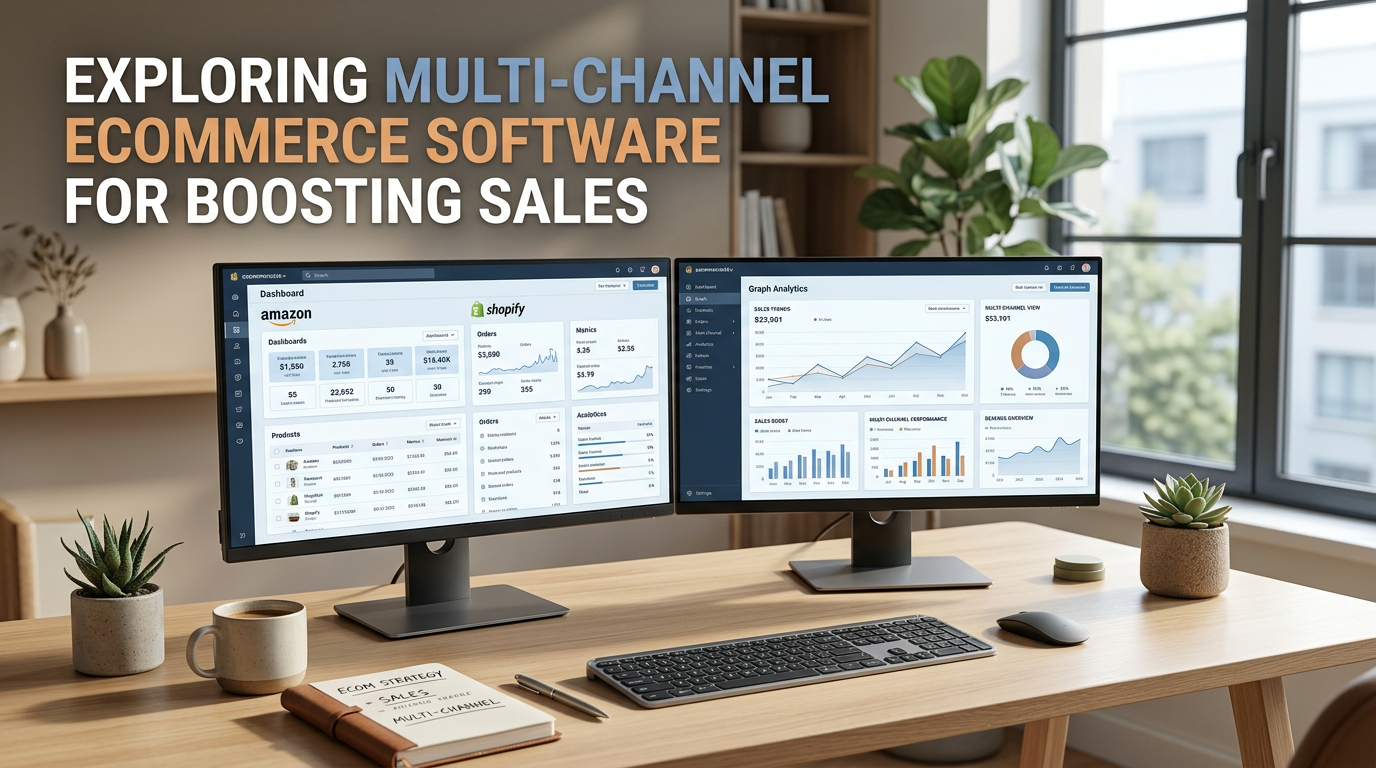
Introduction to Multi-Channel Ecommerce Software
In today's competitive ecommerce landscape, businesses need robust solutions to stay ahead. Multi-channel ecommerce software, particularly those enhanced by AI, is revolutionizing how businesses operate. These solutions offer significant advantages in streamlining operations across various platforms, improving customer engagement, and ultimately boosting sales.
Understanding AI in Multi-Channel Ecommerce
AI-powered multi-channel ecommerce software integrates Artificial Intelligence to automate, analyze, and optimize ecommerce operations across multiple sales channels. This technology enables businesses to manage their presence across platforms like Amazon, eBay, Shopify, and more from a single interface, enhancing efficiency and decision-making.
Implementation of AI Solutions
The implementation of AI in multi-channel ecommerce involves a few strategic steps. Initially, businesses must assess their current operations and identify areas where AI can be beneficial. This could involve automating inventory management, personalizing customer interactions, or predicting sales trends. Choosing the right software that aligns with business goals is crucial, followed by a thorough integration process to ensure seamless operation across all channels.
Practical Implementation Steps
Step 1: Needs Assessment
Begin with a comprehensive analysis of your current ecommerce operations. Identify pain points within your multi-channel strategy that could benefit from AI intervention.
Step 2: Selecting the Right Software
Research and select an AI-powered multi-channel ecommerce platform that fits your specific needs. Consider features like real-time analytics, automated reporting, and compatibility with existing systems.
Step 3: Integration and Training
Integrate the chosen software into your existing systems. This may require technical expertise to ensure smooth data migration and system interoperability.
Step 4: Continuous Optimization
Leverage AI to continuously analyze performance data. Use insights to refine strategies and improve operations, ensuring the software adapts to changing business needs.
Business Value of AI-Powered Ecommerce Solutions
The business value derived from multi-channel ecommerce software is substantial. By centralizing operations, businesses can reduce overhead costs associated with managing multiple platforms independently. Additionally, AI-driven insights facilitate data-driven decisions, optimizing pricing strategies and promotional efforts.
Enhanced Customer Experience
AI solutions enable personalized customer interactions by analyzing customer behavior and preferences. This leads to more efficient targeting and tailored marketing campaigns, improving customer satisfaction and loyalty.
Increased Operational Efficiency
Automation of repetitive tasks such as order processing and inventory management allows for more efficient use of resources. This not only reduces the potential for human error but also frees up human capital for more strategic initiatives.
Risks Associated with AI Solutions
Despite the benefits, there are risks associated with AI implementation in multi-channel ecommerce. Data privacy concerns are paramount, as AI systems often require access to sensitive customer information. Ensuring compliance with regulations such as GDPR is crucial.
Key Performance Indicators (KPIs)
Monitoring the success of AI-powered multi-channel ecommerce solutions involves tracking key performance indicators. These include:
- Sales Growth: Measure the increase in sales volume across all channels.
- Customer Retention Rate: Assess the effectiveness of personalized engagements in retaining customers.
- Operational Costs: Evaluate reductions in costs associated with channel management.
- Inventory Turnover: Monitor efficiency in inventory management and order fulfillment.
Examples of Successful AI Implementations
Several companies have successfully implemented AI in their multi-channel ecommerce strategies. For instance, a leading apparel brand integrated AI to streamline its inventory management and saw a 30% reduction in out-of-stock occurrences, significantly boosting sales.
Another example is a home goods retailer that utilized AI to personalize its customer interactions. By analyzing browsing patterns and purchase history, they tailored marketing efforts, resulting in a 25% increase in customer retention.
Conclusion
AI-powered multi-channel ecommerce software offers transformative potential for businesses looking to enhance their sales and operational efficiency. By implementing these solutions, companies can optimize their processes, offer personalized customer experiences, and make data-driven decisions. However, careful consideration of risks and continuous monitoring of KPIs are essential to harnessing the full benefits of this technology.
Integrating AI with Existing Ecommerce Systems
Integrating AI into existing ecommerce systems requires careful planning and execution. Companies must ensure compatibility with current technologies and facilitate a seamless transition to avoid disrupting ongoing operations. This integration can be achieved through APIs, middleware solutions, or custom software development, depending on the complexity and requirements of the existing infrastructure.
Data Synchronization and Management
One of the critical challenges in integrating AI solutions is ensuring data synchronization across multiple channels. Businesses need to implement robust data management strategies to maintain data integrity and consistency. This involves setting up automated processes for data collection, validation, and updating to ensure that real-time information is available for decision-making.
Training and Support for Staff
Successful implementation of AI in ecommerce also involves training staff to use new tools and systems efficiently. Providing adequate support and resources can help employees adapt to changes more quickly and maximize the benefits derived from AI-powered solutions. This might include workshops, online tutorials, or on-the-job training sessions tailored to specific roles within the company.
Future Trends in AI-Powered Ecommerce
As AI technology continues to evolve, new trends are emerging in the ecommerce sector. One such trend is the increased use of chatbots and virtual assistants, which provide instant customer service and support. These AI-driven tools can handle a wide range of customer inquiries, from product information to order tracking, reducing the need for human intervention.
AI and Augmented Reality (AR) in Shopping
The integration of AI with augmented reality (AR) is another promising trend. Retailers are beginning to utilize AR to offer virtual try-ons and immersive shopping experiences. This technology enhances customer engagement by allowing shoppers to visualize products in their own space, leading to increased conversion rates and customer satisfaction.
Predictive Analytics for Demand Forecasting
AI's ability to process vast amounts of data quickly makes it an invaluable tool for predictive analytics. By leveraging historical sales data, market trends, and consumer behavior patterns, AI can provide accurate demand forecasts, helping businesses optimize inventory levels and reduce the risk of overstocking or stockouts.
Addressing Data Privacy and Security Concerns
With the rise of AI in ecommerce, data privacy and security have become critical issues. Businesses must implement robust security measures to protect sensitive customer information from breaches and unauthorized access. This includes employing encryption, secure data storage solutions, and regular security audits. Additionally, transparency in data usage policies can help build trust with customers, ensuring compliance with privacy regulations and fostering a positive brand image.
Case Studies of AI-Driven Success
Real-world examples of AI-powered multi-channel ecommerce solutions can provide valuable insights into best practices and potential challenges. A notable case study involves a global electronics retailer that used AI to integrate its online and offline channels seamlessly. By implementing machine learning algorithms to analyze customer data, the retailer improved its omnichannel marketing strategy, resulting in a 20% increase in overall sales.
Another example is a popular beauty brand that leveraged AI for personalized product recommendations. By analyzing customer preferences and purchase history, the brand was able to offer tailored suggestions, enhancing the shopping experience and increasing conversion rates by 15%.
Conclusion and Call to Action
AI-powered multi-channel ecommerce software represents a significant opportunity for businesses looking to expand their reach and improve operational efficiency. By carefully selecting and integrating the right AI solutions, companies can enhance customer experiences, streamline processes, and stay competitive in a rapidly evolving market. As businesses continue to adopt these technologies, staying informed about new developments and trends will be crucial for sustained success. Companies are encouraged to explore AI innovations actively, invest in staff training, and prioritize data security to fully leverage the benefits of multi-channel ecommerce software.