
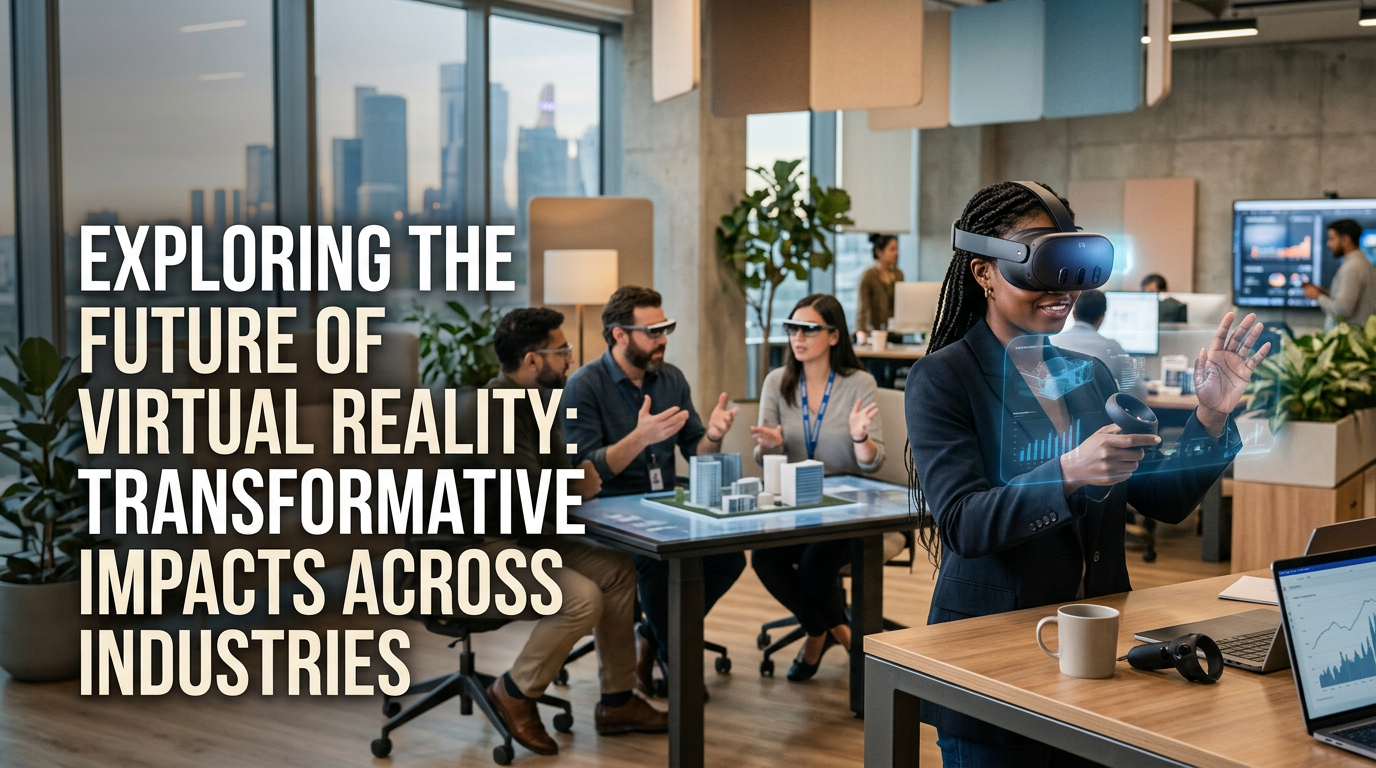
Introduction to Virtual Reality in Modern Industries
In recent years, Virtual Reality (VR) has emerged as a groundbreaking technology with the potential to transform various industries. As AI solutions continue to advance, VR is no longer confined to gaming and entertainment but is increasingly being integrated into sectors such as healthcare, education, real estate, and manufacturing. This article explores the transformative impacts of VR across industries, focusing on practical implementation, business value, risks, workflows, KPIs, and examples.
AI-Powered Virtual Reality: Practical Implementation
Understanding the Technology
Virtual Reality immerses users in a simulated environment, often requiring specialized equipment like VR headsets and motion capture devices. The integration of AI into VR systems enhances functionality by providing more realistic interactions, intelligent data processing, and personalized user experiences. AI algorithms can adapt virtual environments in real-time based on user behavior, making VR applications more responsive and effective.
Steps for Implementing VR Solutions
- Identify Use Cases: Determine where VR can add the most value within your industry. For example, in healthcare, VR can be used for surgical simulations and mental health therapy.
- Develop a Strategy: Formulate a strategy that includes objectives, target audience, and key performance indicators (KPIs) to measure success.
- Select Suitable Technology: Choose appropriate VR hardware and software that align with your business needs.
- Integrate AI Capabilities: Implement AI algorithms to enhance the VR experience, offering adaptive and personalized interactions.
- Test and Iterate: Conduct pilot tests to gather feedback, refine the system, and ensure seamless integration into existing workflows.
Business Value of VR Across Industries
Healthcare: Revolutionizing Patient Care
In healthcare, VR offers transformative potential by providing immersive training for medical professionals, enhancing patient care through virtual diagnostics, and offering therapeutic treatments for mental health conditions. For instance, VR simulations allow surgeons to practice complex procedures, reducing the risk of errors in real-life surgeries.
Education: Engaging Learning Experiences
VR transforms education by creating interactive and engaging learning environments. Students can explore historical sites, conduct science experiments, or participate in immersive language lessons, enhancing knowledge retention and student motivation.
Real Estate: Enhancing Property Visualization
VR allows potential buyers to tour properties from anywhere in the world, offering a realistic sense of space and design. This technology streamlines the real estate process, reducing time and costs associated with physical property visits.
Risks and Challenges of VR Implementation
Despite its advantages, VR implementation presents several challenges. The cost of VR equipment and development can be prohibitive for some businesses. Additionally, ensuring user comfort and avoiding motion sickness is crucial. Data privacy is also a concern, particularly in applications that collect sensitive user information.
Establishing Workflows and KPIs for VR Solutions
Optimizing Workflows
Integrating VR into business operations requires establishing efficient workflows. This involves training employees to use VR systems, maintaining the technology, and continually updating content to ensure relevancy and effectiveness.
Key Performance Indicators
- User Engagement: Measure the time users spend in VR environments and their interaction levels.
- Learning Outcomes: In educational settings, assess improvements in student performance and knowledge retention.
- Cost Efficiency: Calculate savings in time and resources compared to traditional methods.
- Customer Satisfaction: Gather user feedback to gauge satisfaction and areas for improvement.
Examples of Successful VR Implementations
Case Study: VR in Automotive Manufacturing
Automotive companies like Ford have integrated VR to design and prototype vehicles, reducing the time and cost associated with physical mock-ups. By simulating the assembly line in a virtual environment, they identify potential issues and optimize production processes.
Case Study: VR in Mental Health Therapy
Startups like Limbix are using VR to provide exposure therapy for anxiety disorders. By immersing patients in controlled environments, therapists can safely guide them through therapeutic exercises, showing significant improvements in treatment outcomes.
Conclusion
The future of Virtual Reality, powered by AI solutions, holds immense potential across various industries. By understanding its practical applications, business value, and implementation strategies, companies can leverage VR to enhance operations and deliver innovative experiences. While challenges exist, the measurable outcomes and transformative impacts make VR a valuable investment for forward-thinking businesses.
Innovative Applications of Virtual Reality
Beyond the conventional uses, VR is being adapted for innovative applications that expand its utility. These applications leverage VR's immersive capabilities to push boundaries and create unique experiences across different domains.
Retail: Enhancing Customer Experience
Retailers are using VR to create virtual shopping experiences, allowing customers to browse and purchase products as if they were in a physical store. These experiences are personalized with AI-driven recommendations, enhancing customer satisfaction and increasing sales conversion rates.
Tourism: Virtual Travel Experiences
VR offers potential travelers the opportunity to experience destinations before booking a trip. This technology enables users to explore landmarks, hotels, and local attractions, leading to more informed travel decisions and a rise in travel bookings.
Developing VR Content with AI
Creating engaging VR content is essential for successful implementation. AI can significantly enhance this process by automating content generation and personalizing experiences for individual users.
AI-Driven Content Creation
AI algorithms can generate realistic virtual environments by analyzing data and creating 3D models. This reduces time and cost associated with traditional content creation methods. Additionally, AI can personalize content by adjusting scenarios based on user preferences and interactions, ensuring a tailored experience.
User-Centric Design and Feedback
AI tools can analyze user feedback and interaction data to optimize VR experiences continually. This iterative design process improves content quality and ensures relevance, fostering greater user engagement and satisfaction.
Addressing VR Implementation Risks
While the potential of VR is immense, addressing its inherent risks is crucial for successful deployment. Understanding these risks enables businesses to develop mitigation strategies and ensure sustainable implementation.
Mitigating Motion Sickness
Motion sickness remains a barrier to VR adoption. Developers are working on enhancing frame rates and reducing latency to minimize discomfort. Additionally, designing user interfaces that align with natural human movements can help reduce the risk of motion sickness.
Ensuring Data Privacy and Security
As VR applications gather extensive user data, ensuring robust data privacy and security measures is vital. Businesses must comply with data protection regulations and implement secure data handling practices to protect user information.
Future Trends in Virtual Reality
The evolution of VR technology is driven by ongoing research and development, promising exciting future trends that will shape industries.
Integration with Augmented Reality
Combining VR with Augmented Reality (AR) creates Mixed Reality (MR) experiences, offering seamless transitions between virtual and physical environments. This integration enhances applications in fields like training, where realistic scenarios can be overlaid onto real-world settings.
Accessibility and Affordability Innovations
As technology advances, VR hardware is becoming more affordable and accessible, promoting widespread adoption. Companies are focusing on developing lightweight, wireless headsets to enhance user convenience and comfort.
Conclusion: Embracing a VR-Driven Future
As Virtual Reality continues to evolve, its impact across industries will only grow. By embracing VR and effectively addressing its challenges, businesses can unlock new opportunities for innovation, efficiency, and customer engagement. The strategic implementation of VR, powered by AI, positions companies at the forefront of technological advancement, ready to lead in a VR-driven future.
VR in Workforce Training and Development
Virtual Reality is revolutionizing the way organizations approach workforce training and development. By creating immersive learning environments, VR enables employees to gain hands-on experience in a safe and controlled setting, significantly enhancing skill acquisition and retention.
Simulating Real-World Scenarios
Incorporating VR into training programs allows for the simulation of real-world scenarios that employees may encounter in their roles. For instance, VR can simulate high-risk environments for training emergency responders or complex machinery operation for manufacturing workers, reducing the risk of accidents and improving overall competency.
Benefits for Employee Training
- Enhanced Engagement: VR's immersive quality captures learners' attention, leading to higher engagement levels compared to traditional training methods.
- Immediate Feedback: VR training modules can provide instant feedback on performance, enabling learners to make real-time adjustments and improve their skills more effectively.
- Scalability: VR training can be easily scaled to accommodate large numbers of employees, ensuring consistent training across diverse geographical locations.
- Cost Reduction: By reducing the need for physical training materials and locations, VR can significantly cut down on training-related expenses.
Evaluating the Success of VR Implementations
To maximize the benefits of Virtual Reality, businesses must evaluate the success of VR implementations through a comprehensive set of metrics and feedback mechanisms. This involves not only measuring tangible business outcomes but also capturing user experiences and satisfaction levels.
Feedback Collection and Analysis
Regularly collecting feedback from users is crucial for identifying areas of improvement and optimizing VR applications. Surveys, interviews, and user interaction analytics can provide valuable insights into user satisfaction and engagement levels, guiding future enhancements and strategic decisions.
Measuring Business Outcomes
Businesses should track key performance indicators such as return on investment (ROI), process efficiency improvements, and customer acquisition rates to assess the broader impact of VR solutions. These metrics can highlight the value VR brings to organizational objectives and justify continued investment in the technology.