
Introduction
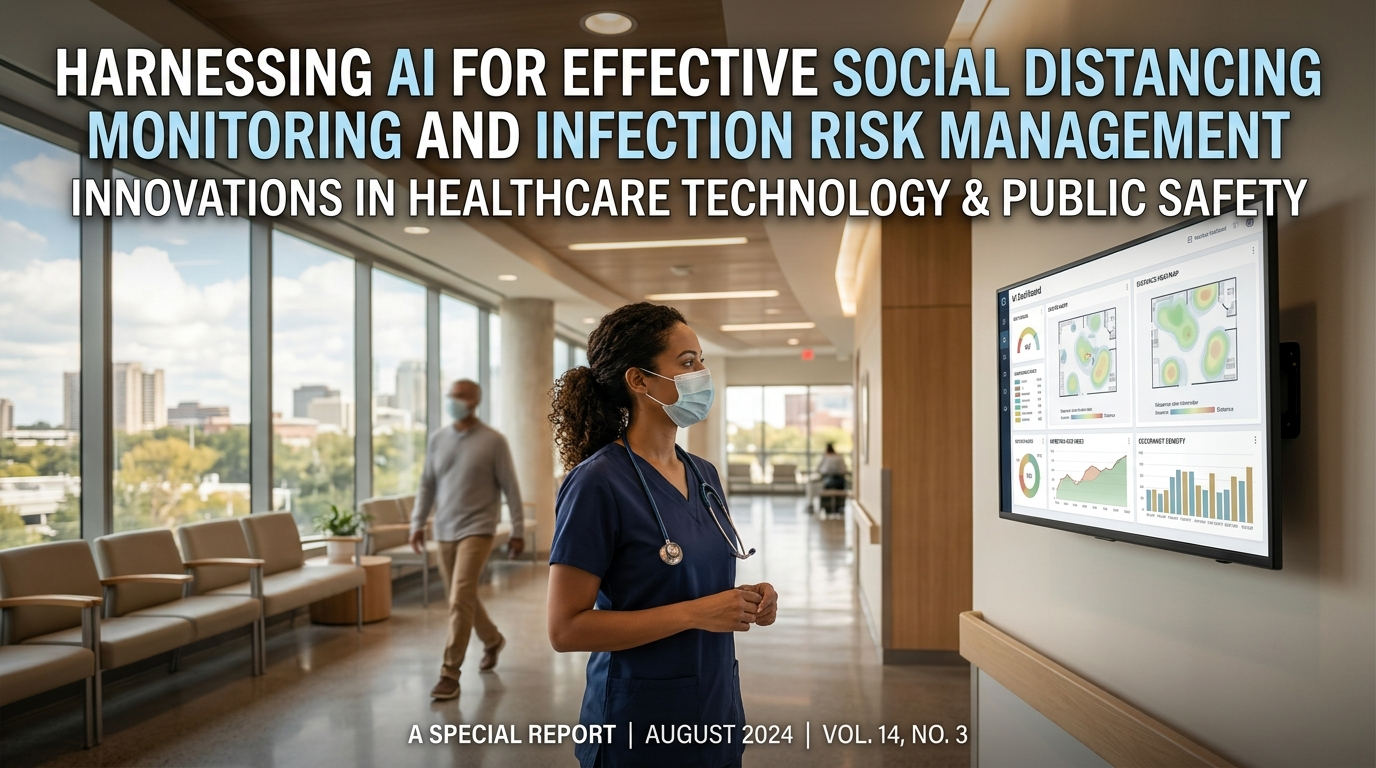
In the wake of global health challenges, ensuring public safety has become a priority for governments and businesses alike. Social distancing has emerged as a critical strategy in mitigating the spread of infectious diseases. To enforce this effectively, advanced technologies such as Artificial Intelligence (AI) have been leveraged, providing innovative solutions for social distancing monitoring and infection risk management. This article delves into the practical implementation of AI solutions, examines their business value, potential risks, and measurable outcomes.
AI Solutions for Social Distancing Monitoring
AI-driven social distancing monitoring solutions utilize computer vision, machine learning, and data analytics to observe and analyze human interactions in real-time. These systems are often integrated with existing security cameras to monitor areas, ensuring compliance with social distancing guidelines. By detecting the proximity between individuals, AI systems can alert management of potential risks, thereby facilitating immediate intervention.
Practical Implementation
Implementing AI solutions for social distancing involves several key steps. Initially, businesses need to ensure their infrastructure supports AI technology. This includes having adequate camera systems and a robust IT network. Next, AI models are trained to recognize human shapes and calculate distances accurately. Continuous monitoring and periodic updates of these models are necessary to adapt to changing guidelines and environments. Additionally, integrating these systems with existing security frameworks enhances their utility, allowing for seamless data flow and reporting.
Business Value
The business value of AI-driven social distancing solutions is multifaceted. Firstly, these solutions help organizations comply with government regulations, avoiding potential fines and reputational damage. Secondly, they enhance workplace safety, reassuring employees and customers about their well-being. Thirdly, AI systems can reduce costs associated with manual monitoring, as they require minimal human intervention once operational. Finally, businesses can gain insights into spatial dynamics, helping them optimize layouts and improve customer experience.
Risks and Challenges
While AI solutions offer significant advantages, they are not without risks. Privacy concerns are paramount, as constant surveillance may infringe on individual rights. Businesses must ensure compliance with data protection laws and implement measures to anonymize data. Additionally, the accuracy of AI models can be affected by environmental factors such as lighting and camera angles, requiring ongoing calibration and maintenance. There is also a risk of over-reliance on technology, potentially leading to complacency in adhering to safety measures.
Risk Mitigation Strategies
To mitigate these risks, businesses should adopt a transparent approach, informing stakeholders of surveillance practices and data usage. Regular audits and compliance checks can ensure adherence to legal standards. Moreover, employing a hybrid approach that combines AI monitoring with human oversight can enhance reliability, as humans are adept at interpreting complex social cues that machines might miss.
Workflows and KPIs
Effective implementation of AI solutions requires well-defined workflows. These typically involve data collection, analysis, and action. Cameras capture footage, which is then processed by AI algorithms to detect social distancing breaches. Alerts are sent to relevant personnel who take corrective actions. Key Performance Indicators (KPIs) for these systems include accuracy of detection, response time to alerts, reduction in breach incidents, and compliance levels. Regular KPI reviews enable businesses to refine their strategies and improve overall efficacy.
Examples of Successful Implementation
A notable example is the deployment of AI solutions in retail environments. Stores have used AI to monitor customer movements, ensuring shopping aisles are not overcrowded and checkout lines maintain adequate distance. In corporate settings, businesses have employed AI to manage office layouts and employee interactions, promoting a safer work environment. These implementations have resulted in measurable outcomes such as increased compliance rates and enhanced customer confidence.
Conclusion
AI-driven social distancing monitoring solutions represent a crucial tool in managing infection risks. By offering real-time insights and facilitating prompt action, these systems enhance public safety and support business continuity. However, the success of these solutions depends on careful implementation, ongoing maintenance, and a balanced approach that respects privacy and legal standards. As technology evolves, AI's role in infection risk management is likely to expand, providing even more sophisticated tools for ensuring public health.
Technological Advancements and Integration
As technology continues to evolve, the integration of advanced AI components into social distancing monitoring systems is becoming increasingly sophisticated. New developments in deep learning algorithms and sensor technologies are enhancing the accuracy and efficiency of these systems. For instance, advanced motion sensors and high-definition cameras can now capture data with greater precision, allowing AI to detect subtle social cues and interactions that may have been missed previously.
Seamless System Integration
Integrating AI solutions with existing business technology infrastructure requires careful planning and execution. Companies must ensure that AI systems are compatible with current IT frameworks, which may involve updating or replacing outdated hardware. Cloud-based solutions can offer scalability and flexibility, making it easier for organizations to adapt to changing social distancing requirements and increasing data loads. Moreover, integration with enterprise resource planning (ERP) systems can streamline operations and facilitate data-driven decision-making.
Ethical Considerations and Public Perception
Incorporating AI solutions for social distancing monitoring raises important ethical considerations. The deployment of surveillance technologies can lead to public skepticism, particularly if individuals feel their privacy is being compromised. To address these concerns, businesses must prioritize transparency and communication. Public awareness campaigns that highlight the benefits and safeguards of AI monitoring can help alleviate concerns and foster public trust. It's essential to engage with stakeholders, including employees, customers, and privacy advocates, to ensure ethical standards are upheld.
Balancing Privacy and Safety
Finding the right balance between privacy and safety is crucial when implementing AI-driven monitoring systems. Anonymizing data and employing data minimization strategies can help address privacy issues. Additionally, businesses should consider implementing opt-in policies where possible, allowing individuals to consent to data collection and usage. By establishing clear guidelines and protocols, organizations can demonstrate their commitment to protecting personal information while prioritizing public health.
Future Trends in AI-Driven Monitoring
As AI technology continues to advance, future trends in social distancing monitoring are likely to include more personalized and adaptive solutions. Machine learning algorithms are expected to become more adept at recognizing patterns and predicting potential risks, offering proactive rather than reactive measures. Furthermore, the integration of AI with other emerging technologies, such as the Internet of Things (IoT) and 5G connectivity, will enhance the capabilities of monitoring systems, providing faster and more reliable data transmission.
Customization and Scalability
Future AI solutions will likely offer greater customization and scalability to meet the specific needs of different industries and environments. Tailored solutions that account for unique spatial layouts and organizational structures will enable businesses to maximize the effectiveness of their monitoring efforts. Additionally, scalable systems that can be easily expanded or reduced in response to fluctuating demands will ensure long-term sustainability and cost-effectiveness.
Industry-Specific Applications
Different industries have varying requirements when it comes to implementing social distancing measures. In healthcare settings, for example, AI systems can be used to monitor patient and staff interactions, ensuring that critical areas such as waiting rooms and treatment areas adhere to distancing guidelines. In the hospitality sector, AI-driven solutions can manage crowd control in venues such as restaurants, hotels, and event spaces, enhancing guest safety and experience.
Transportation and Public Spaces
Transportation systems, including airports, train stations, and public transit, can benefit significantly from AI monitoring solutions. By analyzing passenger flow and density, these technologies can help manage boarding processes, reduce congestion, and improve overall safety in high-traffic areas. Similarly, in public spaces such as parks and recreational areas, AI can monitor visitor numbers and ensure compliance with distancing measures, contributing to community health and well-being.
Conclusion
The adoption of AI-driven social distancing monitoring solutions is transforming the way businesses and public institutions manage infection risks. By leveraging advanced technologies, organizations can enhance safety, ensure compliance, and gain valuable insights into human behavior and interactions. However, the success of these initiatives depends on thoughtful implementation, continuous improvement, and a commitment to ethical standards. As we move forward, the collaboration between technology providers, policymakers, and the public will be essential in shaping a future where AI plays a pivotal role in safeguarding public health.