
Introduction to Computer Vision Processing
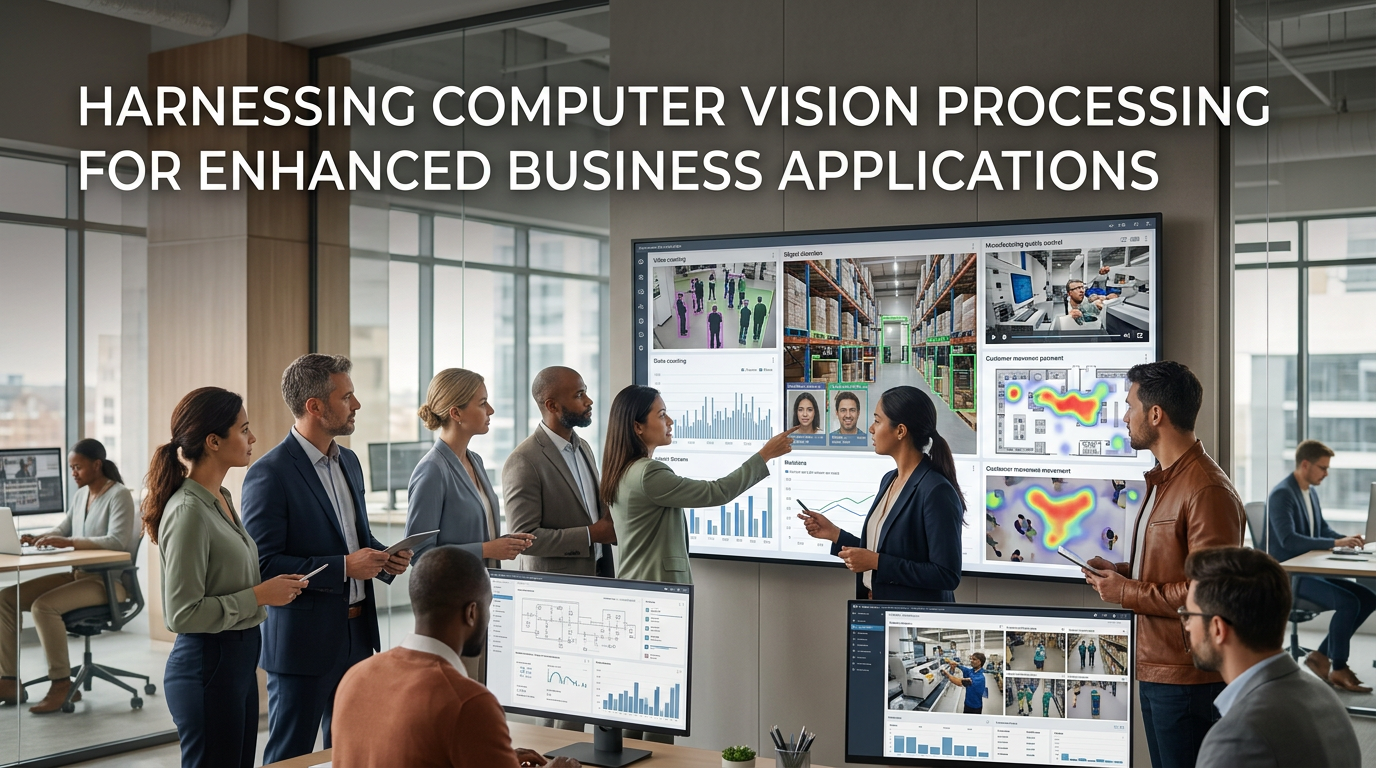
In the current digital era, businesses are increasingly turning to artificial intelligence to innovate and improve their operations. One such AI technology making significant strides is computer vision processing. This technology enables computers to interpret and make decisions based on visual inputs, similar to how humans perceive and understand the visual world. By harnessing computer vision, businesses can enhance efficiency, accuracy, and decision-making across various applications.
Understanding Computer Vision
Before delving into its business applications, it is essential to understand what computer vision entails. Essentially, computer vision is a field of artificial intelligence that trains computers to interpret and understand the visual world. Through computer vision, computers can recognize patterns, identify objects, and process visual data, enabling automated decision-making and insight generation.
The Technology Behind Computer Vision
Computer vision relies on deep learning and convolutional neural networks (CNNs) to analyze visual data. These technologies allow computers to discern complex patterns and make predictions based on large datasets. By training algorithms with labeled images, computer vision systems learn to identify and classify objects, detect anomalies, and even understand text within images.
Practical Implementation in Business
Implementing computer vision processing in business involves several steps to ensure successful deployment and integration. Here, we outline the key implementation steps:
1. Identify Business Needs
The first step involves identifying specific business needs where computer vision can add value. This could range from automating quality checks in manufacturing to enhancing customer experiences in retail.
2. Data Collection and Preparation
Data is the cornerstone of any computer vision project. Businesses need to collect and prepare large datasets of images related to their specific use case. Ensuring data diversity and quality is crucial for the accuracy of the computer vision model.
3. Model Training and Testing
Using the prepared dataset, machine learning models are trained to recognize patterns and make predictions. Rigorous testing is conducted to fine-tune the model and ensure high accuracy and reliability.
4. Integration into Business Processes
Once the model is trained, it should be integrated into existing business workflows. This includes adapting processes to accommodate the insights and predictions generated by the computer vision system.
5. Continuous Monitoring and Improvement
After deployment, continuous monitoring is necessary to maintain performance and adapt to any changes in business needs or data patterns.
Business Value and Measurable Outcomes
The adoption of computer vision processing offers substantial business value. Here are some key areas where businesses can gain competitive advantages:
Improved Operational Efficiency
By automating routine tasks such as quality inspection, computer vision reduces the need for manual intervention, leading to faster and more efficient operations.
Enhanced Customer Experience
Retail businesses can utilize computer vision to personalize customer interactions, offering tailored recommendations and improving customer satisfaction.
Cost Reduction
Automation through computer vision can lead to significant cost savings by reducing labor costs and minimizing errors in manual processes.
Increased Accuracy
With high precision in image analysis, businesses can achieve greater accuracy in tasks such as inventory management and security monitoring.
Risks and Challenges
Despite its advantages, integrating computer vision into business processes poses certain risks and challenges. These include:
Data Privacy Concerns
The use of image data raises privacy concerns, particularly in applications involving human subjects. Businesses must ensure compliance with data protection regulations.
High Initial Costs
The initial investment in technology infrastructure and data acquisition can be substantial, requiring careful consideration and planning.
Integration Complexity
Integrating computer vision systems with existing business processes can be complex, demanding expertise and possibly requiring process reengineering.
Workflows and Examples
To illustrate the practical application of computer vision processing, consider the following workflows and examples:
Supply Chain and Logistics
In logistics, computer vision can optimize routing by analyzing real-time traffic and weather conditions. By predicting potential delays, businesses can make proactive decisions to reroute deliveries, ensuring timely arrival.
Healthcare
In healthcare, computer vision assists in diagnostics by analyzing medical images such as X-rays and MRIs. It helps radiologists detect anomalies faster and with greater accuracy.
Retail and E-commerce
Retailers use computer vision for inventory management, recognizing products on shelves and automating restocking processes to maintain optimal inventory levels.
Key Performance Indicators (KPIs)
Measuring the success of computer vision implementations is critical. Key performance indicators include:
Accuracy Rate
Measures the percentage of correct predictions made by the computer vision system.
Processing Time
Evaluates the time taken by the system to analyze and provide insights, critical for time-sensitive applications.
Cost Savings
Quantifies the reduction in operational costs post-implementation.
User Satisfaction
Gauges the impact on customer experience and employee efficiency.
Conclusion
Computer vision processing is revolutionizing various business applications by providing intelligent insights and automating complex tasks. While the implementation of this technology requires careful planning and consideration of potential risks, the business benefits are significant. By improving efficiency, enhancing customer experience, and reducing costs, computer vision positions businesses to achieve competitive advantage in a rapidly evolving market. As the technology advances, its applications will continue to expand, offering new opportunities for innovation across industries.
Future Trends in Computer Vision Processing
As technology evolves, so do the capabilities and applications of computer vision processing. Businesses must stay ahead of these trends to maintain a competitive edge. Here are some key trends to look out for:
Edge Computing
Edge computing brings computation and data storage closer to the location where it is needed, to improve response times and save bandwidth. In the realm of computer vision, this means processing data locally on devices like cameras and phones instead of relying solely on cloud-based solutions. This trend is particularly beneficial for industries requiring real-time decision-making, such as autonomous vehicles and smart cities.
Enhanced AR and VR Integration
Augmented Reality (AR) and Virtual Reality (VR) are set to integrate more deeply with computer vision. This integration will enable more immersive experiences, such as virtual try-ons in retail or enhanced training simulations in manufacturing and healthcare, providing richer user experiences and improved training outcomes.
Improved Real-Time Processing
As computer vision algorithms become more efficient, real-time processing capabilities are expanding. This is crucial for applications in security and surveillance, where immediate responses to visual data are necessary. Businesses can expect more sophisticated solutions that can process video feeds in real-time, enhancing security measures and operational efficiencies.
Industry-Specific Applications
Different industries are finding unique and innovative applications for computer vision. Here are some examples:
Automotive Industry
In the automotive sector, computer vision is pivotal in developing advanced driver-assistance systems (ADAS) and autonomous vehicles. By interpreting live camera feeds, these systems can detect pedestrians, read traffic signs, and assess road conditions to make driving safer and more efficient.
Agriculture
Farmers are harnessing computer vision to monitor crop health, assess soil conditions, and manage livestock more efficiently. Drones equipped with computer vision can survey large tracts of land, providing data that helps in making informed decisions about crop management and resource allocation.
Finance
In finance, computer vision is used for identity verification and fraud detection. By analyzing visual data such as facial features and document images, financial institutions can enhance security measures and streamline customer onboarding processes.
Measurement and Optimization
To derive maximum value from computer vision technologies, businesses must focus on measurement and optimization. Continuously assessing performance and refining processes ensures sustained improvements and greater returns on investment.
Data Quality and Diversity
Ensuring high-quality and diverse data is crucial for accurate computer vision predictions. Regular audits and updates to datasets can help in maintaining the relevance and accuracy of the models.
Model Performance Monitoring
Continuous monitoring of model performance through KPIs such as accuracy rates and processing times allows businesses to identify areas of improvement quickly. This proactive approach helps in maintaining high standards of operational efficiency and cost-effectiveness.
Feedback Loops
Establishing feedback loops within computer vision systems can lead to significant improvements. By using real-world results to refine models and processes, businesses can adapt more swiftly to changes and enhance the value delivered by computer vision applications.
Conclusion
As computer vision technology advances, its role in transforming business operations becomes increasingly significant. By understanding its potential and carefully managing its implementation, businesses can harness its power to drive innovation, enhance efficiency, and secure a competitive advantage. Staying attuned to emerging trends and continuously optimizing processes will be key to maximizing the benefits of computer vision processing in the years to come.