
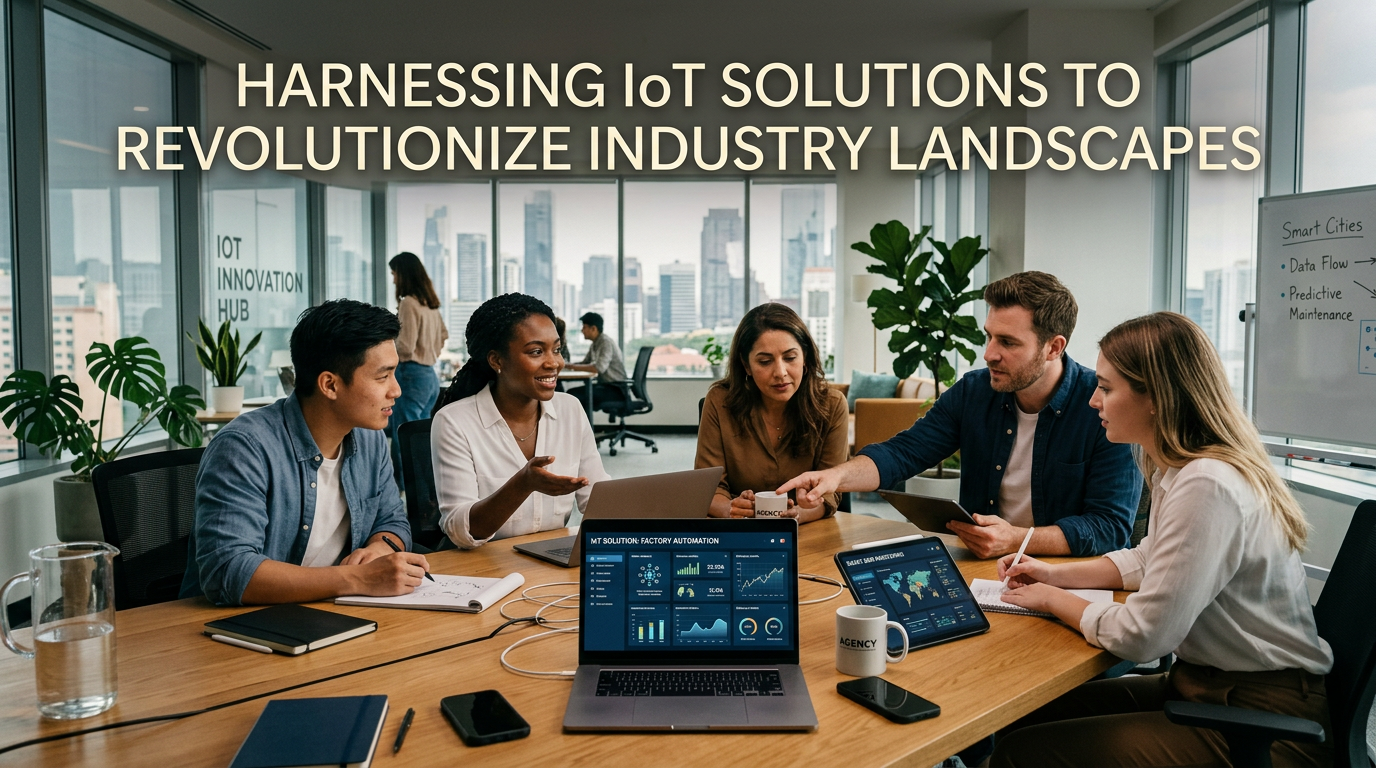
Introduction to IoT Solutions
The Internet of Things (IoT) has ushered in a new era of technological advancement, offering unprecedented opportunities for industries to enhance efficiency, improve customer experiences, and drive innovation. IoT solutions harness connected devices, sensors, and data analytics to create intelligent ecosystems capable of transforming business operations across various sectors.
Practical Implementation of IoT Solutions
Implementing IoT solutions involves integrating smart devices within an organization’s infrastructure. This process begins with identifying specific business needs and selecting appropriate IoT devices and technologies. These devices are then networked to collect and transmit data, which is stored and analyzed in real-time to inform decision-making and optimize processes.
For instance, in the manufacturing sector, IoT can be applied to monitor machinery health and predict maintenance needs, thereby reducing downtime and increasing operational efficiency. Similarly, in logistics, IoT-enabled tracking systems provide real-time updates on shipment locations, improving supply chain transparency and efficiency.
Business Value of IoT Solutions
The integration of IoT solutions offers substantial business value. Companies can leverage data-driven insights to enhance productivity, reduce costs, and improve product quality. By automating routine tasks and providing predictive insights, IoT helps businesses to focus on strategic growth areas and customer satisfaction.
Moreover, IoT solutions enable businesses to develop innovative service offerings. For example, in the healthcare industry, IoT devices can monitor patient vitals remotely, allowing for personalized care and timely interventions. This not only improves patient outcomes but also opens new revenue streams for healthcare providers.
Measurable Outcomes and KPIs
To evaluate the success of IoT implementations, organizations must establish clear Key Performance Indicators (KPIs). Common KPIs include increased operational efficiency, reduced downtime, cost savings, customer satisfaction, and revenue growth. By tracking these metrics, businesses can quantify the impact of IoT solutions and refine strategies to maximize returns.
For example, a retail business might measure success through enhanced inventory management accuracy, resulting in reduced stockouts and overstock situations, thereby improving customer satisfaction and sales.
Risks and Challenges
Despite the numerous advantages, implementing IoT solutions also presents challenges. Security is a primary concern, as connected devices increase the risk of cyberattacks. Organizations must adopt robust security protocols and regularly update systems to protect sensitive data.
Additionally, IoT implementations can involve significant initial investments and require ongoing maintenance. Businesses must carefully assess their readiness and develop comprehensive plans to manage these costs effectively.
Workflow Optimization through IoT
IoT solutions streamline workflows by providing real-time data and insights that facilitate informed decision-making. By automating routine monitoring and data collection tasks, IoT allows employees to focus on higher-level strategic activities. In agriculture, IoT sensors monitor soil conditions and crop health, enabling farmers to optimize irrigation and fertilization processes, thereby increasing crop yields and resource efficiency.
Successful Examples of IoT Integration
One exemplary case is the automotive industry, where IoT solutions are revolutionizing vehicle design and manufacturing processes. Connected cars equipped with IoT sensors offer enhanced safety features, such as automatic collision detection and real-time traffic updates, improving driver experience.
Another notable example is smart cities, where IoT-enabled infrastructure manages energy consumption, traffic flow, and waste management, fostering sustainable urban environments.
Conclusion
The transformative potential of IoT solutions is vast, offering industries a pathway to innovate and remain competitive in a rapidly evolving market. By carefully planning implementation strategies, managing risks, and measuring outcomes, businesses can harness the full potential of IoT to drive substantial improvements in efficiency, profitability, and customer engagement.
IoT in Retail: Enhancing Customer Experience
In the retail sector, IoT solutions are being leveraged to revolutionize the customer shopping experience. By deploying IoT devices such as smart shelves, RFID tags, and beacons, retailers can personalize shopping experiences, optimize inventory management, and streamline checkout processes. Smart shelves can monitor stock levels in real-time, alerting staff to replenish items before they run out. Beacons can send personalized offers and product information directly to customers' smartphones as they browse the store, enhancing engagement and driving sales.
- Personalized Shopping: IoT enables retailers to gather data on customer preferences and shopping habits, allowing for targeted marketing strategies and personalized offers.
- Inventory Management: Real-time tracking of stock levels and automated replenishment schedules enhance inventory accuracy and reduce waste.
- Streamlined Checkout: IoT solutions like smart carts and mobile payment options expedite the checkout process, improving customer satisfaction and reducing wait times.
IoT in Energy Management: Driving Sustainability
Energy management is another area where IoT solutions are making a significant impact. Through the use of smart meters, connected grids, and energy-efficient devices, IoT helps companies and households monitor and manage their energy consumption in real-time. Smart grids facilitate the efficient distribution of electricity and enable demand-response initiatives that can reduce energy usage during peak times.
For example, smart thermostats can adjust heating and cooling systems based on occupancy patterns, reducing energy waste and lowering utility bills. IoT-enabled energy management systems can also provide insights into energy usage patterns, helping organizations identify areas for improvement and optimize their energy strategies.
Benefits of IoT in Energy Management
- Cost Savings: Real-time monitoring and control of energy usage lead to significant reductions in energy costs.
- Environmental Impact: Optimizing energy consumption reduces carbon footprints and contributes to sustainability efforts.
- Operational Efficiency: Automation of energy management processes increases operational efficiency and reduces the need for manual intervention.
Healthcare and IoT: Improving Patient Outcomes
In healthcare, IoT solutions are transforming patient care by enabling remote monitoring and telemedicine. IoT devices such as wearable health monitors and smart medical equipment collect vital health data and transmit it to healthcare providers in real-time. This continuous flow of data allows for proactive health management and timely interventions, improving patient outcomes.
For instance, wearable devices can monitor heart rates, blood pressure, and glucose levels, alerting healthcare providers to potential health issues before they become critical. This not only enhances patient care but also reduces the need for hospital visits and readmissions, ultimately lowering healthcare costs.
- Remote Patient Monitoring: IoT devices allow for continuous monitoring of patients' health metrics, enabling early detection and intervention for medical conditions.
- Telemedicine: IoT facilitates virtual consultations, providing patients with access to healthcare services from the comfort of their homes.
- Data-Driven Insights: Analyzing health data collected by IoT devices helps healthcare providers develop personalized treatment plans and improve patient care.
IoT in Agriculture: Enhancing Farm Productivity
IoT is revolutionizing agriculture by providing farmers with the tools needed to optimize their operations and increase yields. With IoT sensors, farmers can monitor soil moisture, nutrient levels, and weather conditions in real-time. This data enables precision farming techniques, such as targeted irrigation and fertilization, which maximize resource efficiency and minimize waste.
Additionally, IoT solutions can streamline farm management by automating tasks such as livestock monitoring and equipment maintenance. Farmers can track the health and location of their livestock remotely, ensuring timely care and reducing losses.
Key Advantages of IoT in Agriculture
- Increased Yields: Precision farming techniques driven by IoT data lead to higher crop yields and more efficient use of resources.
- Cost Reduction: By optimizing resource usage and automating routine tasks, farmers can reduce operational costs.
- Environmental Sustainability: Efficient use of water and nutrients reduces the environmental impact of farming activities.
IoT in Transportation: Revolutionizing Mobility
The transportation sector is undergoing a significant transformation with the integration of IoT solutions. By equipping vehicles with IoT-enabled sensors and connectivity options, transportation companies can gain valuable insights into fleet management, maintenance, and safety. These technologies allow for the monitoring of vehicle health in real-time, enabling predictive maintenance and reducing the likelihood of breakdowns.
Moreover, IoT solutions facilitate the optimization of routes and schedules, improving fuel efficiency and reducing operational costs. Real-time traffic monitoring and GPS data enable dynamic route adjustments, minimizing delays and improving service reliability.
- Fleet Management: IoT allows for continuous monitoring of vehicles, ensuring optimal performance and reducing downtime.
- Safety Enhancements: IoT technologies provide drivers with real-time alerts on road conditions and potential hazards, enhancing safety.
- Fuel Efficiency: Optimized routing and driving practices informed by IoT data contribute to reduced fuel consumption.
IoT for Smart Homes: Enhancing Comfort and Security
Smart home technologies powered by IoT are rapidly gaining popularity, offering homeowners increased control over their living environments. IoT devices such as smart thermostats, lighting systems, and security cameras can be managed remotely via smartphones, providing convenience and peace of mind.
These systems can learn user preferences and adjust settings accordingly, creating comfortable living conditions while optimizing energy usage. IoT security solutions also enhance home safety through features like real-time surveillance and automated alerts.
- Energy Efficiency: Smart home devices optimize energy consumption by adapting to user schedules and preferences.
- Enhanced Security: IoT-enabled security systems offer real-time monitoring and instant notifications of suspicious activities.
- Convenience and Control: Remote management of home systems enhances user convenience and provides better control over household operations.