
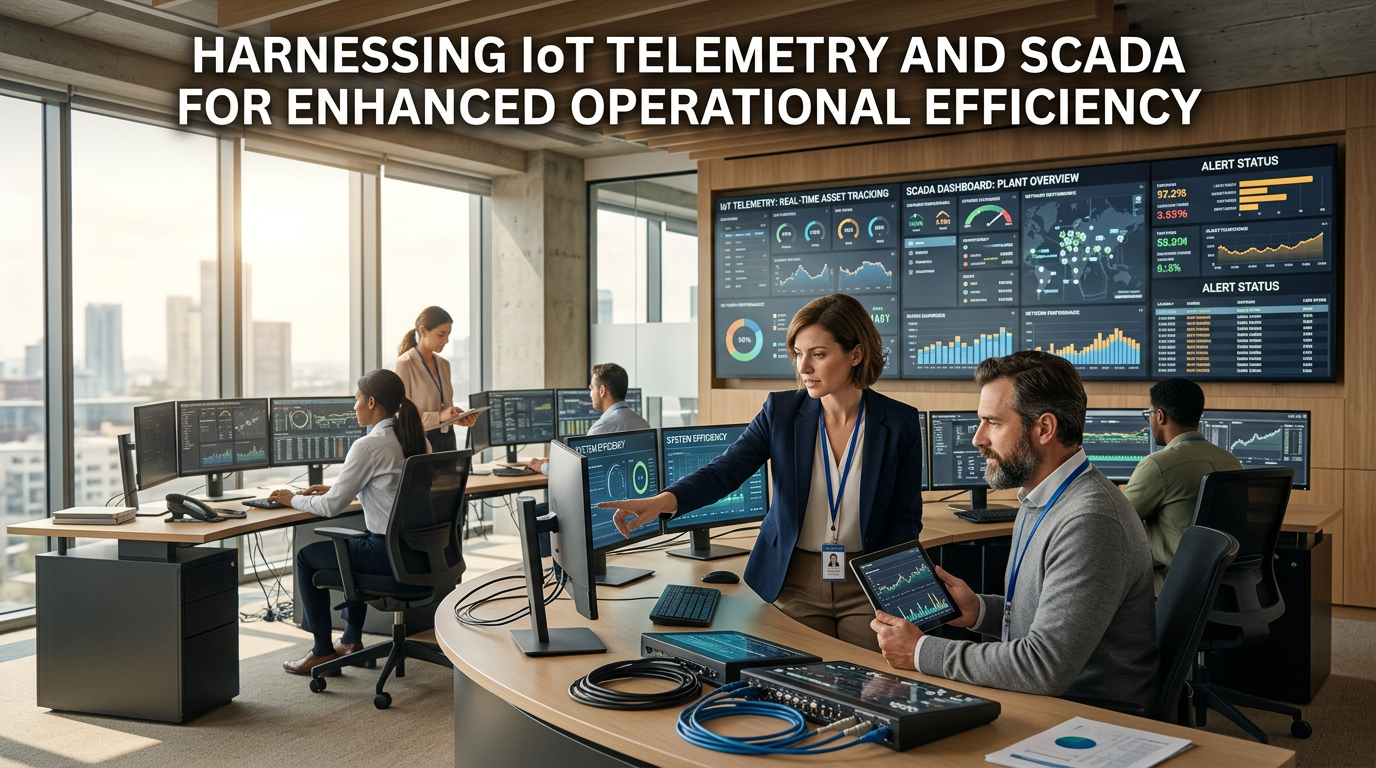
Introduction to IoT Telemetry and SCADA
The rise of the Internet of Things (IoT) has transformed numerous industries by enabling real-time data collection and analysis. Among its most impactful applications are IoT Telemetry and Supervisory Control and Data Acquisition (SCADA) systems. These technologies have become critical in optimizing operational efficiency across sectors such as manufacturing, energy, and agriculture. As businesses aim to enhance productivity and reduce costs, understanding how to harness IoT Telemetry and SCADA is essential.
Understanding IoT Telemetry and SCADA
What is IoT Telemetry?
IoT Telemetry involves the automated collection and communication of data from remote sensors or devices to a central system for monitoring and analysis. This data can include temperature, humidity, pressure, and other environmental variables. By leveraging AI solutions, telemetry data can be processed in real-time to provide actionable insights, enabling businesses to make informed decisions swiftly.
What is SCADA?
SCADA is a control system architecture that utilizes computers, networked data communications, and human-machine interfaces (HMIs) to manage high-level processes. It allows operators to monitor and control industrial processes locally or at remote locations, enhancing the operational capabilities of industries. The integration of AI with SCADA systems facilitates predictive analytics, anomaly detection, and seamless automation.
Practical Implementation of IoT Telemetry and SCADA
Steps for Implementation
- Assessment of Needs: Begin by evaluating the specific requirements of your industry and operations. Identify key areas where IoT telemetry and SCADA can bring improvements.
- Infrastructure Setup: Deploy IoT sensors and devices to collect data from various sources. Ensure robust network connectivity for data transmission.
- SCADA Integration: Integrate SCADA systems to process and control data flow. Implement AI models for intelligent data analysis and automation.
- Testing and Calibration: Conduct thorough testing of the systems to ensure they are accurately capturing and processing data. Calibrate sensors and devices as necessary.
- Training and Support: Train personnel on using the new systems effectively. Provide ongoing support to troubleshoot issues and optimize performance.
Challenges and Risks
While implementing IoT Telemetry and SCADA systems offers numerous benefits, businesses must be aware of potential challenges. Cybersecurity risks are a primary concern, as these systems often communicate sensitive data over networks. Implementing robust security measures, such as encryption and access controls, is crucial. Additionally, the complexity of integrating new technologies with existing systems can pose difficulties, necessitating careful planning and execution.
Business Value of IoT Telemetry and SCADA
Enhanced Operational Efficiency
By using IoT Telemetry and SCADA, businesses can significantly enhance operational efficiency. Real-time data allows for immediate adjustments to processes, reducing downtime and optimizing resource utilization. For example, in manufacturing, predictive maintenance enabled by AI can minimize equipment failures and maintenance costs.
Cost Reduction
The data-driven insights provided by these systems can lead to substantial cost savings. By optimizing energy use, reducing waste, and improving asset management, companies can lower operating expenses significantly.
Improved Decision-Making
AI-enhanced SCADA systems enable better decision-making through predictive analytics and trend analysis. By identifying patterns and forecasting outcomes, businesses can proactively address potential issues and capitalize on opportunities.
Key Performance Indicators (KPIs) for IoT Telemetry and SCADA
Monitoring Effectiveness
- Data Accuracy: Measure the precision of data collected from IoT devices.
- System Uptime: Track the operational time of IoT and SCADA systems to ensure reliability.
- Response Time: Evaluate the time taken to process data and implement decisions.
Operational Efficiency
- Resource Utilization: Assess how effectively resources are being used.
- Cost Savings: Calculate the reduction in operational costs due to system implementation.
- Maintenance Frequency: Monitor the reduction in maintenance activities due to predictive maintenance capabilities.
Real-World Examples
Manufacturing Sector
In the manufacturing industry, a company implemented IoT telemetry and SCADA systems to monitor machinery health and performance. By analyzing data in real-time, they achieved a 30% reduction in unplanned downtime and a 20% increase in production efficiency, resulting in annual savings of $500,000.
Energy Sector
An energy company adopted AI-enhanced SCADA systems to optimize grid management. By predicting demand fluctuations and automating control, they reduced energy wastage by 15% and improved service reliability, enhancing customer satisfaction.
Conclusion
Harnessing the power of IoT Telemetry and SCADA, enhanced with AI solutions, can revolutionize operational efficiency across industries. By following strategic implementation steps and focusing on key performance metrics, businesses can unlock significant value, driving growth and competitiveness. However, it is imperative to address potential risks and ensure robust cybersecurity measures are in place. As technology continues to evolve, the integration of IoT and SCADA will remain pivotal in shaping the future of industrial operations.
Integration with Emerging Technologies
IoT and Edge Computing
Integrating IoT Telemetry with edge computing can significantly enhance data processing capabilities. Edge computing allows data to be processed closer to the source, reducing latency and bandwidth usage. This is particularly beneficial in environments where real-time decision-making is critical, such as in automated manufacturing lines or smart grids. By leveraging edge computing, businesses can ensure faster response times and more efficient operations.
AI and Machine Learning
The combination of AI and machine learning with IoT Telemetry and SCADA systems brings about transformative improvements. AI algorithms can process vast amounts of data to detect anomalies, predict equipment failures, and optimize processes. Machine learning models can evolve over time, improving their accuracy and providing businesses with more precise insights. For instance, AI can help in forecasting energy consumption patterns, enabling companies to better manage supply and demand.
Sector-Specific Applications
Agriculture
In agriculture, IoT Telemetry and SCADA systems can be used to monitor and control irrigation systems, ensuring optimal water usage based on soil moisture levels and weather conditions. These systems can also track equipment health, enabling predictive maintenance to reduce downtime and enhance productivity. By integrating AI, farmers can receive recommendations on crop management, leading to better yields and resource utilization.
Healthcare
In the healthcare sector, IoT devices can monitor patient health metrics in real-time, enabling timely interventions and improving patient outcomes. SCADA systems can be utilized to manage the operation of critical hospital equipment, ensuring reliability and efficiency. The integration of AI can facilitate the analysis of patient data, offering insights into treatment effectiveness and helping in personalized medicine approaches.
Risk Mitigation Strategies
Cybersecurity Measures
To mitigate cybersecurity risks, businesses should implement comprehensive security protocols. This includes using encryption for data transmission, establishing access controls, and regularly updating software to protect against vulnerabilities. Conducting security audits and penetration testing can help identify potential weaknesses in the system, allowing for proactive measures to be taken.
System Redundancy
Implementing redundancy is essential to ensure system reliability. This can be achieved by having backup systems and failover mechanisms in place. In the event of a system failure, redundancy ensures that operations continue with minimal disruption, maintaining data integrity and operational continuity.
Future Trends and Innovations
Interoperability and Standardization
The future of IoT Telemetry and SCADA lies in enhanced interoperability and standardization. Developing universal protocols that allow seamless communication between diverse systems will be crucial. This will facilitate broader adoption and integration of technology across various industries, enhancing overall operational efficiency.
Blockchain Integration
Blockchain technology is poised to play a significant role in enhancing the transparency and security of IoT Telemetry and SCADA systems. By providing a decentralized ledger for data transactions, blockchain can ensure data integrity and traceability, reducing the risk of tampering and fraud.
Environmental Impact and Sustainability
Integrating IoT Telemetry and SCADA systems goes beyond operational efficiency and cost reduction; these technologies also contribute to sustainability efforts. By optimizing processes, reducing energy consumption, and minimizing waste, businesses can significantly lower their carbon footprint. For instance, in the energy sector, real-time monitoring and predictive analytics help in optimizing the use of renewable resources, thereby promoting sustainable energy practices.
Green Manufacturing
In the manufacturing sector, IoT and SCADA systems enable greener operations by monitoring emissions and ensuring compliance with environmental regulations. By automating equipment to operate only when needed and optimizing resource allocation, manufacturers can reduce their environmental impact and improve sustainability metrics, such as energy intensity and waste generation.
User Experience and Human-Machine Interaction
The evolution of IoT Telemetry and SCADA systems has improved human-machine interaction, leading to enhanced user experiences. Modern interfaces are designed to be intuitive, enabling operators to easily interpret complex data sets and make informed decisions. The integration of virtual and augmented reality in these systems offers immersive training experiences, helping personnel to better understand system functionalities and improve their operational skills.
Personalized Dashboards
With the help of AI, SCADA systems can offer personalized dashboards, presenting data that is most relevant to individual users. This customization allows for a more focused analysis, enabling quicker and more accurate decision-making. Personalized dashboards can be tailored to highlight KPIs, alerts, and trends specific to a user's role within the organization, thereby enhancing productivity and efficiency.
Conclusion
As industries continue to evolve, the integration of IoT Telemetry and SCADA systems will remain a crucial element in transforming operational efficiency and sustainability. By understanding and responding to the unique challenges and opportunities presented by these technologies, businesses can achieve significant gains in productivity, cost reduction, and environmental impact. Constant innovation and adaptation will drive the future landscape of industrial operations, ensuring that companies remain competitive and resilient in a rapidly changing world.