
Introduction
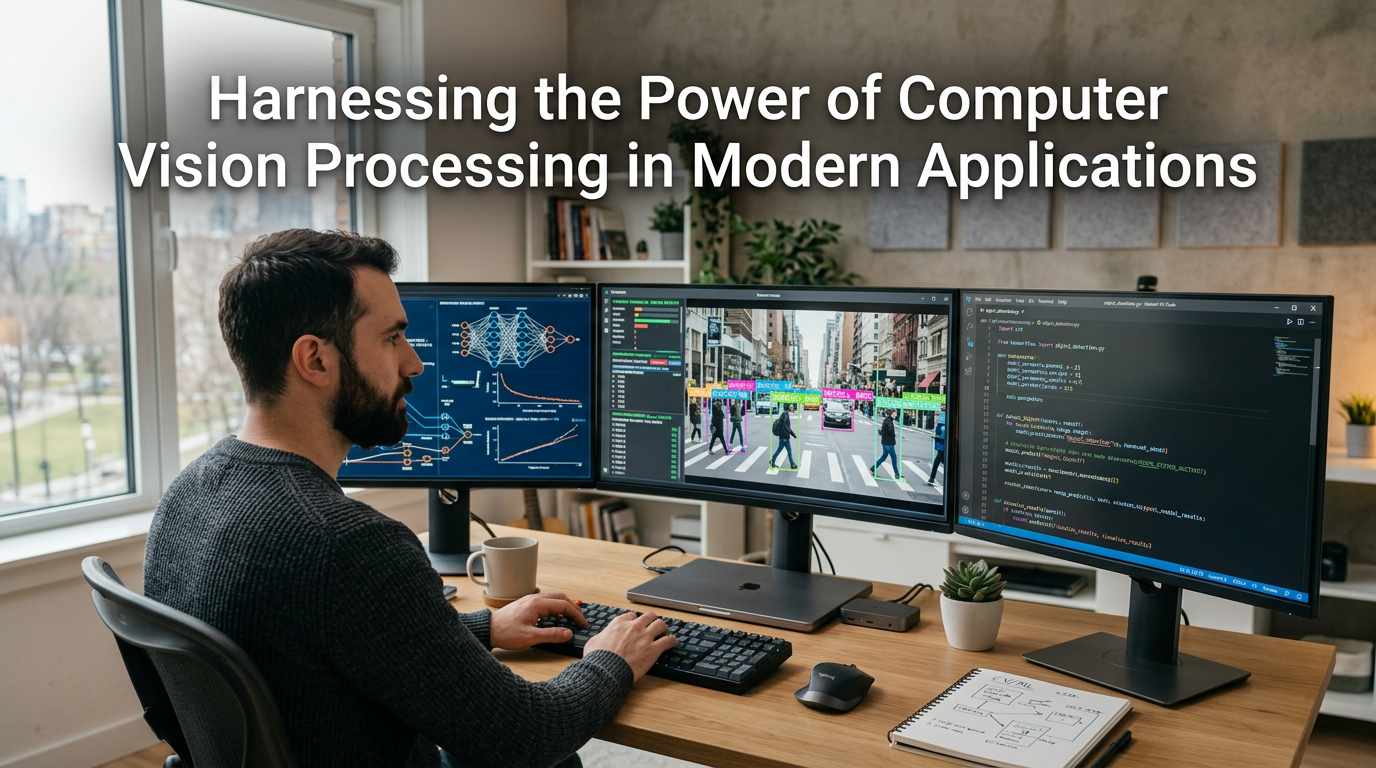
In the digital age, where data is the new oil, computer vision processing emerges as a critical component in harnessing visual data. This technology utilizes algorithms to interpret and understand visual information from the world, enabling machines to see, identify, and process images as humans do. From autonomous vehicles to healthcare diagnostics, computer vision processing is revolutionizing various sectors. This article delves into practical implementation methods, business value, associated risks, workflows, key performance indicators (KPIs), and real-world examples.
Understanding Computer Vision Processing
Computer vision processing involves the use of artificial intelligence (AI) to enable computers to interpret and process visual data. It encompasses a range of technologies such as image recognition, video analytics, and 3D modeling. The process begins with capturing image data through cameras and sensors, which is then analyzed using machine learning algorithms to derive meaningful insights.
Key Technologies
- Image Recognition: Utilizes neural networks to identify objects within images.
- Video Analytics: Processes video data in real-time for surveillance, traffic monitoring, and more.
- 3D Modeling: Creates three-dimensional representations of objects for applications in virtual reality and design.
Practical Implementation in Various Sectors
Computer vision has found applications across diverse industries, each harnessing its power uniquely to innovate and streamline operations:
Healthcare
In healthcare, computer vision assists in diagnostics by analyzing medical images such as X-rays, MRIs, and CT scans. It aids in early detection of diseases, improving patient outcomes. For instance, AI-driven systems can identify anomalies in images with higher accuracy and speed than traditional methods.
Retail
Retailers use computer vision to enhance customer experience and optimize inventory management. Smart cameras analyze customer behavior, track product movement, and provide insights on consumer preferences.
Automotive
Autonomous vehicles rely heavily on computer vision for navigation and safety. Cameras and sensors detect obstacles, read road signs, and monitor traffic conditions in real-time, enabling vehicles to make informed decisions.
Manufacturing
In manufacturing, computer vision ensures quality control by inspecting products for defects. Automated systems compare live production images with ideal models to detect discrepancies immediately.
Business Value and Measurable Outcomes
Implementing computer vision processing offers significant business value:
- Enhanced Efficiency: Automates repetitive tasks, reducing human error and increasing productivity.
- Cost Reduction: Minimizes labor costs associated with manual processes.
- Improved Accuracy: AI-driven analysis provides precise results, especially in quality control and diagnostics.
- Data-Driven Insights: Generates valuable insights for strategic decision-making and innovation.
KPIs for Success
Key performance indicators for evaluating computer vision projects include:
- Accuracy Rate: Measures the precision of object detection and analysis.
- Processing Time: Time taken to analyze and process visual data.
- Cost Savings: Reduction in operational costs due to automation.
- User Satisfaction: Feedback from users on the efficiency and effectiveness of the system.
Risks and Challenges
Despite its advantages, implementing computer vision comes with challenges:
- Data Privacy: Handling sensitive visual data raises privacy concerns.
- Computational Demand: Requires significant processing power and storage capabilities.
- Complexity: Developing and deploying sophisticated algorithms can be complex.
Mitigation Strategies
Organizations can mitigate these risks by adhering to data privacy regulations, investing in robust IT infrastructure, and collaborating with AI experts for system development.
Workflow and Implementation Steps
Implementing computer vision processing involves a structured approach:
- Define Objectives: Clearly outline what the system aims to achieve.
- Data Collection: Gather relevant visual data for training and analysis.
- Algorithm Development: Develop and train machine learning models.
- Integration: Integrate the system with existing processes.
- Testing: Conduct rigorous testing to ensure accuracy and reliability.
- Deployment: Roll out the system for production use.
- Monitoring and Evaluation: Continuously monitor system performance and make necessary adjustments.
Real-World Examples
Several companies have successfully implemented computer vision solutions:
Amazon Go
The Amazon Go stores utilize computer vision for checkout-free shopping, where cameras track items shoppers pick and automatically charge them upon exit.
Siemens
Siemens uses computer vision in its manufacturing plants for quality assurance, employing real-time image analysis to detect defects in products.
Waymo
Waymo, a leader in autonomous driving technology, employs computer vision to navigate complex driving environments efficiently and safely.
Conclusion
Computer vision processing stands at the forefront of the AI revolution, offering unprecedented opportunities for innovation and efficiency across various sectors. By understanding its implementation, value proposition, and associated challenges, businesses can harness this technology to gain a competitive edge, enhance customer experiences, and drive growth. As the technology evolves, its applications will only expand, making it a cornerstone of modern digital transformation strategies.
Future Trends in Computer Vision
As computer vision technology continues to mature, several emerging trends are set to shape its future applications and capabilities. These trends highlight the dynamic nature of this field and its potential to revolutionize further sectors.
Edge Computing
Edge computing involves processing data closer to its source rather than relying on centralized data centers. This can reduce latency and increase the speed of data processing, making it ideal for applications like autonomous vehicles and real-time surveillance. By integrating computer vision with edge computing, businesses can achieve faster decision-making and improved efficiency.
Improved Image Recognition
The accuracy of image recognition technologies is expected to improve with advancements in deep learning algorithms. These improvements will enhance the ability of systems to identify and classify objects, leading to more precise applications in healthcare diagnostics, security, and e-commerce.
Ethical Considerations
As the use of computer vision expands, ethical considerations become increasingly important. These include concerns about privacy, bias, and the impact on employment.
Privacy Concerns
With the ability to analyze vast amounts of visual data, computer vision systems can inadvertently infringe upon personal privacy. Regulations such as the General Data Protection Regulation (GDPR) in Europe set guidelines for how companies should handle data responsibly. Companies must ensure transparency in how they collect and use visual data to build trust with consumers.
Algorithmic Bias
AI systems, including computer vision, can inherit biases present in the data used to train them. This can lead to unfair outcomes, particularly in areas like law enforcement and hiring. To mitigate this, organizations should focus on using diverse datasets and regularly auditing their systems for bias.
Impact on Employment
While computer vision can automate tasks, leading to job displacement, it also creates new opportunities for skilled workers in AI development and system management. Organizations should invest in reskilling their workforce to adapt to these technological changes.
Integrating Computer Vision with Other Technologies
Computer vision is often more powerful when combined with other technologies, creating synergistic effects that enhance overall functionality.
Internet of Things (IoT)
Incorporating computer vision into IoT devices can lead to smarter and more responsive systems. For example, in smart homes, computer vision can enable security cameras to recognize familiar faces and trigger specific responses, enhancing security and user experience.
Augmented Reality (AR)
Augmented reality can be significantly enhanced with computer vision, allowing for more interactive and immersive experiences. Retailers can use AR combined with computer vision to enable customers to visualize products in their homes before making a purchase decision.
Robotics
Robotics paired with computer vision can perform complex tasks such as automated assembly in manufacturing or precise surgical procedures in healthcare. The ability to see and interpret the environment allows robots to make more informed decisions.
Conclusion
The potential of computer vision processing continues to grow as technology advances. By understanding and addressing the associated risks and ethical considerations, businesses can effectively integrate computer vision into their strategies. As more sectors adopt this technology, the insights and efficiencies gained promise to drive innovation and competitive advantage in the digital economy. Organizations that are proactive in adapting to these changes will be well-positioned to lead in their respective industries.