
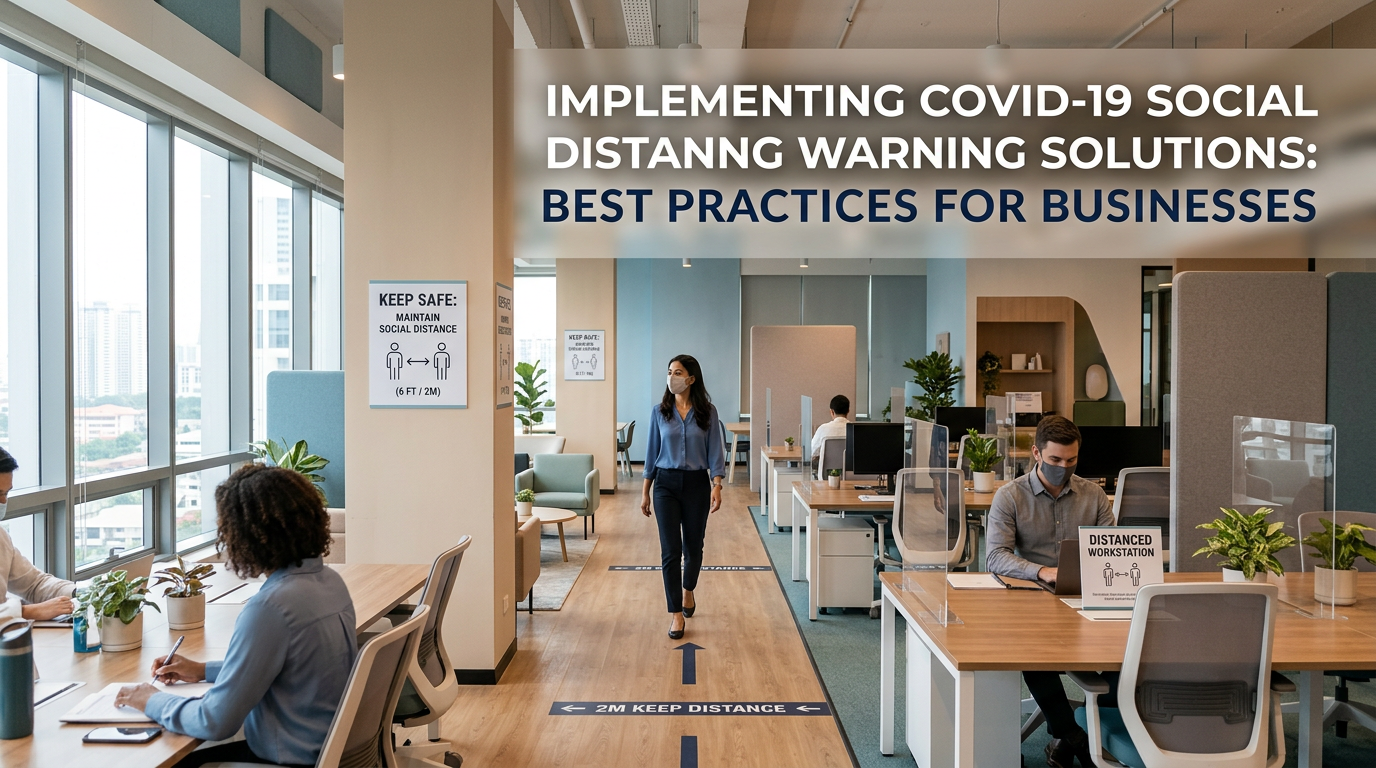
Introduction
The Covid-19 pandemic has necessitated the adoption of innovative solutions to ensure public safety and business continuity. Among these, AI-driven social distancing warning systems have emerged as a pivotal tool for businesses seeking to maintain operations while adhering to health guidelines. This article delves into the practical implementation of these solutions, their business value, risks, workflows, and examples.
Understanding AI-Driven Social Distancing Solutions
AI-powered social distancing solutions utilize computer vision and machine learning algorithms to monitor and analyze physical spaces. By detecting the distance between individuals in real-time, these systems provide alerts when social distancing measures are violated, ensuring compliance with health regulations.
Key Components
The core components of an AI-driven social distancing solution include cameras, AI algorithms, and integration platforms. Cameras capture live video feeds, which are analyzed by AI models to calculate distances. The integration platform then processes this data, triggering alerts or notifications when necessary.
Benefits of Implementing Social Distancing Solutions
Implementing these solutions offers several advantages:
- Enhanced Safety: By automatically monitoring and alerting staff to breaches in social distancing, businesses can create safer environments for employees and customers.
- Regulatory Compliance: These systems help businesses comply with local and international health regulations, thereby reducing the risk of fines and operational disruptions.
- Operational Efficiency: Automated monitoring reduces the need for manual oversight, allowing staff to focus on core business activities.
Measurable Outcomes
Businesses can measure the effectiveness of these solutions through various KPIs, such as:
- Reduction in Social Distancing Violations: Tracking the frequency of alerts can help gauge compliance levels.
- Employee and Customer Satisfaction: Surveys can assess perceptions of safety and overall satisfaction with the business environment.
- Regulatory Compliance Metrics: Monitoring adherence to health guidelines can indicate successful implementation.
Practical Implementation Steps
1. Assessing Business Needs
Begin by evaluating the specific needs of your business environment. Consider factors such as the size of the space, foot traffic, and existing infrastructure to determine the scope and scale of the solution required.
2. Choosing the Right Technology
Selecting the appropriate technology is crucial. This includes choosing between different types of cameras (e.g., IP cameras or thermal imaging) and AI software solutions that offer the desired accuracy and reliability.
3. Integration with Existing Systems
Ensure that the chosen solution can be integrated with existing security and operational systems. This might involve working with vendors to customize software or hardware to meet specific business requirements.
4. Training and Deployment
Train staff on the use of the system to ensure they understand how to respond to alerts and reports. Deployment should be phased, starting with high-traffic areas, and gradually expanding to cover the entire business space.
5. Monitoring and Optimization
Regularly monitor system performance and make necessary adjustments. This might involve recalibrating cameras or updating software to improve accuracy and responsiveness.
Risks and Challenges
While AI-driven social distancing solutions offer significant benefits, there are potential risks and challenges:
- Privacy Concerns: The use of cameras and video feeds may raise privacy issues among employees and customers. It's crucial to comply with data protection regulations and ensure transparency about data usage.
- Technological Limitations: Depending on the environment, factors such as lighting and infrastructure can affect system performance. Choosing the right technology and conducting thorough testing can mitigate these risks.
- Cost: Initial setup and ongoing maintenance costs can be substantial. Businesses should conduct a cost-benefit analysis to ensure financial viability.
Case Study: Successful Implementation
Consider a retail chain that implemented an AI social distancing solution across its outlets. By strategically placing cameras and integrating with their existing security infrastructure, the chain achieved a 30% reduction in social distancing violations within the first month. Employee satisfaction surveys indicated a 15% increase in perceived safety, highlighting the solution's impact on workplace morale.
Conclusion
AI-driven social distancing solutions are an effective means for businesses to navigate the challenges posed by the Covid-19 pandemic. By implementing these solutions, businesses can enhance safety, ensure regulatory compliance, and maintain operational efficiency. Despite potential challenges, the measurable outcomes and overall benefits make these systems a valuable investment for businesses seeking to adapt to the new normal.
Future Trends in Social Distancing Technology
As the world continues to adapt to post-pandemic realities, social distancing technologies are expected to evolve significantly. These advancements could further streamline operations and enhance safety protocols in various business environments.
Integration with IoT Devices
One of the trends involves the deeper integration of Internet of Things (IoT) devices with AI-driven social distancing systems. By leveraging IoT, businesses can create a network of interconnected devices that communicate in real-time, providing comprehensive monitoring and data collection capabilities. For instance, smart sensors can be used to track occupancy levels, enabling dynamic adjustments to space utilization and improving overall safety.
Augmented Reality (AR) Applications
Augmented Reality (AR) offers another avenue for enhancing social distancing solutions. By overlaying digital information onto physical environments, AR can guide individuals through spaces while highlighting areas where social distancing is enforced. This technology could be particularly beneficial in retail settings, where customers can be directed through less congested paths, thereby minimizing contact.
Evaluating the Long-term Business Impact
Implementing AI-driven social distancing solutions can have long-term impacts on business operations and strategies. Companies should consider how these technologies can align with their broader goals, such as improving customer experience and increasing operational agility.
Enhanced Customer Experience
Businesses that prioritize customer safety can see improvements in customer loyalty and brand reputation. By investing in visible safety measures, such as AI-driven social distancing systems, businesses can assure customers that their well-being is a top priority, potentially leading to increased patronage.
Scalability and Flexibility
AI solutions offer scalability that can accommodate changes in business size and scope. As companies grow or modify their operational models, these systems can be scaled up or down accordingly. This flexibility ensures that businesses remain agile and responsive to future challenges, such as potential new health directives or regulations.
Addressing Ethical Considerations
While the technological benefits are clear, the ethical implications of implementing AI-driven solutions must also be considered. Businesses need to ensure that these systems are deployed responsibly and with respect for individual rights.
Transparency and Communication
Transparent communication with employees and customers about how data is collected and used is crucial. Privacy concerns can be mitigated by clearly explaining the purpose of the technology and implementing stringent data protection measures. Regular updates and open channels for feedback can also help build trust among stakeholders.
Developing Ethical Guidelines
Businesses should consider developing ethical guidelines for AI implementation, focusing on principles such as fairness, accountability, and transparency. These guidelines can help ensure that AI systems are used in ways that respect human rights and contribute positively to society.
Leveraging Data for Continuous Improvement
Data collected from social distancing solutions can provide valuable insights for continuous improvement. By analyzing trends and patterns, businesses can make informed decisions about their operations and strategies.
Predictive Analytics
Predictive analytics can be used to anticipate future challenges and optimize resource allocation. For example, data on peak congestion times can guide staffing decisions, ensuring adequate personnel are available to manage customer volume effectively.
Feedback Loops
Establishing feedback loops where employees and customers can report their observations and experiences can enhance the system's effectiveness. This feedback can be integrated into system updates, ensuring that the solution remains relevant and responsive to user needs.
Conclusion
As businesses navigate an evolving landscape, AI-driven social distancing solutions offer a powerful tool for enhancing safety and operational efficiency. By embracing future trends, addressing ethical concerns, and leveraging data for ongoing improvement, businesses can position themselves for success in a post-pandemic world. The proactive implementation of these technologies not only ensures compliance and safety but also sets a foundation for innovation and growth.