
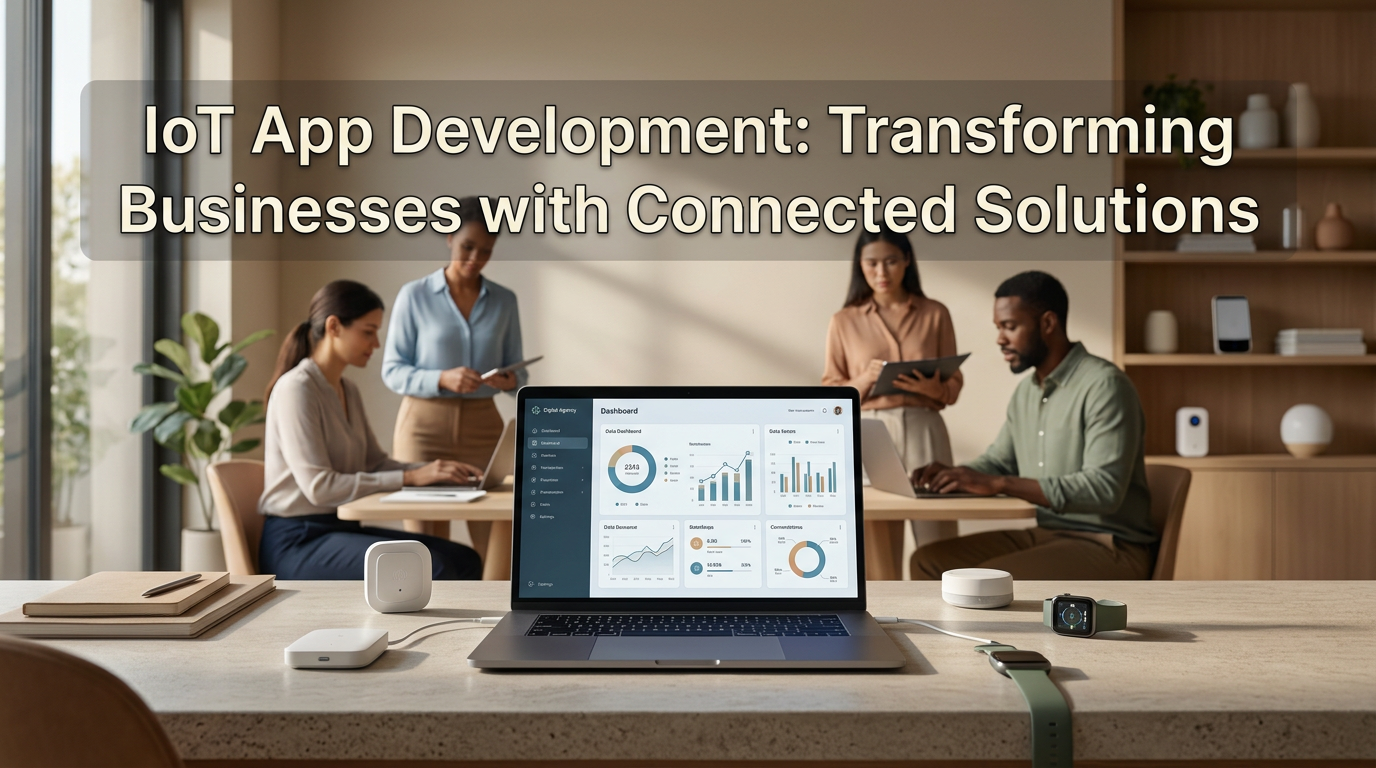
Introduction to IoT App Development
The Internet of Things (IoT) is revolutionizing how businesses operate, interact with their environment, and provide value to their customers. As a connected network of devices that communicate and exchange data, IoT offers unparalleled opportunities for businesses to enhance efficiency, reduce costs, and drive innovation. Through IoT app development, companies can create customized solutions that leverage AI to unlock new possibilities across different industries.
Understanding IoT App Development
IoT app development involves creating applications that enable devices to connect, communicate, and perform tasks autonomously. These apps are tailored to harness the power of connected solutions, providing real-time data insights and automation capabilities that streamline processes and improve decision-making. By integrating AI, IoT apps can analyze vast amounts of data, predict trends, and automate complex workflows, offering businesses a competitive edge.
Implementation Steps
Implementing IoT app development involves several critical steps to ensure successful deployment and operation:
- Define Objectives: Clearly outline the business objectives and challenges that the IoT app aims to address.
- Identify Devices: Determine the types of devices and sensors that will be integrated into the IoT network.
- Develop the App: Design and develop the application with an emphasis on user experience, data security, and scalability.
- Integrate AI: Incorporate AI algorithms to enhance data analysis, automate tasks, and provide predictive insights.
- Testing and Deployment: Conduct rigorous testing to ensure the app functions correctly and securely before deployment.
- Monitor and Optimize: Continuously monitor the app's performance and optimize it based on user feedback and data insights.
Business Value of IoT App Development
IoT app development can significantly transform businesses by providing various advantages:
Increased Efficiency and Productivity
By automating routine tasks and providing real-time data insights, IoT apps enable businesses to operate more efficiently. For example, in manufacturing, IoT solutions can monitor equipment performance, predict maintenance needs, and reduce downtime.
Enhanced Customer Experience
With IoT apps, businesses can offer personalized services, track customer preferences, and improve product offerings. For instance, retail companies can use IoT data to enhance inventory management and create personalized shopping experiences.
Cost Reduction
IoT solutions help reduce operational costs by optimizing resource usage, minimizing waste, and preventing equipment failures. This can lead to significant savings in industries such as logistics, where IoT can optimize routes and reduce fuel consumption.
Risks and Challenges
Despite the benefits, IoT app development also presents certain risks and challenges:
Security Concerns
With multiple connected devices, ensuring data security and protecting against cyber threats is paramount. Businesses must implement robust security measures to safeguard sensitive information.
Integration Complexity
Integrating IoT solutions with existing systems can be complex and requires careful planning and execution to ensure seamless operation.
Data Management
Handling large volumes of data generated by IoT devices can be overwhelming. Businesses need effective data management and analysis strategies to derive valuable insights.
Measurable Outcomes and KPIs
To evaluate the success of IoT app development, businesses should establish Key Performance Indicators (KPIs) that measure the impact on their operations:
- Operational Efficiency: Track improvements in process efficiency and productivity.
- Cost Savings: Measure cost reductions achieved through optimized resource usage and reduced downtime.
- Customer Satisfaction: Assess improvements in customer experience and engagement using surveys and feedback.
- Data Utilization: Evaluate how well the business leverages IoT data for decision-making and strategic planning.
Case Studies and Examples
Several companies have successfully implemented IoT app development to transform their businesses:
Example 1: Smart Manufacturing
A leading manufacturing company implemented an IoT solution to monitor equipment health and predict maintenance needs. As a result, they reduced downtime by 30% and cut maintenance costs by 20%.
Example 2: Intelligent Retail
A retail chain used IoT apps to enhance inventory management and offer personalized promotions to customers. This led to a 15% increase in sales and improved customer loyalty.
Conclusion
IoT app development is a transformative technology that empowers businesses to harness the full potential of connected solutions. By integrating AI, companies can achieve unprecedented levels of efficiency, innovation, and customer satisfaction. However, to fully realize these benefits, businesses must address the associated risks and challenges, implement robust security measures, and continuously optimize their IoT strategies. As IoT technology continues to evolve, it will undoubtedly offer new opportunities for businesses to thrive in a connected world.
Future Trends in IoT App Development
As IoT technology continues to evolve, several emerging trends are poised to shape the future of IoT app development, offering new opportunities and challenges for businesses.
Increased Focus on Edge Computing
Edge computing is gaining traction as a way to process data closer to where it is generated, reducing latency and bandwidth usage. This shift is crucial for IoT applications that require real-time data processing, such as autonomous vehicles and industrial automation. By integrating edge computing, IoT apps can offer faster response times and greater reliability.
Integration with 5G Technology
The rollout of 5G networks is set to revolutionize IoT app development by providing faster connectivity, increased capacity, and lower latency. 5G will enable more devices to connect simultaneously, supporting the growth of smart cities and expanding the capabilities of IoT solutions in industries like healthcare and transportation.
Enhanced AI and Machine Learning Capabilities
AI and machine learning are becoming increasingly sophisticated, allowing IoT apps to deliver more advanced analytics and predictive insights. These capabilities will enable businesses to automate complex processes, improve decision-making, and create more personalized experiences for their customers.
Greater Emphasis on Sustainability
As environmental concerns become more prominent, businesses are looking to IoT solutions to help reduce their carbon footprint and promote sustainability. IoT apps can optimize energy usage, monitor environmental conditions, and support sustainable supply chain practices, helping companies meet their sustainability goals.
Practical Applications of IoT App Development
The potential applications of IoT app development are vast and varied, with numerous industries already benefiting from connected solutions.
Healthcare
In healthcare, IoT apps are used to monitor patients' vital signs remotely, manage chronic conditions, and improve the delivery of care. By connecting medical devices and wearables, healthcare providers can offer better patient outcomes and reduce hospital readmissions.
Smart Agriculture
IoT solutions are transforming agriculture by enabling precision farming techniques. IoT apps can monitor soil conditions, track weather patterns, and optimize irrigation, leading to increased crop yields and reduced resource consumption.
Logistics and Supply Chain Management
IoT apps enhance logistics and supply chain management by providing real-time tracking of shipments, optimizing inventory levels, and reducing delays. This leads to improved efficiency and customer satisfaction in industries such as retail and manufacturing.
Best Practices for Successful IoT App Development
To ensure the success of IoT app development projects, businesses should adhere to several best practices:
- Prioritize Security: Implement robust security measures to protect data and devices from cyber threats.
- Focus on User Experience: Design intuitive and user-friendly interfaces to enhance user engagement and satisfaction.
- Ensure Scalability: Develop scalable solutions that can grow with the business and accommodate an increasing number of connected devices.
- Foster Collaboration: Encourage cross-functional collaboration between IT, engineering, and business teams to align IoT initiatives with organizational goals.
In Conclusion
IoT app development represents a significant shift in how businesses operate and interact with their environments. By leveraging connected solutions and integrating AI, companies can unlock new levels of efficiency, innovation, and customer satisfaction. As IoT technology continues to advance, businesses that embrace these changes will be well-positioned to thrive in a connected world. However, it is crucial for organizations to address the associated challenges, prioritize security, and continuously adapt to the evolving landscape to fully realize the potential of IoT app development.