
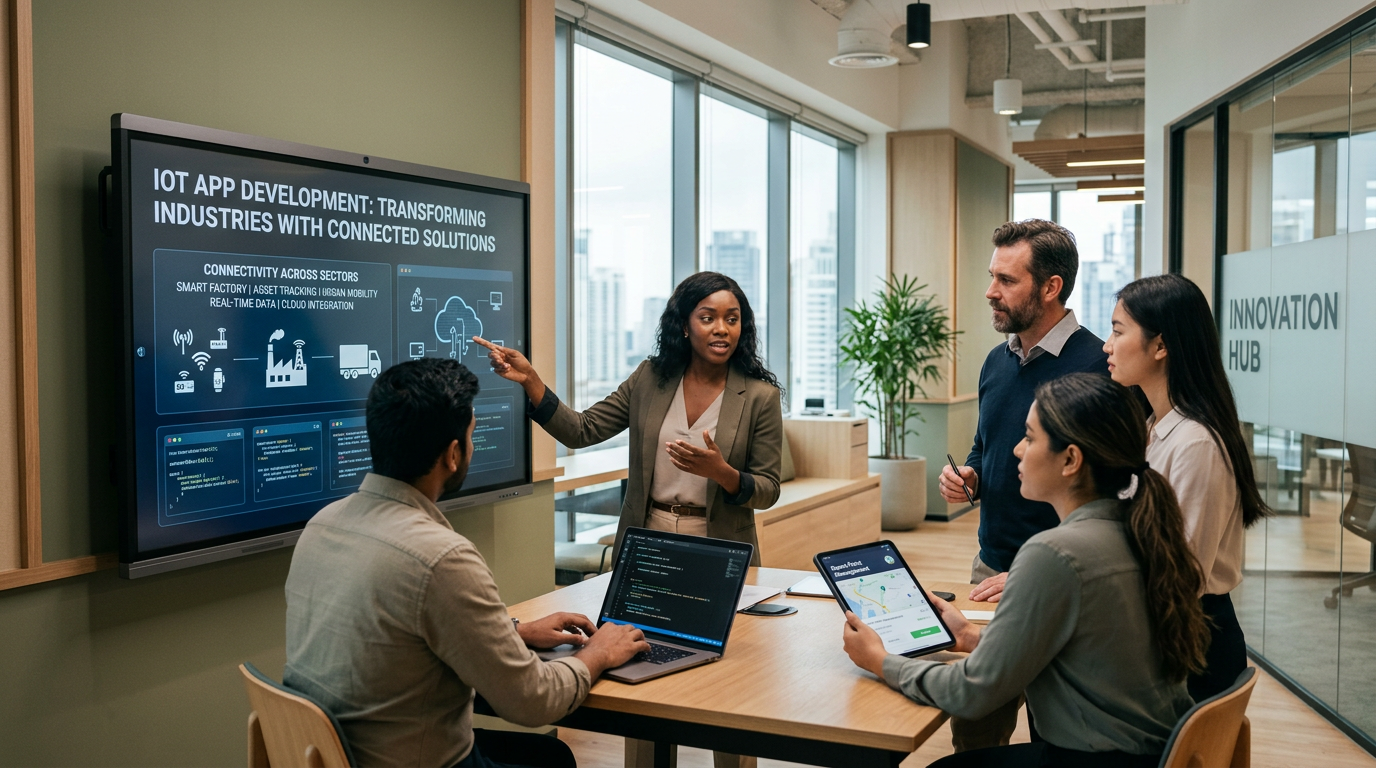
Introduction to IoT App Development
In today's rapidly advancing technological landscape, the Internet of Things (IoT) has emerged as a pivotal force driving innovation across various industries. IoT app development, powered by artificial intelligence (AI), is at the forefront of this transformation, offering connected solutions that enhance efficiency, reduce costs, and create new business opportunities. In this detailed analysis, we explore how IoT app development is reshaping industries, focusing on AI-driven use cases, implementation strategies, business value, and measurable outcomes.
AI-Driven IoT Solutions: Practical Implementation
IoT app development leverages AI to create intelligent, connected ecosystems that facilitate real-time data collection, analysis, and decision-making. Implementing AI in IoT solutions involves several critical steps:
1. Identifying Business Needs
The first step is to identify specific business needs and challenges that IoT solutions can address. This involves conducting a thorough analysis of existing processes to pinpoint inefficiencies and areas where automation can deliver significant improvements.
2. Designing IoT Architecture
Once business needs are identified, the next step is designing a robust IoT architecture. This includes selecting appropriate sensors, devices, and communication protocols to ensure seamless data flow. AI algorithms are integrated to analyze data, enabling predictive insights and automated actions.
3. Development and Integration
Developing IoT applications requires a multidisciplinary approach, combining expertise in software development, AI, and network engineering. Integration with existing IT infrastructure is crucial to maximize the value of IoT solutions.
4. Ensuring Security and Compliance
Security is a paramount concern in IoT app development. Implementing robust encryption, authentication, and access control measures is essential to protect sensitive data. Additionally, ensuring compliance with industry standards and regulations is vital for maintaining trust and credibility.
Business Value and Measurable Outcomes
Enhancing Operational Efficiency
IoT solutions powered by AI can significantly enhance operational efficiency by automating routine tasks, monitoring equipment performance, and predicting maintenance needs. This leads to reduced downtime, lower operational costs, and improved productivity.
Enabling Data-Driven Decision Making
With IoT apps collecting vast amounts of data, AI-driven analytics provide businesses with actionable insights. These insights enable informed decision-making, allowing companies to optimize processes, forecast trends, and identify new revenue streams.
Improving Customer Experience
IoT applications offer personalized experiences by analyzing customer behavior and preferences. For instance, in retail, IoT devices can track customer interactions and tailor marketing strategies accordingly, enhancing customer satisfaction and loyalty.
Risks and Challenges in IoT App Development
Data Security Concerns
With the proliferation of IoT devices, data security is a significant concern. Ensuring device security, data encryption, and secure data transmission are critical to safeguarding information.
Interoperability Issues
IoT ecosystems often involve multiple devices from different manufacturers, leading to interoperability challenges. Establishing industry standards and using open protocols can mitigate this issue.
Scalability and Infrastructure
As IoT networks grow, scalability becomes a challenge. Ensuring that infrastructure can handle increased data loads and device connections is vital for long-term success.
Workflows and Key Performance Indicators (KPIs)
Developing Efficient Workflows
Successful IoT app development requires streamlined workflows that integrate seamlessly into existing processes. This involves collaboration across departments, clear communication channels, and agile development methodologies.
Key Performance Indicators
Measuring the success of IoT solutions involves tracking specific KPIs, such as:
- Reduction in operational costs
- Improvement in process efficiency
- Increase in customer satisfaction and retention rates
- Revenue growth from new business models
Case Studies: Success Stories in IoT App Development
Smart Manufacturing
In the manufacturing sector, IoT solutions have revolutionized production processes. By integrating AI-driven IoT apps, companies can monitor equipment health, predict failures, and optimize supply chains, resulting in increased output and reduced waste.
Healthcare Transformation
Healthcare providers are leveraging IoT apps to enhance patient care. Wearable devices and remote monitoring systems provide real-time health data, enabling proactive care management and reducing hospital readmissions.
Conclusion
IoT app development, empowered by AI, is transforming industries by enabling connected, intelligent ecosystems. From enhancing operational efficiency to delivering personalized customer experiences, the business value of IoT solutions is profound. While challenges such as data security and interoperability remain, the measurable outcomes and strategic advantages drive continued investment and innovation in IoT app development. As industries embrace these technologies, the future promises even more revolutionary changes driven by the seamless integration of IoT and AI.
Exploring IoT in Agriculture
IoT app development is making significant strides in agriculture by optimizing resource usage and enhancing crop yields. Smart farming technologies, including soil sensors, weather stations, and drones, provide farmers with real-time data to make informed decisions.
Precision Farming
Precision farming involves using IoT devices to collect detailed data on soil conditions, plant health, and environmental factors. This data is analyzed using AI algorithms to determine the optimal amount of water, fertilizers, and pesticides required, thereby reducing waste and increasing productivity.
Supply Chain Optimization
IoT applications streamline the agricultural supply chain by tracking the movement of produce from farm to market. By monitoring conditions such as temperature and humidity during transportation, these apps ensure freshness and reduce spoilage, benefiting both producers and consumers.
IoT in Smart Cities
Smart cities are utilizing IoT to create more efficient, sustainable urban environments. IoT applications in smart cities include traffic management systems, energy-efficient buildings, and waste management solutions.
Traffic Management
IoT-enabled traffic management systems use sensors and cameras to monitor traffic flow in real-time. AI analyzes this data to optimize traffic signals, reduce congestion, and improve safety, ultimately enhancing the urban commuting experience.
Energy Efficiency
Smart buildings equipped with IoT devices can monitor energy usage and automate lighting, heating, and cooling systems based on occupancy and weather conditions. This leads to significant energy savings and reduced carbon footprints.
Waste Management
IoT solutions in waste management involve deploying sensors in waste bins to monitor fill levels. These sensors communicate with collection services to optimize pickup schedules, reducing unnecessary trips and lowering operational costs.
Challenges in IoT App Development
Data Privacy and Ownership
As IoT devices collect vast amounts of data, privacy and ownership concerns arise. Establishing clear policies on data usage and ensuring user consent are essential to address these issues and build trust with users.
Environmental Impact
The production and disposal of IoT devices contribute to electronic waste. Developing sustainable manufacturing practices and promoting recycling and reuse of components are critical to minimizing environmental impact.
Future Trends in IoT App Development
Edge Computing
Edge computing is becoming increasingly important as IoT networks expand. By processing data closer to the source, edge computing reduces latency and bandwidth usage, enabling faster decision-making and improved performance.
Blockchain Integration
Integrating blockchain technology with IoT enhances security and transparency. Blockchain can provide a secure, immutable record of all transactions and data exchanges, addressing concerns about data integrity and tampering.
Innovative IoT Applications
Emerging IoT applications are continually pushing the boundaries of what's possible. From smart grids to connected vehicles, the potential for innovation is vast.
Connected Vehicles
IoT-enabled vehicles communicate with each other and infrastructure to enhance safety and efficiency. Features like predictive maintenance, real-time traffic updates, and autonomous driving are transforming the automotive industry.
Smart Grid Solutions
IoT apps in the energy sector are enabling smart grid solutions that balance supply and demand in real-time. These systems improve energy distribution, reduce outages, and support the integration of renewable energy sources.
IoT in Retail and Logistics
IoT app development is also making a significant impact in the retail and logistics sectors by enhancing inventory management and improving customer experiences.
Inventory Management
IoT devices, such as RFID tags and smart shelves, enable real-time inventory tracking. This helps retailers maintain optimal stock levels, reduce shrinkage, and automate reordering processes, ultimately leading to cost savings and increased sales.
Customer Experience Enhancement
By leveraging IoT data, retailers can personalize customer interactions. Smart mirrors, IoT-enabled fitting rooms, and personalized product recommendations based on browsing history create a seamless and engaging shopping experience.
Logistics Optimization
In logistics, IoT solutions provide real-time tracking of shipments, optimize delivery routes, and monitor the condition of goods in transit. This transparency improves supply chain efficiency, reduces delivery times, and enhances customer satisfaction.
IoT in Environmental Monitoring
IoT applications are crucial in monitoring environmental conditions and supporting sustainability initiatives.
Air Quality Monitoring
IoT sensors can track air quality levels in real-time, providing valuable data to city planners and policymakers. This information is used to implement strategies that reduce pollution and improve urban living conditions.
Water Resource Management
Smart IoT devices help manage water resources by monitoring consumption patterns, detecting leaks, and optimizing water distribution. This leads to more sustainable water use and reduces wastage.
Addressing IoT Development Challenges
Standardization Efforts
To overcome interoperability issues, industry stakeholders are collaborating to establish universal standards and protocols. These efforts ensure different IoT devices and systems can communicate effectively, fostering innovation and widespread adoption.
Investment in Cybersecurity
As data security remains a top concern, ongoing investment in advanced cybersecurity measures is crucial. This includes developing AI-driven security solutions that proactively identify and mitigate potential threats.