
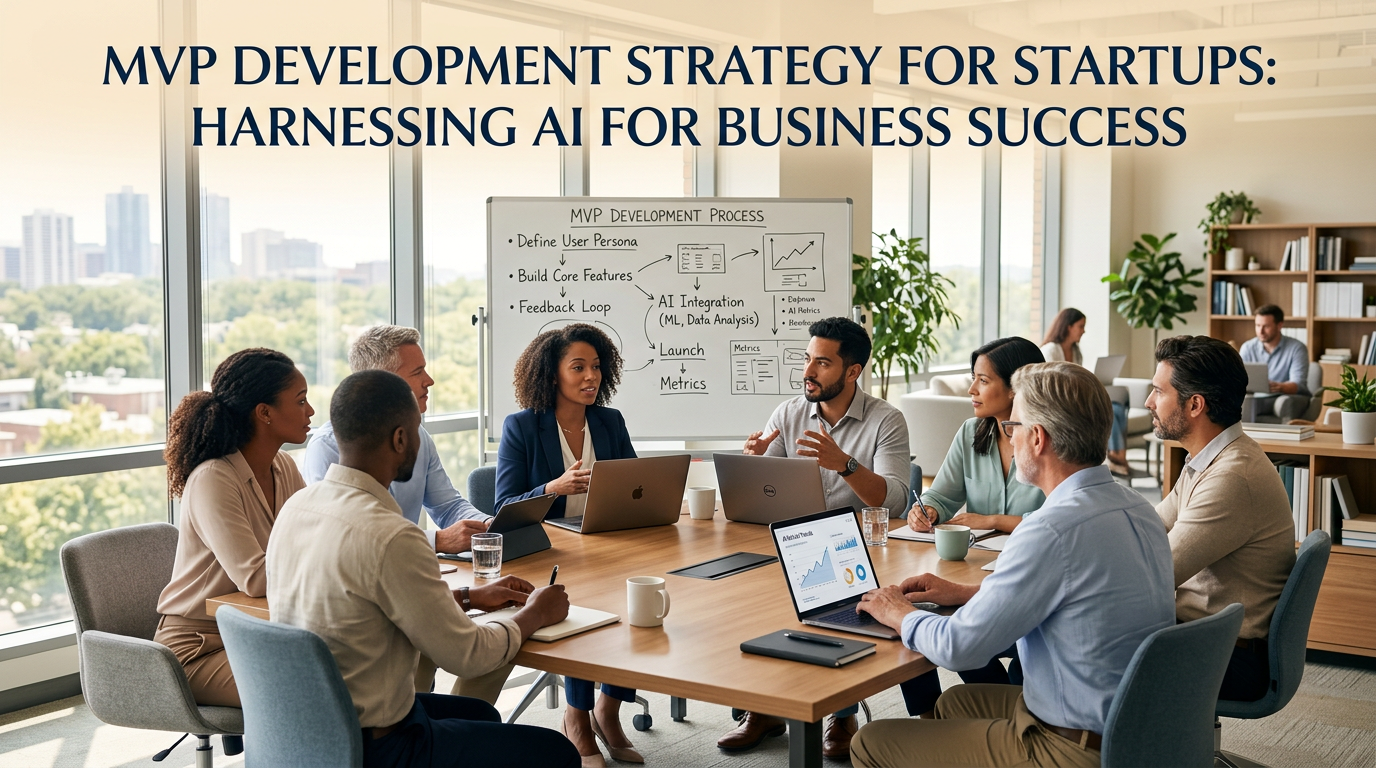
Introduction to MVP Development in Startups
In the fast-paced world of startups, developing a Minimum Viable Product (MVP) is a critical step towards achieving business success. An MVP allows startups to test their ideas in the market with minimal resources, gather valuable user feedback, and refine their product based on real-world data. However, developing an MVP does not guarantee success; it requires a strategic approach that aligns with the startup's goals and market needs.
The Role of AI in MVP Development
Artificial Intelligence (AI) is revolutionizing the way startups approach MVP development. AI technologies can enhance various aspects of the MVP process, from ideation to market analysis and user engagement. By integrating AI into MVP development, startups can gain insights into customer behavior, optimize processes, and ultimately deliver a product that better meets user needs.
AI Use Cases in MVP Development
AI can be leveraged in several use cases during the MVP development process:
- Market Analysis: AI-powered analytics tools can sift through massive datasets to identify market trends, consumer preferences, and potential competitors. This information is invaluable for startups looking to position their MVP effectively.
- User Feedback: Natural Language Processing (NLP) algorithms can analyze user feedback and reviews to extract sentiments and identify common pain points. This helps startups make data-driven decisions to improve their MVP.
- Product Optimization: AI can automate A/B testing and other optimization processes, allowing startups to experiment with different features and functionalities efficiently.
Implementing AI in MVP Development
Implementing AI in MVP development requires a clear strategy and the right set of tools. Here are the key steps:
1. Define Objectives
Start by clearly defining the objectives of your MVP. What problem does it solve, and how will AI enhance its value? Setting clear goals will guide the AI integration process.
2. Select the Right AI Tools
Choose AI tools that align with your MVP objectives. Consider factors such as scalability, ease of integration, and cost-effectiveness. Popular AI tools for startups include TensorFlow, IBM Watson, and Google Cloud AI.
3. Data Collection and Analysis
AI thrives on data. Collect relevant data that can inform your MVP's features and functionalities. Use AI to analyze this data for actionable insights.
4. Continuous Testing and Iteration
AI enables continuous testing and iteration, making it easier to refine your MVP based on user feedback and market changes. Utilize AI for automated testing to ensure your MVP evolves with user needs.
Business Value of AI-Driven MVPs
AI-driven MVPs offer significant business value. By leveraging AI, startups can:
- Reduce Time to Market: AI accelerates the development process, allowing startups to launch their MVPs faster and gain a competitive edge.
- Enhance User Experience: Personalized experiences powered by AI can increase user satisfaction and engagement, leading to higher retention rates.
- Improve Decision Making: Data-driven insights from AI help startups make informed decisions, reducing the risk of costly mistakes.
Measurable Outcomes from AI-Driven MVPs
To evaluate the success of an AI-driven MVP, startups should focus on measurable outcomes. These include:
- User Engagement Metrics: Track metrics such as active users, session duration, and churn rates to assess user engagement.
- Feedback Analysis: Use AI to analyze feedback for trends and insights that can guide further development.
- Revenue Growth: Monitor revenue metrics to determine how well the MVP is meeting market demands and driving business growth.
Conclusion
Incorporating AI into MVP development provides startups with the tools needed to succeed in a competitive market. By strategically implementing AI, startups can enhance their MVP's value, optimize development processes, and achieve measurable outcomes that drive business success. As AI technology continues to evolve, its role in MVP development will only become more critical, offering new opportunities for innovation and growth.
Challenges in AI-Driven MVP Development
Despite the advantages AI brings to MVP development, startups may face several challenges when integrating AI into their processes. Understanding these challenges is crucial for devising effective strategies to overcome them.
Data Privacy Concerns
AI systems often require large amounts of data to function effectively, which can raise data privacy concerns. Startups must ensure they comply with data protection regulations such as GDPR and prioritize user consent and data security.
Resource Intensity
Implementing AI technologies can be resource-intensive, particularly for startups with limited funding. Building AI solutions requires skilled professionals and computational resources, which can be costly.
Integration Complexity
Integrating AI tools with existing systems and workflows can be complex. Startups must navigate compatibility issues and ensure seamless integration to avoid disruptions during MVP development.
Strategies for Overcoming AI Integration Challenges
To successfully integrate AI into MVP development, startups should consider the following strategies:
- Partner with AI Experts: Collaborating with AI specialists can help startups navigate technical challenges and leverage expertise in AI implementation.
- Utilize Cloud-Based Solutions: Cloud-based AI platforms offer scalable and cost-effective solutions for startups, reducing the need for extensive in-house resources.
- Focus on Core AI Features: Start with core AI functionalities that add the most value to the MVP, and gradually expand as resources allow.
Case Studies of Successful AI-Driven MVPs
Examining real-world examples of successful AI-driven MVPs can offer valuable insights into best practices and innovative approaches:
Case Study: AI-Powered Healthcare App
A startup in the healthcare sector developed an AI-driven app designed to assist patients in managing chronic conditions. The app utilized AI to analyze patient data and provide personalized health recommendations, significantly improving patient outcomes.
This MVP's success stemmed from a focused AI integration strategy that prioritized data security and patient privacy while continuously refining its algorithms based on user feedback.
Case Study: AI in E-commerce
An e-commerce startup launched an MVP featuring an AI recommendation engine that analyzes customer behavior to suggest products. By delivering personalized shopping experiences, the startup saw a 20% increase in conversion rates within the first few months.
The MVP's success was attributed to the seamless integration of AI tools and the startup's commitment to using data-driven insights for continuous improvement.
Future Trends in AI and MVP Development
The intersection of AI and MVP development is rapidly evolving, with new trends emerging that promise to shape the future of startup innovation:
Explainable AI
As AI becomes more integral to MVPs, there is a growing demand for transparency and explainability. Startups are increasingly looking to develop AI systems that can provide clear, understandable insights into their decision-making processes.
AI-Driven User Personalization
The trend towards hyper-personalization is set to continue, with AI enabling startups to deliver highly tailored user experiences. This personalization extends beyond product recommendations to include customized user interfaces and adaptive content.
Edge AI
Edge AI, which involves processing data closer to the source rather than relying on centralized cloud servers, is gaining traction. This approach reduces latency and enhances the performance of AI-driven MVPs, particularly in industries like IoT and autonomous vehicles.
Conclusion: Embracing AI for Long-Term Success
For startups, embracing AI in MVP development is not just a short-term strategy but a pathway to long-term success. By understanding the challenges, leveraging best practices, and staying ahead of emerging trends, startups can create innovative MVPs that resonate with their target audience and drive sustainable growth.
Building a Collaborative MVP Team
The success of an AI-driven MVP often hinges on the strength and collaboration of the development team. Startups must prioritize building a well-rounded team equipped with diverse skills and perspectives.
Key Roles in an MVP Development Team
- Product Manager: Responsible for defining the product vision and aligning the team’s efforts with business goals.
- AI Specialist: Brings technical expertise in AI to design and implement smart algorithms and systems within the MVP.
- UX/UI Designer: Focuses on crafting engaging and intuitive user interfaces that meet the needs of the target audience.
- Software Engineer: Develops the technical architecture of the MVP, ensuring scalability and robustness.
- Data Analyst: Analyzes user data to extract actionable insights that drive product improvements and optimizations.
A collaborative approach that encourages open communication and cross-functional teamwork can significantly enhance the MVP development process, leading to a more innovative and effective product.
Long-Term AI Strategy for Startups
While AI integration in MVPs is a crucial step, startups must also consider a long-term AI strategy to sustain growth and innovation. This involves continuous investment in AI research, staying abreast of technological advancements, and fostering an AI-centric culture within the organization.
Steps to Develop a Long-Term AI Strategy
- Invest in AI Talent: Hire and train individuals with expertise in AI to ensure the company remains at the forefront of technological innovation.
- Commit to Continuous Learning: Encourage team members to engage in ongoing education and training to stay updated with the latest AI trends and tools.
- Leverage AI Partnerships: Collaborate with AI research institutions and other tech companies to share knowledge and resources, driving mutual growth.
- Focus on Scalability: Develop AI systems and processes that can scale alongside the business, accommodating growing data and user demands.
By embedding AI into the core of their business strategy, startups can not only enhance their current MVPs but also position themselves for future opportunities in the ever-evolving tech landscape.