
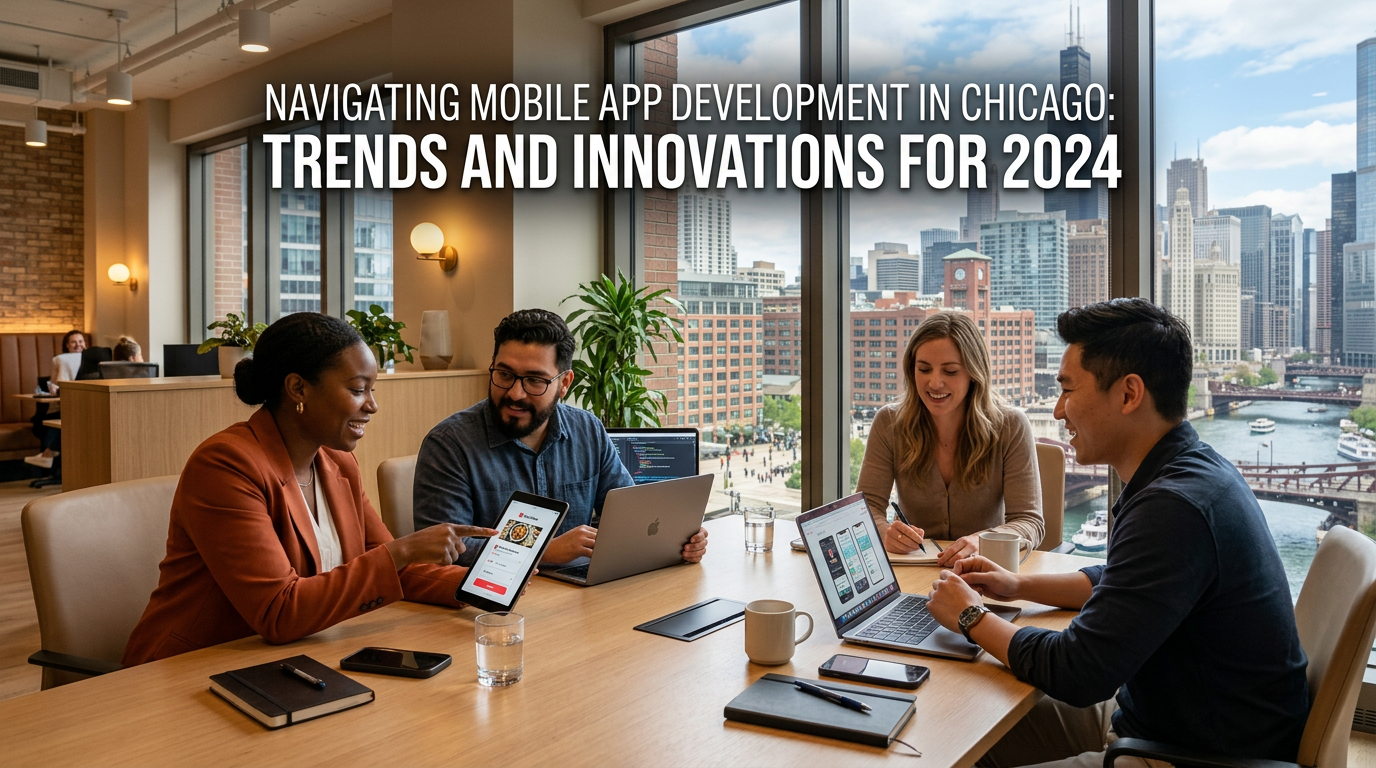
Introduction
Chicago is not just a city of architectural marvels and innovative businesses; it is also a burgeoning hub for mobile app development. As we move into 2024, the landscape of mobile app development in Chicago is being transformed by emerging technologies, especially artificial intelligence (AI). This article delves into the current trends and innovations shaping mobile app development in the Windy City, focusing on AI-driven solutions, practical implementation, measurable business value, risks, and more.
Leading Trends in Mobile App Development
AI Integration
AI is at the forefront of mobile app development, offering solutions that enhance user engagement and streamline operations. In Chicago, companies are increasingly integrating AI to provide personalized user experiences, predictive analytics, and automated customer service. These capabilities not only improve app functionality but also drive user retention and satisfaction.
Progressive Web Apps (PWAs)
PWAs continue to gain traction in Chicago's app development scene. They offer a seamless user experience by combining the best features of both web and mobile apps. Chicago developers are leveraging PWAs to deliver faster load times and offline capabilities, crucial for businesses aiming to reach wider audiences.
5G Technology
The rollout of 5G technology is revolutionizing mobile app performance in Chicago. With faster data transfer rates and lower latency, 5G enables apps to support more complex functionalities and real-time data processing. This advancement is particularly beneficial for apps utilizing AI, as it allows for more efficient data handling and processing.
Implementing AI in Mobile App Development
Practical Steps
Implementing AI in mobile app development involves several critical steps:
- Identifying Use Cases: Determine where AI can add the most value, such as improving customer interactions or enhancing app security.
- Data Collection: Gather relevant data to train AI models. This includes user behavior data, transaction records, and more.
- Model Training: Develop AI models using machine learning algorithms tailored to your app’s requirements.
- Integration: Seamlessly integrate AI capabilities into the app, ensuring they align with the user interface and experience design.
- Testing and Deployment: Conduct rigorous testing to ensure AI functions as expected before deploying the app to the market.
Business Value and Measurable Outcomes
Integrating AI into mobile apps offers numerous business benefits:
- Enhanced Customer Experience: AI-driven features such as chatbots and personalized recommendations improve user engagement and satisfaction.
- Operational Efficiency: Automation of routine tasks reduces operational costs and allows employees to focus on strategic initiatives.
- Data-Driven Insights: AI provides actionable insights into user behavior, enabling data-driven decision-making and strategic planning.
Measurable outcomes of AI integration include increased app usage rates, higher customer retention, and improved ROI.
Risks and Challenges
While AI provides significant advantages, it also presents certain risks:
Data Privacy Concerns
Handling large volumes of user data raises privacy issues. Companies must ensure compliance with data protection regulations such as GDPR and CCPA to build user trust.
High Implementation Costs
Developing and integrating sophisticated AI models can be costly. Businesses must weigh these costs against the potential benefits and ROI.
Technical Complexity
AI integration requires specialized knowledge and expertise. Finding skilled professionals to develop and maintain AI-driven apps can be challenging.
Workflows and KPIs
Development Workflow
The mobile app development workflow typically involves:
- Requirement Analysis: Gather and analyze business and technical requirements.
- Design: Create wireframes and design the user interface.
- Development: Code the app, integrating AI features as necessary.
- Testing: Conduct functional, performance, and security testing.
- Deployment: Launch the app on relevant platforms and app stores.
Key Performance Indicators (KPIs)
To measure the success of a mobile app, consider the following KPIs:
- App Usage Rates: Monitor the frequency and duration of app usage to gauge user engagement.
- User Retention Rates: Track how many users continue using the app over time.
- Customer Satisfaction Scores: Use surveys and feedback to assess satisfaction levels.
- ROI: Calculate the return on investment by comparing the costs of development against revenue generated.
Case Study: AI-Driven Mobile App Success in Chicago
A notable example of successful AI integration in Chicago is a local e-commerce app that utilized AI for personalized recommendations. By analyzing user data and purchasing patterns, the app increased sales by 25% within the first six months of launch, demonstrating the significant business value AI can provide.
Conclusion
As Chicago continues to establish itself as a leader in mobile app development, AI remains at the forefront of technological advancement. By understanding and implementing AI-driven solutions, businesses can not only enhance their app offerings but also achieve measurable business outcomes. While challenges exist, the potential rewards make it a worthwhile endeavor for companies looking to thrive in the competitive app market of 2024.
Future Directions and Opportunities
As we look beyond 2024, the future of mobile app development in Chicago holds numerous possibilities. Emerging technologies such as augmented reality (AR), virtual reality (VR), and blockchain are poised to further transform the way apps are developed and utilized. Companies in Chicago can leverage these technologies to create more immersive and secure applications, expanding their market reach and enhancing user engagement.
Augmented and Virtual Reality
AR and VR are increasingly being integrated into mobile apps to offer more engaging and interactive experiences. In Chicago, industries such as real estate, retail, and education are exploring these technologies to provide virtual tours, enhance shopping experiences, and deliver immersive educational content. App developers who adopt AR and VR can capitalize on these trends, offering differentiated solutions that attract and retain users.
Blockchain for Enhanced Security
Blockchain technology provides a secure and transparent way to handle transactions and data exchanges, making it a valuable addition to mobile apps that require robust security features. By integrating blockchain, Chicago app developers can ensure data integrity, protect user information, and build trust with their audience, particularly in sectors like finance and healthcare where data security is paramount.
Building a Competitive Edge
To stay competitive in the evolving mobile app market, Chicago-based developers must continually innovate and adapt to new trends. Building a competitive edge involves not only adopting the latest technologies but also focusing on user-centric design and robust testing methodologies. By prioritizing the needs and preferences of users, developers can create apps that deliver exceptional value and foster long-term user loyalty.
User-Centric Design
User-centric design is essential for creating apps that resonate with audiences. By involving users in the design process through feedback and usability testing, developers can ensure that the app meets user expectations and provides a seamless experience. This approach helps in reducing churn rates and increasing user satisfaction.
Robust Testing and Quality Assurance
Quality assurance is a critical component of mobile app development, ensuring that apps function correctly and provide a smooth user experience. Chicago developers are investing in advanced testing tools and methodologies to identify and resolve issues early in the development process. Automated testing and continuous integration practices are being employed to maintain high-quality standards and accelerate time-to-market.
Collaborative Ecosystem and Networking
Chicago's vibrant tech ecosystem provides ample opportunities for collaboration and networking. Developers can benefit from partnerships with local startups, academic institutions, and tech incubators to foster innovation and share best practices. Networking events, hackathons, and workshops offer platforms for exchanging ideas and staying updated on industry trends.
Engaging with Local Startups
Collaborating with startups can provide valuable insights and opportunities for innovation. Startups are often at the forefront of adopting new technologies and can offer fresh perspectives on app development challenges. By engaging with local startups, established companies can explore novel solutions and accelerate their development processes.
Participating in Tech Events
Attending and participating in tech events in Chicago helps developers stay informed about the latest advancements and network with industry peers. Events such as Techweek Chicago and the Chicago Tech Summit provide platforms for knowledge sharing and collaboration, allowing developers to gain exposure to emerging trends and technologies.
Conclusion
The mobile app development landscape in Chicago is continuously evolving, driven by technological advancements and changing consumer expectations. By embracing innovations such as AI, AR, VR, and blockchain, and focusing on user-centric design and quality assurance, Chicago developers can create impactful apps that deliver significant business value. Through collaboration and networking, they can keep pace with industry trends and maintain a competitive advantage in the dynamic app market. As we move forward, the opportunities for innovation and growth in mobile app development in Chicago remain abundant and promising.