
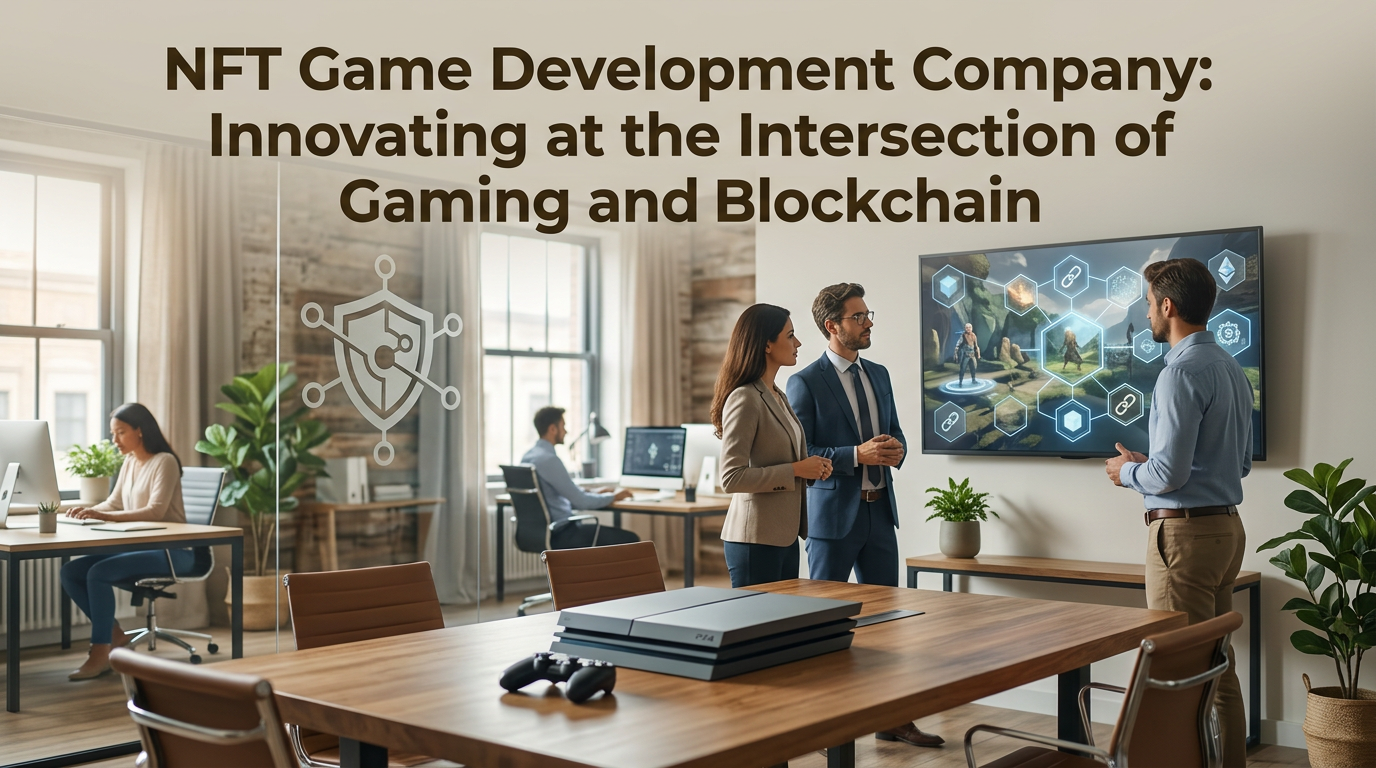
Introduction to NFT Game Development
The gaming industry has always been at the forefront of technological innovation, continuously evolving to meet the demands of an ever-growing audience. Recently, the integration of blockchain technology has led to a significant paradigm shift, marking the rise of Non-Fungible Tokens (NFTs) in gaming. NFT game development companies are now at the center of this transformation, where the intersection of gaming and blockchain is redefining ownership, creativity, and play. This article delves into how NFT game development companies utilize AI solutions to deliver business value, ensure robust implementation, and measure success through key performance indicators (KPIs).
Understanding the Role of AI in NFT Game Development
AI plays a crucial role in enhancing the capabilities of NFT game development companies. It streamlines development processes, improves user experiences, and provides scalable solutions. Incorporating AI in NFT games facilitates procedural content generation, predictive analytics for game marketing, and personalized player experiences.
AI-Driven Procedural Content Generation
AI algorithms can generate diverse and unique in-game assets, such as characters, worlds, and items, which can be tokenized as NFTs. This not only saves time and resources but also offers endless possibilities for creative expression, allowing players to own unique, player-generated content securely stored on blockchain.
Player Experience Personalization
By analyzing player behavior, AI can personalize gaming experiences, tailoring difficulty levels, rewards, and in-game events to individual preferences. This increases player engagement and satisfaction, consequently enhancing retention rates and lifetime value (LTV) of players, key metrics in measuring the ROI of NFT games.
Implementation Steps for NFT Game Development
The successful development of NFT games involves several critical steps, from conceptualization to deployment. Here are the core implementation steps:
Conceptualization and Design
The initial phase involves brainstorming and designing the game’s mechanics, storyline, and NFT integration strategy. It is essential to define the types of NFTs to be used, their role within the game, and how they will provide value to players.
Blockchain Selection
Choosing the right blockchain platform is crucial. Factors such as transaction speed, gas fees, and developer support are important considerations. Ethereum remains a popular choice due to its robust smart contract capabilities, although alternatives like Binance Smart Chain and Polygon are gaining traction.
AI Integration
Integrating AI tools for procedural content generation, predictive analytics, and personalization is the next step. This involves selecting appropriate AI models and training them using relevant datasets to ensure they deliver targeted outcomes.
Development and Testing
The development phase includes coding the game logic, integrating blockchain functionalities, and ensuring seamless interaction between AI components and game features. Rigorous testing is performed to identify and rectify bugs, ensuring the game’s stability and security.
Deployment and Community Building
Once the game is ready, it is deployed on chosen platforms. Building a strong player community through marketing and engagement strategies is essential for the game’s success. AI-driven analytics can be instrumental in refining these strategies by providing insights into player demographics and behavior.
Business Value and Measurable Outcomes
NFT game development companies bring significant business value by offering innovative gaming solutions that enhance player engagement and generate new revenue streams.
New Revenue Models
NFTs introduce new monetization opportunities, such as selling unique in-game assets, facilitating player-to-player trading, and enabling secondary markets. These models not only generate income for developers but also create a sustainable economic ecosystem for players.
Enhanced Player Retention
AI-driven personalization and blockchain-based ownership models foster a deeper connection between players and their gaming experiences. As players invest both emotionally and financially in their unique assets, retention rates improve, increasing the game’s long-term profitability.
Expanded Market Reach
The integration of blockchain and AI opens up new markets, attracting tech-savvy players interested in decentralized gaming and digital ownership. This expanded reach can be measured through traditional KPIs such as daily active users (DAU) and monthly active users (MAU), as well as new metrics specific to blockchain engagement.
Risks and Challenges
Despite the numerous advantages, NFT game development is not without challenges. High entry costs, regulatory uncertainties, and technical complexities pose significant risks. Companies must also address issues related to environmental impact and scalability of blockchain networks.
Conclusion
NFT game development companies are pioneering the future of gaming at the intersection of blockchain and AI. By leveraging AI solutions, these companies can create immersive, personalized, and economically viable gaming experiences. The successful implementation of these technologies requires careful planning, robust development processes, and an understanding of market dynamics. As the industry continues to evolve, staying ahead of technological advancements and regulatory changes will be key to maintaining a competitive edge in this rapidly growing market.
Exploring Potential Risks and Mitigation Strategies
Venturing into NFT game development comes with its share of risks, which need to be carefully managed to ensure long-term success. Companies must develop comprehensive strategies to mitigate these risks effectively.
Regulatory Compliance
Navigating the regulatory landscape is a significant challenge in the NFT game space. Companies should proactively engage with legal experts to ensure compliance with laws related to digital assets, intellectual property, and taxation. Staying informed about regional regulations is crucial as these can vary widely across different jurisdictions.
Environmental Concerns
The energy consumption of blockchain networks, particularly those using Proof of Work (PoW) consensus mechanisms, raises environmental concerns. NFT game developers can mitigate this by choosing more sustainable blockchain platforms, such as those employing Proof of Stake (PoS) or Layer 2 solutions, which are designed to reduce carbon footprints.
Detailed Workflow of NFT Game Development
Understanding the workflow of NFT game development is essential for successful project execution. Here’s a deeper dive into each stage:
Project Planning and Feasibility Study
This phase involves setting clear objectives, assessing technical feasibility, and determining budget requirements. Companies must evaluate potential market demand and competitor analysis to shape their development strategy effectively.
Prototype Development
Creating a prototype allows developers to experiment with game mechanics and NFT integration without committing extensive resources. It serves as a proof of concept, helping stakeholders visualize the project's potential and make informed decisions.
Iterative Development and Feedback Loop
Adopting an agile approach ensures continuous improvement. Developers should gather player feedback through alpha and beta testing phases to refine gameplay, address bugs, and enhance user experience. This iterative process fosters adaptability to changing market demands and player preferences.
Key Performance Indicators (KPIs) for Success
Measuring the success of an NFT game requires identifying and tracking specific KPIs that align with business goals. Here are some critical KPIs for NFT game development companies:
- Player Acquisition and Retention Rates: Tracking how many new players join and how long they remain engaged provides insights into the game’s appeal and longevity.
- Transaction Volume: Monitoring the volume and value of NFT transactions within the game can indicate the health of the in-game economy and player engagement.
- Player-to-Player Trading Activity: High levels of trading activity suggest a vibrant in-game marketplace, fostering community engagement and monetization potential.
- Return on Investment (ROI): Calculating ROI helps assess the financial viability of the project, guiding future investment decisions.
- Community Growth: The size and activity of the player community can be a strong indicator of the game’s popularity and potential for viral growth.
Case Studies: Successful NFT Game Implementations
Examining successful NFT game implementations can offer valuable insights and inspiration for new developers entering the space. Here are a few noteworthy examples:
Axie Infinity
Axie Infinity has been a pioneer in the NFT gaming industry, offering a play-to-earn model that allows players to earn real income through gameplay. It leverages blockchain to provide true ownership of in-game assets, which can be traded on secondary markets.
Decentraland
Decentraland is a virtual world where players can buy, develop, and sell parcels of virtual land as NFTs. Its open-ended nature allows for diverse user-generated content, creating a dynamic and evolving gaming environment.
Future Prospects of NFT Game Development
The future of NFT game development promises exciting advancements as technology continues to evolve. Innovations in AI and blockchain are expected to drive even more immersive and interactive gaming experiences. NFT games could soon integrate virtual reality (VR) and augmented reality (AR) technologies, further blurring the lines between the digital and physical worlds.