
Introduction
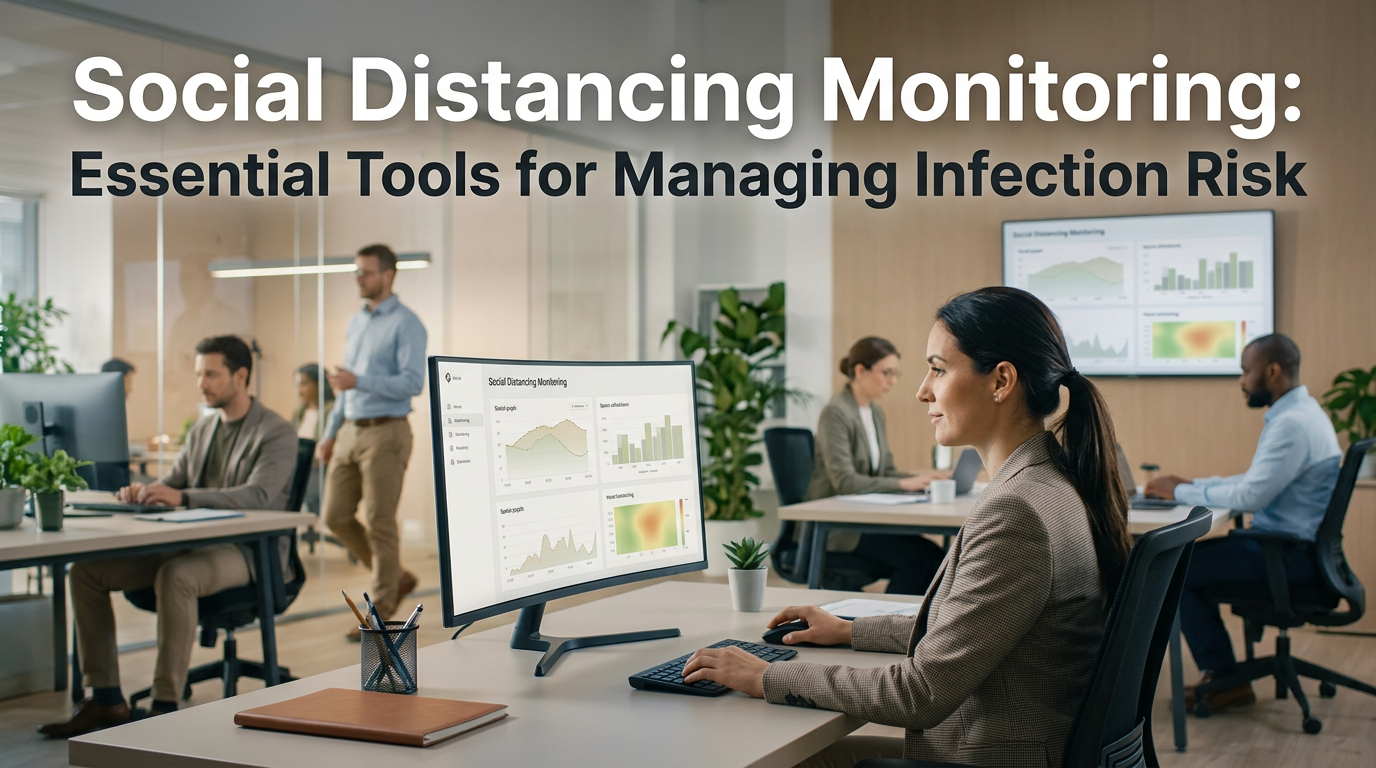
The COVID-19 pandemic has underscored the importance of effective social distancing measures in managing infection risks. As businesses and public spaces reopen, maintaining a safe distance is crucial to prevent virus spread. AI-driven social distancing monitoring solutions offer a promising way to ensure compliance with these measures, providing organizations with tools to enhance safety and operational efficiency.
Practical Implementation of Social Distancing Monitoring
Implementing AI-based social distancing monitoring involves integrating advanced technologies such as video analytics, IoT sensors, and machine learning algorithms. These systems can be deployed in various environments, from retail stores to transportation hubs, facilitating real-time monitoring and ensuring that individuals maintain appropriate distances.
Video Analytics and Machine Learning
Video analytics powered by machine learning algorithms analyze footage from surveillance cameras to detect and track the distance between individuals. This technology can automatically alert security personnel or management when social distancing protocols are breached, allowing for immediate corrective action.
IoT Sensors and Data Integration
IoT sensors can be strategically placed to monitor crowded areas and gather data on foot traffic patterns. Integrating this data with AI algorithms enhances the accuracy of monitoring efforts and provides valuable insights into peak times and high-risk areas.
Business Value of AI-Driven Social Distancing Monitoring
Deploying AI solutions for social distancing monitoring not only ensures compliance with health guidelines but also offers significant business value. By mitigating infection risks, businesses can maintain operational continuity, protect employees and customers, and enhance their brand reputation.
Operational Continuity and Cost Savings
Ensuring compliance with social distancing measures reduces the likelihood of outbreaks, minimizing disruptions to business operations. Additionally, automated monitoring can decrease the need for manual oversight, leading to cost savings in labor and resources.
Enhanced Customer Trust
Customers are more likely to frequent businesses that visibly prioritize health and safety. Implementing AI-driven monitoring systems demonstrates a commitment to public health, fostering customer trust and loyalty.
Risks and Challenges
Despite the advantages, there are potential risks and challenges associated with AI-driven social distancing monitoring. Privacy concerns, data security, and system reliability are critical considerations that businesses must address to ensure successful implementation.
Privacy and Data Security
Monitoring systems collect significant amounts of data, raising privacy concerns. Organizations must implement stringent data protection measures and comply with relevant regulations, such as GDPR, to safeguard personal information.
System Reliability
Ensuring that AI systems operate reliably in diverse environments is essential. This may require regular calibration and maintenance, as well as contingency plans to address technical failures.
Workflows and Implementation Steps
Proper implementation of social distancing monitoring involves several key steps. Organizations must assess their specific needs, choose appropriate technologies, and establish workflows for effective monitoring and response.
Assessment and Planning
The first step is to assess the environment and identify areas where social distancing monitoring is most needed. This includes evaluating existing infrastructure, such as camera placement and network capabilities.
Technology Selection and Integration
Choosing the right combination of AI technologies is crucial. Organizations should consider factors such as accuracy, scalability, and compatibility with existing systems. Integration with current IT infrastructure should be seamless to avoid operational disruptions.
Monitoring and Response Strategies
Establishing clear protocols for monitoring and response is vital. This includes defining alert thresholds, training staff on system use, and developing action plans for addressing social distancing breaches.
Key Performance Indicators (KPIs)
Measuring the success of AI-driven social distancing monitoring requires a set of well-defined KPIs. These indicators help organizations evaluate the effectiveness of their monitoring efforts and make data-driven decisions for improvement.
Compliance Rate
The percentage of time that social distancing measures are maintained within monitored areas is a critical KPI. High compliance rates indicate effective monitoring and enforcement.
Response Time
The time taken to respond to social distancing breaches is another important metric. Faster response times can reduce the risk of infection spread and demonstrate system efficiency.
Customer Feedback
Feedback from customers and employees regarding their perception of safety can provide qualitative insights into the system's impact on public confidence and business reputation.
Examples and Case Studies
Several organizations have successfully implemented AI-driven social distancing monitoring solutions. For instance, a large retail chain deployed video analytics to monitor customer flow, resulting in a significant reduction in overcrowding and increased customer satisfaction. Similarly, an airport integrated IoT sensors and AI algorithms to monitor passenger movement, enhancing compliance with health guidelines and streamlining operations.
Conclusion
AI-driven social distancing monitoring solutions are essential tools for managing infection risks in various environments. By leveraging advanced technologies, businesses can ensure compliance with health guidelines, protect stakeholders, and maintain operational continuity. Addressing challenges such as privacy and system reliability is crucial for successful implementation. With the right approach, organizations can harness the potential of AI to create safer, more efficient spaces.
Future Trends in Social Distancing Monitoring
The landscape of social distancing monitoring is continually evolving, with emerging technologies and methodologies promising to enhance its effectiveness. As AI and related technologies advance, we can expect more sophisticated solutions that further integrate with various facets of business operations.
AI and Augmented Reality
Augmented Reality (AR) solutions are being explored as a way to visualize social distancing guidelines in real-time. By overlaying digital information onto real-world environments, AR can assist individuals in maintaining safe distances through visual cues and guidance.
Predictive Analytics
The integration of predictive analytics can foresee potential crowding scenarios before they occur. By analyzing historical data, AI systems could predict peak times and suggest preemptive actions to disperse crowds, reducing the risk of non-compliance with social distancing measures.
Industry-Specific Applications
Different industries have unique requirements and challenges when it comes to social distancing monitoring. Tailoring solutions to fit these needs is essential for maximizing the effectiveness of monitoring technologies.
Healthcare Environments
In hospitals and clinics, the importance of maintaining social distancing is paramount. AI solutions can help manage patient flow, ensuring that waiting areas do not become crowded and that safe distances are maintained. This can be particularly beneficial in emergency departments where space is often limited.
Education Sector
Schools and universities face challenges in managing social distancing, especially during transitions between classes. AI-powered monitoring systems can assist in managing these transitions smoothly, ensuring students maintain appropriate distances and reducing the risk of outbreaks in educational settings.
- Automated scheduling systems to stagger class times and minimize crowd formation.
- Real-time alerts to inform staff of potential crowding.
Manufacturing Facilities
In manufacturing environments, maintaining social distancing can be challenging due to the nature of the work. AI-driven monitoring can help ensure workers on the factory floor adhere to guidelines, thereby protecting their health and ensuring uninterrupted production.
- Integration with wearable technology to provide immediate feedback to workers about their proximity to others.
- Use of drones for aerial monitoring in large facilities.
Real-World Examples and Success Stories
Numerous organizations across different sectors have successfully utilized AI-driven social distancing monitoring, showcasing its versatility and effectiveness.
Retail Success Stories
In the retail sector, a leading global supermarket chain implemented AI-driven video analytics to monitor foot traffic in real-time. This system enabled dynamic adjustments to store layouts and checkout processes, reducing congestion and enhancing customer satisfaction.
Transportation Innovations
An international airport adopted an AI-based monitoring solution that integrated with passenger information systems. By analyzing passenger flow data, the airport was able to make informed decisions about gate assignments and boarding processes, significantly improving adherence to distancing guidelines.
Conclusion and Future Outlook
As AI-driven social distancing monitoring technologies continue to evolve, they will play an increasingly crucial role in managing infection risks across various environments. By addressing current challenges and leveraging emerging technologies, organizations can create safer, more efficient spaces that prioritize public health. The future holds promising developments that will further integrate these solutions into the fabric of everyday operations, ensuring that businesses and public spaces can adapt to any health challenges that arise.