
Introduction
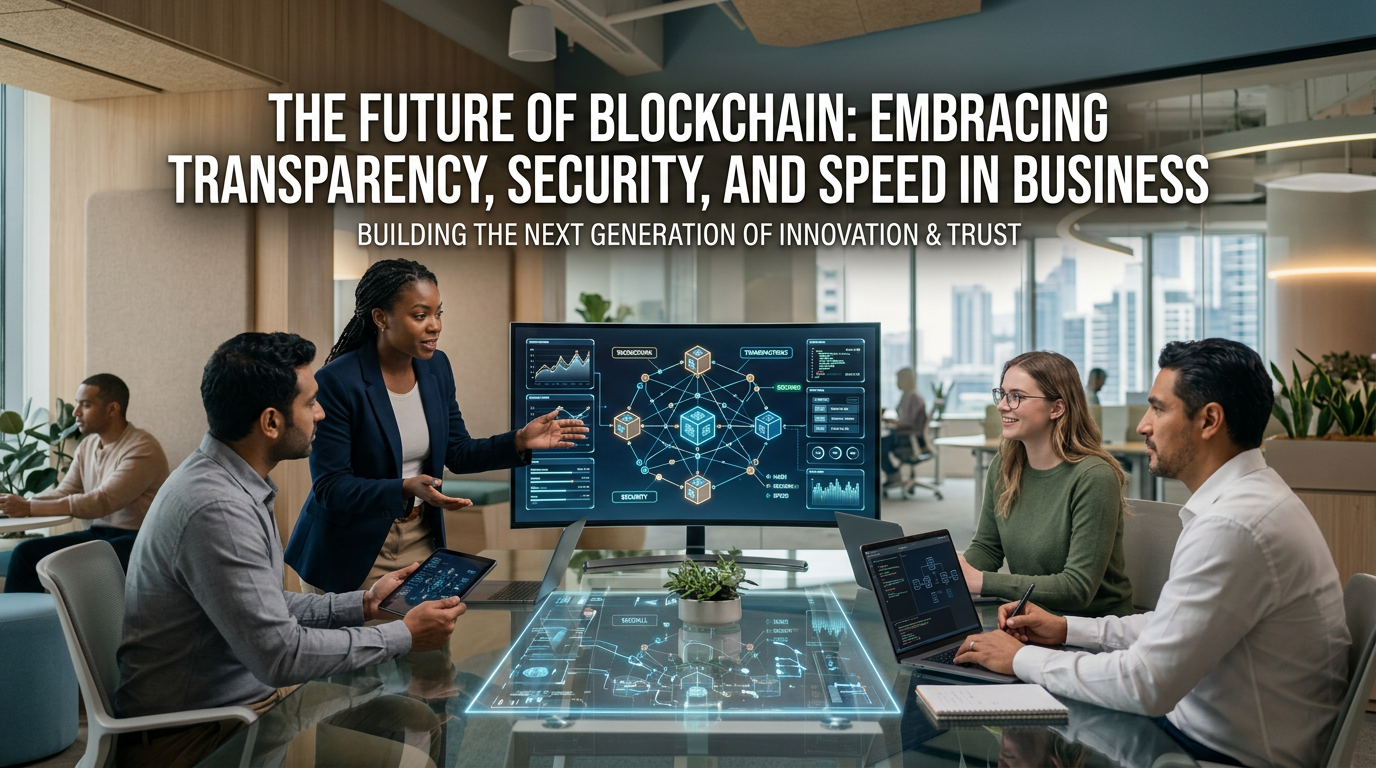
The advent of blockchain technology has set the stage for a revolutionary shift in how businesses manage and secure data. With its promise of transparency, security, and speed, blockchain is poised to redefine various industry landscapes. As businesses increasingly turn to AI-integrated blockchain solutions, the potential to protect values and enhance operational freedom becomes tangible. This article delves into the practical implementation of blockchain, its business value, associated risks, workflows, KPIs, and provides real-world examples.
Practical Implementation of Blockchain with AI
Implementing blockchain technology within a business framework begins with understanding its core components: decentralization, immutability, and smart contracts. AI solutions further enhance these components by automating processes, analyzing data patterns for insights, and managing blockchain nodes efficiently. Smart contracts, for example, can be automated through AI algorithms to execute transactions only when specific criteria are met, ensuring both speed and accuracy.
Businesses can integrate AI with blockchain to automate supply chain processes. By doing so, companies can track the movement of goods in real time, manage inventories accurately, and ensure compliance with regulations. AI-driven analytics can predict demand trends, allowing businesses to optimize their supply chains proactively.
Business Value of Blockchain Integration
The integration of blockchain into business operations offers substantial value across different dimensions. Firstly, transparency is significantly enhanced as all transactions are recorded on an immutable ledger accessible to authorized parties. This transparency reduces the risk of fraud and builds trust among stakeholders. Secondly, security is fortified as blockchain's decentralized nature makes it highly resistant to cyberattacks. Each transaction is encrypted and time-stamped, adding layers of protection against unauthorized access.
Speed is another critical advantage. Transactions that traditionally take days can be completed in seconds with blockchain, improving cash flow and operational efficiency. AI further optimizes this speed by processing data at lightning-fast rates and identifying bottlenecks before they impact performance.
Risks and Challenges
Despite its benefits, blockchain technology is not without risks. One of the primary challenges is the integration process itself, which can be complex and require significant investment. Businesses must ensure they have the necessary infrastructure and expertise to implement blockchain effectively. Additionally, regulatory challenges persist, as governments around the world are still developing legal frameworks for blockchain usage.
AI solutions can mitigate some of these risks by providing predictive analytics to anticipate regulatory changes and adjust business strategies accordingly. Furthermore, AI can assist in managing energy consumption, a notable challenge associated with blockchain due to the intensive computations required.
Workflows and KPIs
Establishing efficient workflows is crucial for successful blockchain implementation. Companies should start by mapping out their existing processes and identifying areas where blockchain can add value. Once identified, AI algorithms can be deployed to automate these processes, ensuring seamless integration with existing systems.
Key Performance Indicators (KPIs) are essential in measuring the success of blockchain initiatives. Businesses should focus on metrics such as transaction speed, cost savings, error reduction, and customer satisfaction. AI can provide real-time data analytics and reporting, allowing businesses to monitor these KPIs continuously and adapt their strategies as needed.
Real-World Examples
Several industries are already reaping the benefits of AI-integrated blockchain solutions. In the financial sector, companies like JPMorgan Chase have developed their own blockchain platforms to facilitate faster payments and reduce transaction costs. In logistics, companies like Maersk are using blockchain to track shipments, reduce paperwork, and enhance supply chain transparency.
Another promising application is in the healthcare industry, where blockchain is used to securely store patient records and facilitate the sharing of data between different healthcare providers. AI tools analyze this data to provide personalized patient care and improve treatment outcomes.
Conclusion
The future of blockchain technology is bright, especially when combined with AI solutions that enhance its core attributes of transparency, security, and speed. As more industries recognize the business value of blockchain, its adoption will undoubtedly accelerate. By addressing the challenges and leveraging the power of AI, businesses can protect their values and experience unprecedented freedom in operations. As we move forward, the synergy between AI and blockchain will continue to unlock new opportunities for innovation and growth.
Innovations and Future Trends
The integration of AI with blockchain is paving the way for numerous innovations that extend beyond conventional applications. One such innovation is in the realm of decentralized finance (DeFi), where AI algorithms can enhance trading strategies by analyzing market data in real time, enabling users to make informed decisions with minimal risk. The integration of AI in smart contracts is also facilitating new forms of digital agreements that are self-executing and adaptable to varying conditions, providing unprecedented flexibility in digital transactions.
Another emerging trend is the use of blockchain in the Internet of Things (IoT) ecosystem. As IoT devices proliferate, the need for secure and transparent communication between devices becomes paramount. Blockchain, with its decentralized and secure framework, combined with AI's ability to process data from numerous devices simultaneously, can lead to enhanced security and operational efficiency in IoT networks.
Blockchain in Government and Public Services
Governments around the world are beginning to explore blockchain technology to improve public services and ensure transparency. By recording property records, vehicle registrations, and identity verification processes on a blockchain, governments can reduce fraud and bureaucracy. AI can further streamline these processes by automating the verification and updating of records, making public services more efficient and user-friendly.
Moreover, blockchain can enhance the voting process by ensuring the integrity and transparency of elections. With AI, voter data can be anonymized and analyzed to ensure fair and accurate election results, potentially increasing public trust in electoral systems.
Environmental Impact and Sustainability
Blockchain technology, particularly in its traditional form, has faced criticism due to its substantial energy consumption. However, AI-driven solutions are paving the way for more sustainable blockchain operations. By optimizing algorithms and improving the efficiency of consensus mechanisms, AI can significantly reduce the carbon footprint of blockchain networks.
Furthermore, blockchain can play a crucial role in promoting sustainable practices across industries. By providing transparent tracking of supply chains, blockchain enables companies to verify the sustainability of raw materials and manufacturing practices. AI can further contribute by analyzing this data to suggest improvements and ensure compliance with environmental standards.
Strategies for Successful Blockchain Adoption
- Education and Training: Educating employees and stakeholders about blockchain technology and its benefits is essential for successful adoption. Training programs that cover both technical and strategic aspects can empower teams to leverage blockchain effectively.
- Collaboration with Experts: Partnering with blockchain and AI experts can provide valuable insights and guidance during the implementation process. Collaborations with technology providers and consultants can help navigate challenges and optimize solutions.
- Pilot Projects: Initiating pilot projects can allow businesses to test blockchain applications on a smaller scale before full-scale deployment. This approach helps identify potential challenges and refine strategies for wider implementation.
- Continuous Innovation: Staying abreast of emerging trends and innovations in blockchain and AI is crucial. Businesses should foster a culture of continuous learning and adaptation to remain competitive and unlock new opportunities.
Conclusion
As we look to the future, the potential for blockchain technology, especially when augmented with AI, is immense. From improving financial systems and supply chains to revolutionizing public services and ensuring sustainable practices, blockchain's impact stretches across numerous domains. By addressing the associated challenges and risks with strategic implementations and continuous innovation, businesses can harness the transformative power of blockchain to unlock new avenues for growth and efficiency. The journey towards a more transparent, secure, and fast-paced business environment is underway, and those who embrace these technologies will lead the charge into a dynamic future.