
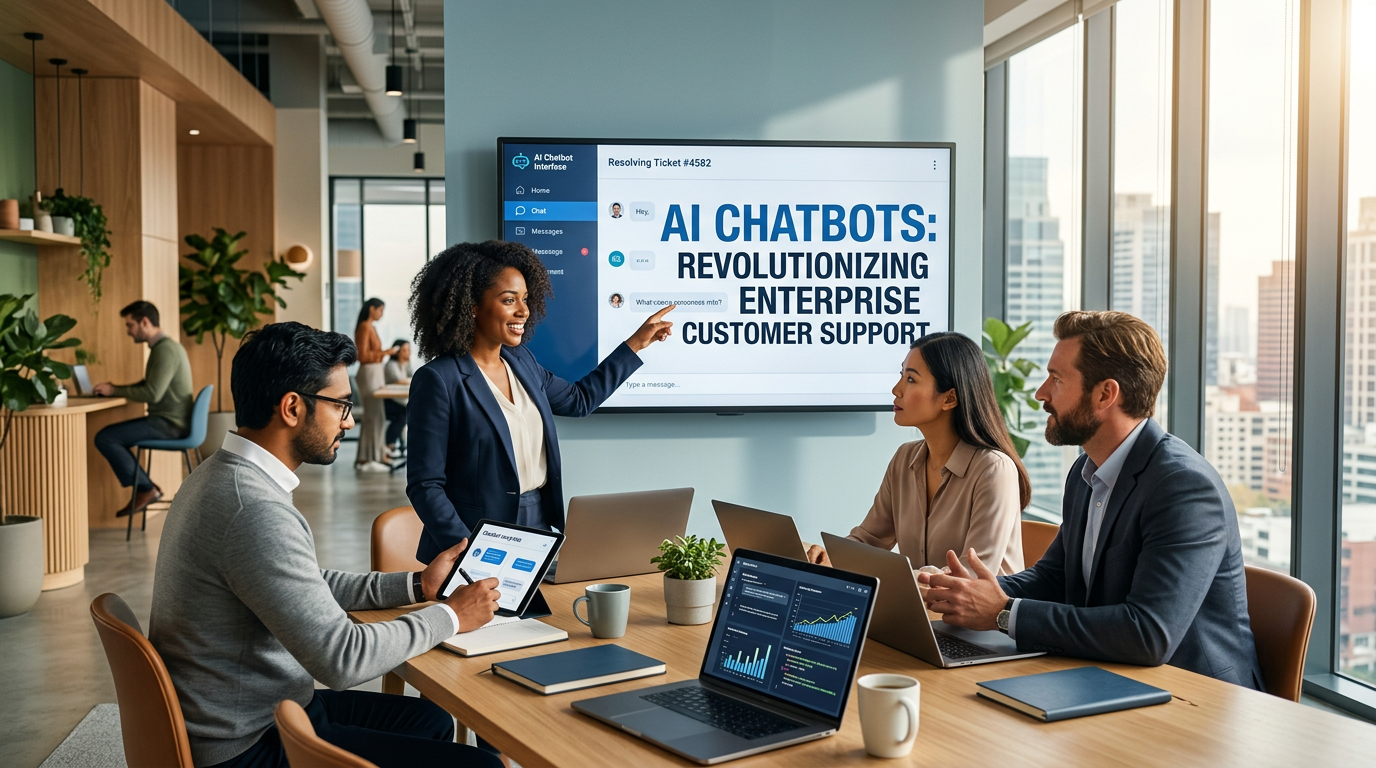
The Rise of AI Chatbots in Enterprise Customer Support
In the rapidly evolving landscape of digital transformation, enterprises are continuously seeking innovative solutions to enhance customer support. AI chatbots have emerged as pivotal tools, offering efficiency, personalization, and a significant reduction in operational costs. As businesses scale, the demand for seamless, 24/7 customer interaction becomes paramount. AI chatbots, powered by advanced machine learning algorithms, have proven to be a game changer in meeting these demands.
Understanding AI Chatbots
AI chatbots are software applications designed to simulate human conversation through voice commands, text chats, or both. They leverage natural language processing (NLP) and machine learning (ML) to understand and respond to customer queries in real-time. By integrating AI chatbots into their systems, enterprises can automate repetitive tasks, thereby freeing up human agents to focus on more complex issues.
Key Features of AI Chatbots
- 24/7 Availability: Unlike human agents, AI chatbots can provide round-the-clock support, ensuring customer queries are addressed promptly, irrespective of time zones.
- Scalability: AI chatbots can handle multiple queries simultaneously, catering to a large customer base without compromising service quality.
- Data-Driven Insights: By analyzing customer interactions, AI chatbots can provide valuable insights into customer behavior, preferences, and pain points.
Advanced Personalization
AI chatbots can tailor interactions based on customer history and preferences, creating a personalized experience that enhances customer satisfaction. This level of personalization can improve brand loyalty and lead to increased customer retention.
Cost Efficiency
Deploying AI chatbots can significantly reduce operational costs. By automating routine tasks, enterprises can optimize their workforce, reduce the need for large support teams, and allocate resources more effectively.
Implementing AI Chatbots in Enterprise Customer Support
The implementation of AI chatbots involves several crucial steps to ensure seamless integration and optimal performance. 4A Labs specializes in guiding enterprises through this process, providing tailored solutions that align with specific business objectives.
Step 1: Identifying Business Needs
The first step in implementing AI chatbots is to identify the specific needs of the business. This involves understanding the current customer support challenges and defining clear objectives that the chatbot should achieve. Whether it's reducing response times, improving customer satisfaction, or increasing efficiency, having a clear goal is essential.
Step 2: Designing the Chatbot
Designing an effective chatbot requires collaboration between technical experts and customer support teams. The chatbot's personality, tone, and conversational style should align with the brand's voice to ensure a consistent customer experience. At 4A Labs, we prioritize creating intuitive and user-friendly designs that enhance customer interaction.
Step 3: Training and Testing
AI chatbots require extensive training to accurately understand and respond to customer queries. This involves feeding the chatbot with a diverse range of queries and continuously updating its database to improve its accuracy. Rigorous testing ensures the chatbot performs optimally and can handle various scenarios effectively.
Step 4: Integration with Existing Systems
Successful implementation requires seamless integration with existing enterprise systems such as CRM platforms and databases. This enables chatbots to access relevant customer data, ensuring accurate and context-aware responses.
Step 5: Monitoring and Optimization
Continuous monitoring and optimization are vital to maintain high performance levels. Regular updates and refinements based on feedback and analytics help in improving the chatbot's capabilities over time.
Use Cases of AI Chatbots in Enterprises
AI chatbots are versatile tools that can be customized for various enterprise applications. Here are some prominent use cases:
Customer Service Automation
AI chatbots can automate routine customer service tasks such as answering frequently asked questions, processing returns, and tracking orders. This automation not only improves response times but also enhances customer satisfaction by providing instant solutions.
Lead Generation and Qualification
By engaging with website visitors, AI chatbots can capture essential information and qualify leads based on predefined criteria. This allows sales teams to focus on high-quality leads, thereby improving conversion rates.
Internal Support for Employees
Enterprises can deploy AI chatbots internally to assist employees with accessing company information, troubleshooting technical issues, or providing HR support. This streamlines internal processes and enhances employee productivity.
Enhanced Customer Engagement
AI chatbots can facilitate interactive and engaging customer experiences by proactively reaching out with personalized offers, product recommendations, and post-purchase support, thus driving customer engagement and loyalty.
Measuring the Impact of AI Chatbots
To evaluate the effectiveness of AI chatbots, enterprises must establish clear metrics and KPIs. These metrics help in assessing the chatbot's performance, understanding customer satisfaction, and identifying areas for improvement.
Response Time and Resolution Rate
Monitoring the average response time and resolution rate is crucial in determining the chatbot's efficiency. A decrease in response time and an increase in resolution rate indicate a successful implementation.
Customer Satisfaction Score (CSAT)
Customer feedback is invaluable in assessing the chatbot's impact. A high CSAT score reflects positive customer experiences, while feedback can provide insights into areas that require enhancement.
Cost Savings
Analyzing the reduction in operational costs post-implementation can provide tangible evidence of the chatbot's financial impact. This includes savings on staffing, training, and customer service infrastructure.
User Retention and Engagement Metrics
Tracking metrics such as user retention and engagement can reveal how effectively the chatbot contributes to keeping customers engaged with the brand.
Conclusion: The Future of AI Chatbots in Customer Support
AI chatbots have undoubtedly revolutionized enterprise customer support by providing efficient, scalable, and cost-effective solutions. As AI technology continues to evolve, the capabilities of chatbots will expand, offering even more sophisticated and personalized customer interactions. At 4A Labs, we are committed to helping enterprises harness the power of AI chatbots to drive customer satisfaction and business growth. By embracing these advanced technologies, businesses can stay competitive in the digital age and deliver exceptional customer experiences.
Future Trends
Looking ahead, the integration of AI chatbots with other emerging technologies like augmented reality (AR) and virtual reality (VR) may open new avenues for immersive customer support experiences. Additionally, advancements in AI will likely enhance the emotional intelligence of chatbots, allowing for even more human-like interactions.
A Call to Action
Enterprises yet to adopt AI chatbots should consider their potential benefits and start exploring how these tools can be integrated into their customer support strategies. By doing so, they can position themselves at the forefront of innovation and provide a competitive edge in delivering superior customer service.
Ensuring Ethical AI Deployment
As AI chatbots become integral to customer support strategies, it is crucial for enterprises to prioritize ethical considerations in their deployment. This includes ensuring data privacy, transparency, and avoiding bias in AI algorithms. Companies must be accountable for how chatbots interact with customers and the data they collect.
Data Privacy and Security
AI chatbots handle vast amounts of customer data, making data privacy and security paramount. Enterprises must implement robust security measures to protect sensitive information and comply with regulations like GDPR. Transparent data practices can help build trust with customers and ensure compliance with legal standards.
Transparency in AI Interactions
Customers should be informed when they are interacting with an AI chatbot. Providing clarity about the chatbot's capabilities and limitations helps manage customer expectations and fosters trust. Additionally, easy access to human support should be available when needed.
Addressing Algorithmic Bias
AI algorithms can unintentionally inherit biases from the data they are trained on. Enterprises should regularly audit and refine chatbot algorithms to identify and mitigate any biases, ensuring fair and equitable treatment of all customers.
Innovative Applications of AI Chatbots
Beyond traditional customer support, AI chatbots are finding innovative applications across various industries. From healthcare to retail, chatbots are being tailored to meet specific industry needs, offering new opportunities for engagement and efficiency.
Healthcare Assistance
AI chatbots in healthcare can assist with scheduling appointments, providing medication reminders, and offering preliminary health advice based on symptom checks. By integrating with electronic health records, they can offer personalized care and support to patients.
Retail Innovations
In the retail sector, AI chatbots enhance the shopping experience by offering product recommendations, assisting with purchase decisions, and handling customer inquiries about orders and returns. They can also analyze purchase history to offer personalized promotions and discounts.
Financial Services
AI chatbots in the financial sector can help customers manage their accounts, provide insights into spending habits, and assist with financial planning. By using predictive analytics, chatbots can offer tailored financial advice and support risk management strategies.
Educational Support
In education, AI chatbots can serve as virtual tutors, providing students with personalized learning resources and answering queries in real-time. They can support educators by automating administrative tasks and offering insights into student performance.
As AI chatbots continue to evolve, their potential applications across various sectors will expand, offering exciting possibilities for enhancing customer experiences and operational efficiencies.