
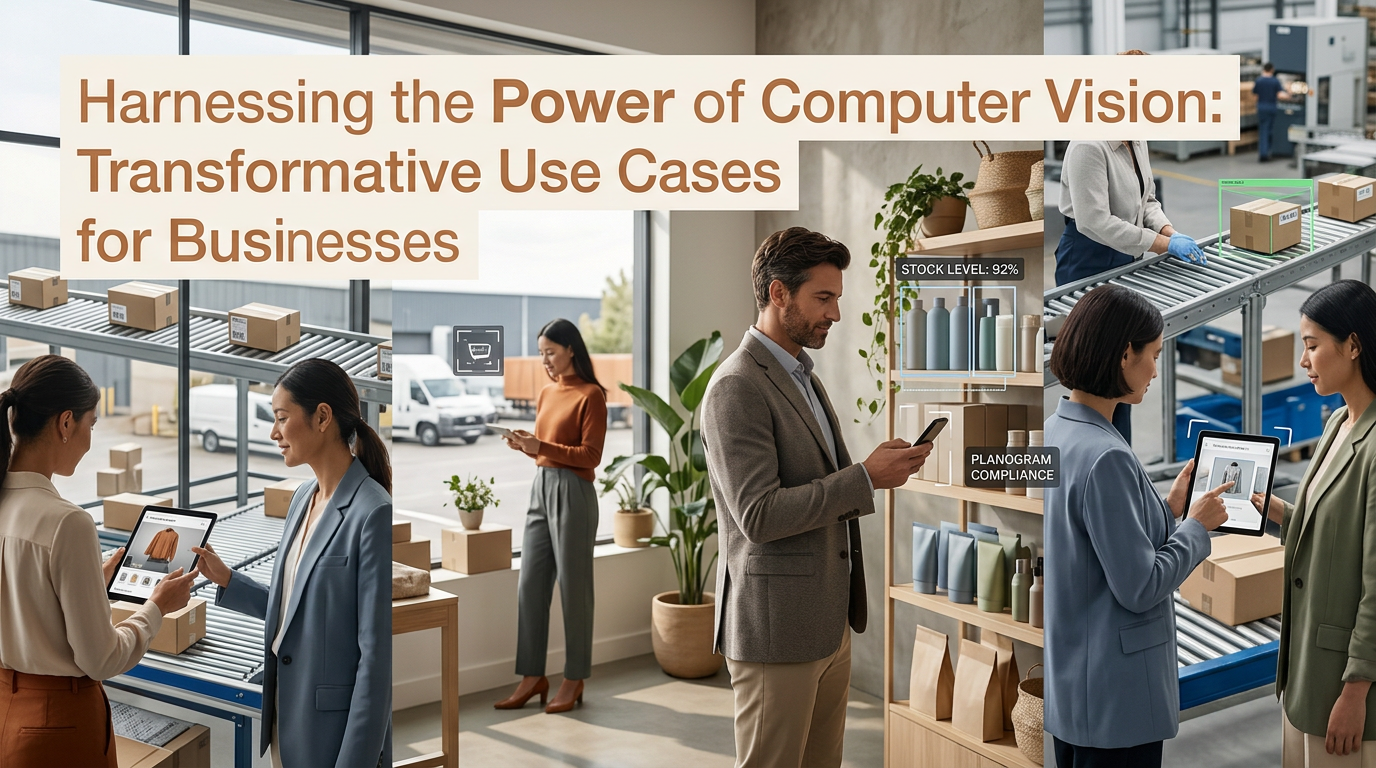
Introduction to Computer Vision
In the digital age, businesses are increasingly leveraging advanced technologies to streamline operations and drive innovation. One such technology that has garnered significant attention is computer vision. Rooted in artificial intelligence (AI), computer vision allows computers to interpret and process visual data from the world around them, mimicking human vision capabilities. This technology has become a vital tool for businesses across various sectors, enabling them to improve efficiency, accuracy, and productivity.
What is Computer Vision?
Computer vision is a field of AI that trains computers to interpret and understand the visual world. Using digital images from cameras and videos and deep learning models, machines can accurately identify and classify objects—and then react to what they 'see'. The applications of computer vision span across different industries, from healthcare to retail, and manufacturing to automotive.
Key Applications of Computer Vision in Business
1. Retail and E-commerce
In the retail sector, computer vision is transforming the way businesses interact with customers and manage operations. Automated checkout systems, powered by computer vision, enable cashier-less stores that reduce checkout times and improve customer experience. Furthermore, visual AI can provide personalized product recommendations by analyzing customer shopping patterns and preferences, leading to increased sales and customer satisfaction.
Another significant application is inventory management. Computer vision can automatically track inventory levels and alert when stock is low, thus optimizing inventory turnover and reducing storage costs. Retailers can also use computer vision for trend analysis, allowing them to predict which products will be in demand.
2. Manufacturing and Quality Control
Computer vision systems are integral in the manufacturing industry for quality control and defect detection. These systems can inspect products at a speed and accuracy that far surpass human capabilities. By identifying defects in real-time, manufacturers can reduce waste and ensure a higher standard of product quality, leading to increased customer trust and reduced costs.
Additionally, computer vision can be used for predictive maintenance by monitoring machinery and equipment. By detecting signs of wear and tear early, businesses can schedule maintenance before a breakdown occurs, minimizing downtime and extending the lifespan of machinery.
3. Healthcare and Medical Imaging
In healthcare, computer vision is making significant strides, particularly in the field of medical imaging. AI-powered systems can analyze medical images, such as X-rays and MRIs, to detect anomalies and assist in disease diagnosis with greater accuracy and speed. This not only accelerates the diagnostic process but also enhances the quality of patient care by reducing diagnostic errors.
Beyond diagnostics, computer vision is being employed in surgery through robotic-assisted procedures. These systems provide surgeons with enhanced precision and control, reducing the risk of complications and improving patient outcomes.
4. Autonomous Vehicles and Transportation
The automotive industry is leveraging computer vision for the development of autonomous vehicles. By processing visual data from the vehicle's surroundings, these systems can identify road signs, pedestrians, and other vehicles, allowing for safer and more efficient navigation. Beyond autonomous driving, computer vision aids in traffic management and accident analysis, contributing to smarter city infrastructure.
Public transportation systems are also benefiting from computer vision, with improvements in passenger safety and operational efficiency. For example, buses and trains equipped with computer vision can monitor passenger behavior to prevent overcrowding and enhance security.
Implementing Computer Vision: A Step-by-Step Guide
Step 1: Define Business Objectives
Before implementing computer vision, businesses must clearly define their objectives. Whether it is improving operational efficiency, enhancing customer experience, or reducing costs, a well-defined goal will guide the entire implementation process.
Step 2: Data Collection and Preparation
Computer vision relies heavily on data, making data collection and preparation crucial steps. Businesses need to gather relevant visual data, such as images and videos, and ensure it is of high quality for accurate model training.
Data augmentation techniques, such as rotation, scaling, and flipping, can be employed to increase the diversity of the training dataset, thus enhancing the robustness of the model.
Step 3: Model Selection and Training
Choosing the right model is essential for effective computer vision implementation. Businesses must select models that align with their objectives and train them using labeled datasets. This training process involves fine-tuning models to improve accuracy and performance.
Transfer learning can be a valuable approach, allowing businesses to leverage pre-trained models, which can significantly reduce training time and computational resources.
Step 4: Integration and Deployment
Once trained, the computer vision model needs to be integrated into existing systems. This integration should be seamless, ensuring minimal disruption to current operations. Deployment involves testing the model in real-world scenarios to ensure it meets business objectives.
Overcoming Challenges in Computer Vision Implementation
Despite the numerous benefits, implementing computer vision comes with challenges. Data privacy and security are major concerns, as sensitive visual data must be protected from unauthorized access. Businesses must adhere to regulations like GDPR to ensure compliance.
Another challenge is the computational power required for training and deploying computer vision models. Investing in high-performance hardware or utilizing cloud-based solutions can address this issue, but it may require significant financial resources.
Measurement Criteria for Success
To evaluate the success of computer vision projects, businesses need to establish clear measurement criteria. These may include:
- Accuracy: The precision of the system in identifying and classifying objects.
- Speed: The time taken to process visual data and make decisions.
- Return on Investment (ROI): The financial benefits gained from implementing the technology versus the cost incurred.
- Customer Satisfaction: Improvements in customer experience and feedback.
- Scalability: The ease with which the solution can be expanded or adapted for additional use cases.
Conclusion: The Future of Computer Vision in Business
Computer vision is poised to revolutionize the way businesses operate, offering a myriad of opportunities for innovation and efficiency. As technology continues to advance, the potential applications of computer vision will expand, unlocking new possibilities across various sectors. By effectively implementing and measuring computer vision solutions, businesses can stay ahead of the competition, ensuring sustained growth and success.
In conclusion, while challenges exist, the benefits of computer vision far outweigh the potential drawbacks. As more businesses adopt this technology, we can expect to see transformative changes in how industries operate, ultimately leading to a more connected and efficient world.
Real-World Case Studies
To further illustrate the impact of computer vision in business, let's explore some real-world case studies that highlight successful implementations and the benefits derived from this technology.
Case Study 1: Revolutionizing Retail Experiences
A leading global retail chain integrated computer vision to enhance in-store experiences by introducing 'smart shelves.' These digital shelves automatically track and analyze inventory levels, providing real-time data to managers. Additionally, interactive displays offer personalized product recommendations based on customer behavior captured by in-store cameras.
The results were remarkable. The chain reported a 15% increase in sales and a 30% improvement in inventory management efficiency, significantly reducing overhead costs and enhancing customer satisfaction.
Case Study 2: Advancements in Healthcare Diagnostics
A major healthcare provider implemented AI-driven computer vision systems in radiology departments. By automating the analysis of medical images, these systems assisted radiologists in diagnosing diseases at an earlier stage, particularly in detecting cancers and other critical conditions.
The implementation led to a 40% reduction in diagnostic times and a 20% increase in diagnostic accuracy. As a result, patient care improved dramatically, and the provider achieved substantial cost savings by reducing the need for repeat tests and treatments.
Future Innovations in Computer Vision
The future of computer vision holds exciting possibilities as researchers and developers continue to push the boundaries of what this technology can achieve. Here are some innovative directions being explored:
Augmented Reality and Computer Vision Fusion
By combining augmented reality (AR) and computer vision, businesses can create immersive experiences for customers and employees alike. For example, in retail, AR can be used to allow customers to visualize products in their homes before making a purchase, while computer vision ensures accurate product placement in the virtual space.
Enhanced Security Systems
Computer vision is set to revolutionize security systems by offering more sophisticated surveillance solutions. Advanced facial recognition and behavioral analysis can provide proactive security measures, identifying potential threats before they materialize.
Environmental and Sustainability Applications
As sustainability becomes a global priority, computer vision can play a crucial role in monitoring environmental changes and promoting sustainability. From tracking deforestation to monitoring ocean health, these technologies can provide critical insights to drive conservation efforts and policy-making.
In summary, the continuous advancements in computer vision will open new avenues for businesses, offering innovative solutions to complex challenges while improving operational efficiency and customer experiences.