
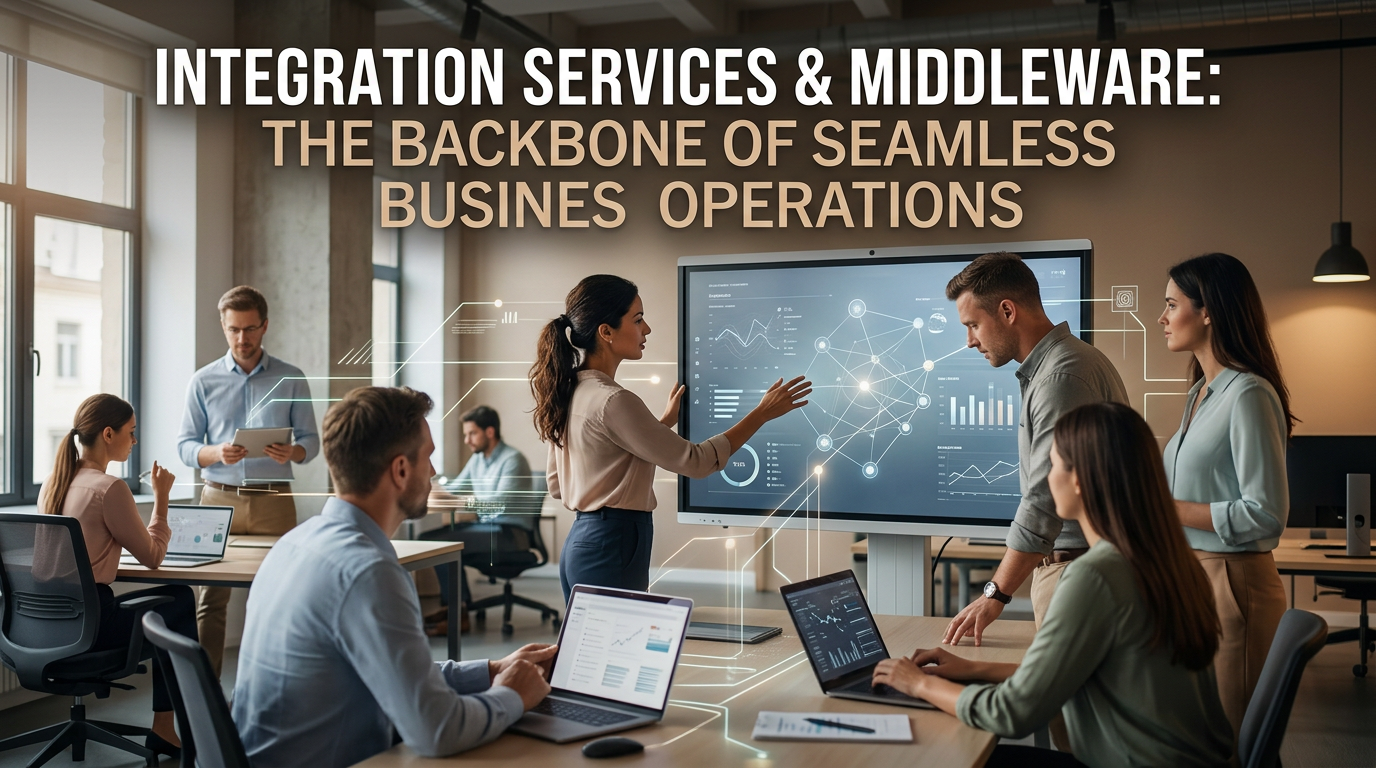
Introduction to Integration Services & Middleware
In today's fast-paced digital landscape, businesses rely heavily on technology to streamline operations and improve efficiency. At the heart of this technological ecosystem lies integration services and middleware development. These services serve as the backbone for seamless business operations, enabling disparate systems to communicate effectively and ensuring uninterrupted workflow.
Understanding Integration Services
Integration services are crucial for connecting various software applications and systems within an organization. They ensure that data flows smoothly between different platforms, reducing silos and enhancing collaboration. For instance, integration services can connect a company's CRM system with its ERP, allowing for seamless data exchange and real-time updates. By bridging the gap between different software, integration services facilitate a unified system that supports comprehensive business functions.
Furthermore, integration services involve a variety of tools and technologies designed to manage and simplify data exchange. This includes APIs (Application Programming Interfaces), which enable different applications to communicate and share data efficiently. API management is an integral part of integration services, ensuring that data exchange is secure, reliable, and easy to manage. APIs serve as the cornerstone for developing a more collaborative and interconnected IT environment.
The Role of Middleware
Middleware acts as a mediator between applications and databases, facilitating communication and data management. It provides a unified interface for different systems, ensuring that they work harmoniously. Middleware solutions can include message brokers, application servers, and more, all designed to handle the complex task of integrating diverse software environments. It essentially acts as a 'middle layer' that abstracts the complexities of data interchange and process management.
One of the most significant roles of middleware is to enhance interoperability between heterogeneous systems. In an organization where different departments might use different software solutions, middleware ensures that these systems can communicate with each other without direct connections. This is particularly important in large enterprises where the IT landscape can be diverse and complex.
Key Benefits of Integration Services & Middleware
One of the primary benefits of integration services and middleware is improved operational efficiency. By automating data transfers and processes, businesses can reduce errors, save time, and allocate resources more effectively. Furthermore, these services enable companies to be more agile, adapting quickly to market changes and new business requirements. With processes streamlined through integration, businesses can respond to customer needs and operational challenges in real-time.
Enhanced Data Accessibility
With integration services, businesses can access data from multiple sources in a centralized manner. This accessibility empowers decision-makers with comprehensive insights, enabling informed decision-making. For example, in a retail business, integrating data from sales, inventory, and customer service platforms can provide a holistic view of operations, driving better strategic decisions.
Key Advantages of Enhanced Data Accessibility:
- Improved visibility into business processes.
- Faster decision-making capabilities.
- More accurate forecasting and planning.
Scalability and Flexibility
Middleware solutions provide the scalability needed to accommodate growing business needs. As companies expand their operations, middleware can easily integrate new applications and systems, ensuring continued efficiency. Scalability is crucial for businesses looking to enter new markets or launch new products without significant overhauls to their existing IT infrastructure.
Moreover, the flexibility offered by middleware allows businesses to customize their IT solutions to better meet specific needs. This adaptability ensures that businesses are not locked into rigid systems and can adjust their operations as required by changing business landscapes.
The Integration Process: Step-by-Step
Step 1: Assessment and Planning
Before implementing integration services, it is crucial to assess the current IT infrastructure. Identifying the systems that need to be connected and understanding the data flow is the first step towards a tailored integration strategy. This phase involves stakeholder consultations, data audits, and system evaluations.
Step 2: Design and Development
The next phase involves designing the integration architecture and developing middleware solutions. This step requires a detailed understanding of the existing systems' technical requirements and potential challenges. Developers collaborate with IT teams to create a blueprint that aligns with the business's goals and technical specifications.
Step 3: Testing and Deployment
Once the middleware solution is developed, it undergoes rigorous testing to ensure seamless functionality. After successful testing, the solution is deployed across the organization's systems. Deployment may occur in phases or as a complete rollout, depending on the organization's needs and risk tolerance.
Step 4: Maintenance and Optimization
Post-deployment, continuous monitoring and optimization are essential to address any emerging issues and ensure the integration remains efficient. Regular updates and system checks help in maintaining the integration's effectiveness over time.
Use Cases of Integration Services & Middleware
Integration services and middleware solutions are applicable across various industries:
Retail Industry
In retail, integration services connect inventory management systems with e-commerce platforms, ensuring real-time stock updates and smooth order processing. This connectivity enhances customer experience by providing accurate product availability and delivery timeframes.
Retail Use Case Benefits:
- Optimized inventory levels reduce costs.
- Improved customer satisfaction through timely order fulfillment.
- Enhanced data analytics for better sales strategies.
Healthcare Sector
In healthcare, middleware solutions integrate patient data from different departments, providing healthcare professionals with a holistic view of patient records. This integration is crucial for improving patient care and operational efficiency within healthcare facilities.
Healthcare Integration Advantages:
- Improved patient care through comprehensive data access.
- Reduced errors in patient records management.
- Enhanced collaboration between healthcare providers.
Financial Services
In the financial industry, integration services facilitate secure data exchange between banking systems, enhancing transaction accuracy and customer experience. With middleware, banks can also integrate with third-party financial tools, offering more extensive services to clients.
Financial Services Benefits:
- Increased data security and compliance with regulations.
- Streamlined financial operations and transactions.
- Improved customer service through integrated platforms.
Measuring the Success of Integration Services
To evaluate the effectiveness of integration services and middleware, businesses should consider several key metrics:
System Performance
Monitor system response times and data processing speeds to ensure that integration services are enhancing, not hindering, operations. Regular performance audits can help identify bottlenecks and optimize processes.
Data Accuracy
Regularly check data consistency across integrated platforms to confirm that data is being transferred accurately. Implementing robust data validation processes is key to maintaining high data integrity.
Operational Efficiency
Assess the time and resources saved through integration services, highlighting improvements in workflow efficiency and resource allocation. Efficiency can be measured by comparing pre- and post-integration performance metrics.
Key Performance Indicators:
- Reduction in operational costs.
- Improvement in process turnaround times.
- Increased employee productivity.
Conclusion
Integration services and middleware development are indispensable for modern businesses aiming for seamless operations. By connecting different systems and ensuring efficient data flow, these solutions enhance agility, scalability, and overall business performance. Businesses that invest in robust integration services position themselves for success in an increasingly interconnected world. At 4A Labs, we specialize in crafting customized integration and middleware solutions, empowering businesses to thrive in a connected digital environment. As technology continues to evolve, the role of integration services and middleware will only grow in importance, underscoring their value in driving business innovation and efficiency.
Challenges in Implementing Integration Services & Middleware
While integration services and middleware offer numerous advantages, their implementation can present several challenges that businesses must be prepared to address. Understanding and mitigating these challenges is crucial for successful integration.
Complexity of Legacy Systems
Many organizations operate on legacy systems that were not designed for modern integration. These systems often lack the necessary interfaces and can be difficult to connect with newer technologies. Businesses may need to invest in additional middleware solutions or custom coding to bridge the gap between old and new systems.
Data Security and Privacy Concerns
Integration services involve the transfer and sharing of data between systems, raising potential security and privacy issues. Ensuring that data is protected during transit and at rest requires robust security measures, such as encryption and secure APIs. Compliance with regulations such as GDPR or HIPAA can further complicate the integration process.
Cost and Resource Allocation
Implementing integration services and middleware can require significant financial and human resources. The cost of purchasing or developing middleware solutions, along with ongoing maintenance and support, can be substantial. Additionally, skilled personnel are needed to design, build, and manage these integrations effectively.
- Mitigating Challenges:
- Conduct thorough assessments of existing systems to identify integration needs.
- Invest in employee training to manage and support integration solutions.
- Partner with experienced integration service providers to leverage expertise and reduce risks.
Future Trends in Integration Services & Middleware
The landscape of integration services and middleware is continually evolving, influenced by advancements in technology and changing business needs. Staying ahead of these trends is essential for businesses looking to maintain a competitive edge.
Adoption of Cloud-based Integration
Cloud computing is becoming increasingly popular, and with it comes a shift towards cloud-based integration solutions. These solutions offer scalability, flexibility, and cost-effectiveness, allowing businesses to integrate systems across different environments seamlessly.
Incorporation of Artificial Intelligence
While the article avoids focusing on AI, it's worth noting that artificial intelligence is starting to play a role in automating and optimizing integration processes. AI can be used to predict integration issues, provide intelligent data mapping, and enhance data analytics capabilities.
As businesses continue to digitize and expand their technological capabilities, the demand for efficient integration services and middleware will only grow. Companies that proactively address integration challenges and embrace future trends will be well-positioned to capitalize on new opportunities and drive innovation.