
Understanding CRM Automation
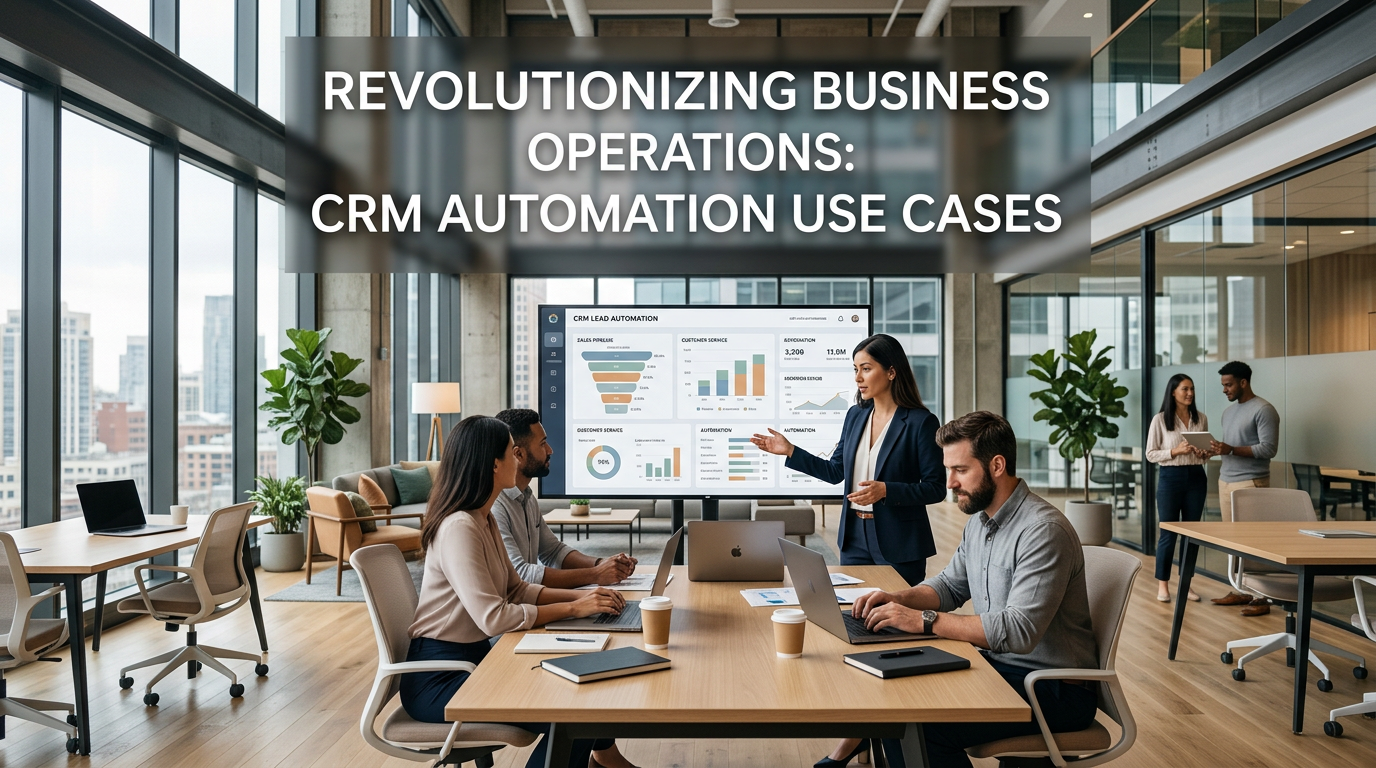
Customer Relationship Management (CRM) automation involves the use of technology to streamline and enhance the business processes associated with managing customer interactions and data. By automating repetitive tasks, businesses can focus more on strategic initiatives and improve overall efficiency. In this article, we will delve into various use cases of CRM automation that can revolutionize business operations.
Enhancing Customer Engagement
Personalized Communication
CRM automation allows businesses to tailor communication to individual customer preferences. By leveraging data analytics, companies can send personalized messages and offers, thus increasing the likelihood of engagement. For instance, an e-commerce platform can use CRM automation to send tailored product recommendations based on past purchases and browsing behavior.
For effective personalized communication, businesses need to:
- Collect and analyze customer data to understand behavior and preferences.
- Segment customers based on specific criteria such as demographics or buying patterns.
- Create dynamic email content that changes based on customer segments.
By implementing these strategies, businesses can ensure that their communications are not only personalized but also timely and relevant, leading to improved customer loyalty and retention.
Automated Follow-Ups
Automated follow-ups can significantly enhance customer engagement. For example, when a customer abandons a shopping cart, the CRM system can automatically send a reminder email encouraging them to complete the purchase. Such timely interventions can boost conversion rates and improve customer satisfaction.
Some best practices for automated follow-ups include:
- Setting up trigger-based emails that activate based on customer actions (e.g., abandoned carts, recent purchases).
- Personalizing follow-up messages to include specific details related to the customer's experience.
- Incorporating feedback requests in follow-up emails to gather insights for improvement.
By tailoring follow-up strategies to the needs of the customer, businesses can create a more engaging and responsive communication loop.
Streamlining Sales Processes
Lead Scoring and Prioritization
CRM automation enables businesses to implement lead scoring systems that prioritize high-value prospects. By analyzing data such as website interactions and email responses, businesses can allocate resources more effectively and focus on leads that are most likely to convert.
This process involves:
- Defining criteria for what constitutes a 'qualified' lead.
- Using predictive analytics to rank leads based on their potential to convert.
- Regularly updating lead scores to reflect the latest data and insights.
Lead scoring helps sales teams manage their time and resources more effectively, ensuring that the most promising opportunities are prioritized.
Automated Sales Reporting
Generating sales reports manually can be time-consuming and prone to errors. CRM automation can generate accurate sales reports in real-time, providing valuable insights into sales performance, forecast accuracy, and pipeline management. This enables sales teams to make informed decisions swiftly.
Automation in sales reporting includes:
- Creating dashboards that provide an overview of key sales metrics.
- Using AI-driven tools to predict sales trends and outcomes.
- Automating the distribution of reports to relevant stakeholders.
Such automation ensures that sales teams have access to the information they need to strategize effectively and achieve targets.
Improving Customer Service
Automated Ticketing Systems
An automated ticketing system can streamline customer service operations by automatically categorizing and assigning customer inquiries to the appropriate departments. This reduces response times and ensures that customer issues are addressed promptly.
Key components of an automated ticketing system include:
- Auto-tagging and categorizing tickets based on keywords or customer input.
- Routing tickets to agents with the right skills and availability.
- Tracking ticket status and ensuring timely follow-up.
By improving the efficiency of ticket management, businesses can enhance their overall customer service experience.
Chatbots and Virtual Assistants
Integrating chatbots with CRM systems can improve customer service by providing instant responses to common queries. Virtual assistants can handle routine tasks, freeing up human agents to focus on more complex customer issues, thereby enhancing service efficiency.
Advantages of using chatbots include:
- 24/7 availability to assist customers outside of business hours.
- Instant response times for basic inquiries and support requests.
- Scalability to handle high volumes of queries without additional staffing costs.
By leveraging chatbots and virtual assistants, companies can ensure consistent and efficient customer support.
Optimizing Marketing Efforts
Automated Campaign Management
CRM automation can be employed to manage marketing campaigns more effectively. By automating tasks such as email marketing, social media posting, and ad management, businesses can ensure consistent communication and maximize their reach across various channels.
Components for successful automated campaign management include:
- Scheduling and automating email blasts to targeted lists.
- Setting up social media posts in advance to maintain an active presence.
- Utilizing CRM data to personalize marketing messages and offers.
Automation allows marketers to focus on strategy while ensuring that campaign execution is efficient and effective.
Data-Driven Marketing Analytics
Automated analytics tools can provide real-time insights into marketing performance, allowing businesses to adjust their strategies based on data-driven results. For instance, CRM systems can track customer engagement metrics and suggest optimizations to improve campaign effectiveness.
Strategies for leveraging data-driven analytics include:
- Tracking key performance metrics such as open rates, click-through rates, and conversion stats.
- Conducting A/B testing to optimize marketing messages and delivery.
- Adjusting campaigns based on real-time data to improve ROI.
By focusing on data-driven decisions, businesses can enhance their marketing effectiveness and maximize their return on investment.
Boosting Operational Efficiency
Automated Workflow Management
Automating workflows can streamline internal processes, reducing the time spent on administrative tasks. CRM systems can automate routine tasks such as data entry, appointment scheduling, and invoice generation, enabling employees to focus on more strategic activities.
Benefits of automated workflow management include:
- Reducing the likelihood of human errors in manual processes.
- Improving employee productivity by eliminating repetitive tasks.
- Enhancing transparency and accountability by tracking task completion.
With automated workflows, businesses can ensure that their operations run smoothly and efficiently.
Integration with Existing Systems
CRM automation can be integrated with existing business systems, such as ERP and HRM, to create a seamless flow of information across the organization. This integration enhances data accuracy, reduces duplication of effort, and improves decision-making processes.
Steps to effective integration include:
- Identifying key systems and processes that can benefit from integration.
- Using APIs and other tools to connect disparate systems for data sharing.
- Ensuring consistent data formats and standards across all integrated systems.
By integrating CRM automation with other business systems, companies can create a cohesive and efficient operational environment.
Measurement Criteria for CRM Automation Success
To assess the success of CRM automation, businesses should establish clear metrics. Key performance indicators (KPIs) such as customer satisfaction scores, conversion rates, response times, and operational cost savings can provide valuable insights into the effectiveness of automation initiatives.
Important KPIs include:
- Customer retention rates to gauge loyalty and satisfaction.
- Lead conversion rates to evaluate sales effectiveness.
- Cost per acquisition to measure marketing efficiency.
Monitoring these metrics can help businesses identify areas for improvement and ensure that their CRM automation strategies are aligned with their overall business goals.
Conclusion
CRM automation offers numerous opportunities for businesses to enhance their operations, improve customer experiences, and achieve greater efficiency. By leveraging automation in areas such as customer engagement, sales, customer service, marketing, and operational processes, businesses can stay competitive in a rapidly evolving marketplace. As digital transformation continues to unfold, the role of CRM automation in driving business success will only become more significant.
Ultimately, the goal of CRM automation is to empower businesses to build stronger, more meaningful relationships with their customers. By focusing on the needs of the customer and using technology to drive efficiency, companies can create lasting value and maintain a competitive edge in their industry.