
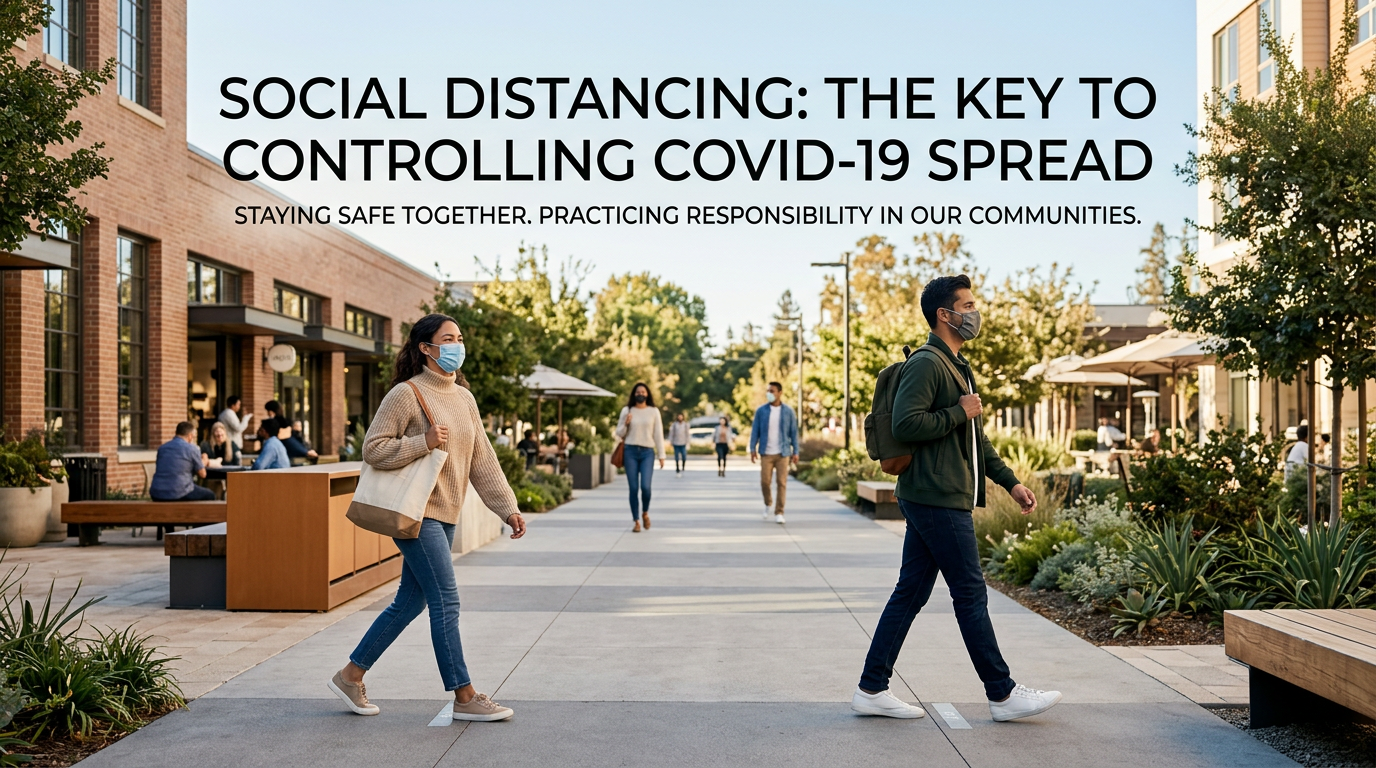
Understanding Social Distancing
Social distancing refers to the public health practice of keeping a safe distance between individuals to prevent the spread of contagious diseases such as COVID-19. This concept has become a cornerstone of global efforts to control the pandemic, requiring individuals to maintain a physical distance of at least six feet from others, avoid gatherings, and minimize contact with people outside their household.
The Science Behind Social Distancing
Social distancing is grounded in epidemiology, the study of how diseases spread. By reducing opportunities for virus transmission, social distancing effectively lowers the basic reproduction number (R0), which indicates the average number of secondary infections produced by one infected individual. When R0 is reduced to below 1, an outbreak gradually wanes.
The Importance of Social Distancing
Social distancing plays a critical role in slowing the transmission of the virus, mainly because COVID-19 spreads through respiratory droplets produced when an infected person coughs, sneezes, or talks. By maintaining a safe distance, the likelihood of these droplets reaching another person is significantly reduced. This is especially important as asymptomatic carriers can unknowingly transmit the virus to others.
Real-World Examples of Social Distancing
Several countries have successfully implemented social distancing measures with notable results. For instance, New Zealand's strict lockdown and social distancing policies resulted in one of the lowest COVID-19 mortality rates globally. Similarly, South Korea utilized aggressive contact tracing combined with social distancing to control its outbreak effectively.
Impact on Public Health Policy
Public health authorities worldwide have incorporated social distancing strategies into their containment and mitigation plans. These include measures like closing non-essential businesses, transitioning to remote work and education, and enforcing travel restrictions. Such interventions have proven effective in flattening the curve, which refers to slowing the rate of infection to prevent overwhelming healthcare systems.
Policy Adjustments and Public Compliance
Governments have had to regularly adjust policies based on infection rates and healthcare capacities. Public compliance has been a crucial factor in the success of these policies. Campaigns to educate the public about the importance of social distancing and mask-wearing have been pivotal in ensuring widespread adherence.
Long-term Benefits of Social Distancing
While the immediate goal of social distancing is to reduce transmission rates, its long-term benefits also include buying time for healthcare systems to prepare and respond more effectively. It allows for scaling up testing capacities, improving healthcare infrastructure, and accelerating vaccine distribution and research efforts.
Preparedness for Future Pandemics
By practicing social distancing, societies are better prepared for future pandemics. Enhanced surveillance systems and rapid response strategies learned during COVID-19 will serve as templates for future public health emergencies.
Challenges and Solutions
Implementing social distancing measures poses several challenges, including economic impacts, social isolation, and non-compliance. Businesses struggle with reduced foot traffic, leading to financial instability, while individuals may experience feelings of loneliness and anxiety. To mitigate these issues, digital solutions such as virtual meetings, e-commerce platforms, and online mental health services have become essential. Companies like 4A Labs offer digital services that help businesses transition to online platforms, ensuring continuity and resilience during periods of enforced social distancing.
Addressing Economic and Social Impacts
- Financial Support: Governments have rolled out financial aid packages to support businesses and individuals affected by social distancing measures.
- Mental Health Resources: Online counseling services have expanded to address increased mental health concerns during periods of isolation.
- Community Support Networks: Local initiatives have emerged to provide essential goods and services to vulnerable populations.
The Role of Digital Services
In the context of social distancing, digital services have emerged as a vital tool in maintaining societal functions. From enabling remote work to facilitating online education, digital solutions have ensured that businesses and individuals can continue their operations and daily activities. By investing in digital transformation, organizations can not only survive the immediate impacts of social distancing but also thrive in a post-pandemic world.
Examples of Digital Transformation
- Remote Work Platforms: Tools such as Zoom, Microsoft Teams, and Slack have become integral to maintaining business operations.
- E-Learning Technologies: Educational institutions have adopted platforms like Moodle and Blackboard to continue delivering quality education.
- Virtual Healthcare: Telemedicine services have expanded, making healthcare more accessible during social distancing periods.
Commercial Value of Social Distancing
Social distancing, while primarily a public health measure, also carries significant commercial implications. Businesses that adapt to this new normal by embracing digital solutions can maintain customer engagement and loyalty. For instance, retailers shifting to e-commerce platforms can reach broader markets, while service providers offering virtual consultations or workshops can expand their client base beyond geographical limitations.
Adapting Business Models
- Subscription Services: Many businesses have adopted subscription-based models to create steady revenue streams.
- Contactless Delivery: Restaurants and retailers have implemented contactless delivery and pick-up options to enhance customer safety.
- Online Marketplaces: Small businesses have joined online marketplaces like Etsy and Amazon to boost their visibility and sales.
Conclusion
Social distancing remains a crucial strategy in the fight against COVID-19. Its effectiveness in reducing transmission rates and protecting public health cannot be overstated. However, the challenges it poses require innovative solutions, particularly in the digital realm. By leveraging digital services and adapting to changing consumer behaviors, businesses can not only navigate the current crisis but also position themselves for future growth. As we continue to adapt to this global challenge, the lessons learned from social distancing will undoubtedly shape public health policies and commercial strategies in the years to come.
Future Considerations
Looking ahead, it is essential for businesses and governments to continue prioritizing public health while fostering economic resilience. Continued investment in digital infrastructure will be key to supporting ongoing social distancing measures and preparing for any future health crises.
The Role of Technology in Supporting Social Distancing
Technology has played a pivotal role in facilitating social distancing measures during the COVID-19 pandemic. With advancements in digital communication, businesses and individuals have been able to maintain connections while physically apart. This reliance on technology not only underscores its importance in daily life but also highlights how digital innovation can support public health initiatives.
Enhancing Communication and Connectivity
One of the key challenges of social distancing is maintaining communication and connectivity. Digital platforms have bridged this gap by offering an array of tools that enable seamless interaction. Video conferencing, instant messaging, and social media platforms have become essential in keeping people connected, whether for work or personal purposes.
- Video Conferencing: Platforms like Zoom and Microsoft Teams have not only supported business operations but have also become venues for social gatherings and events, allowing people to interact safely.
- Social Media Engagement: Social media has allowed individuals to share their experiences, stay informed, and support one another, fostering a sense of community despite physical separation.
- Cloud-Based Collaboration: Tools such as Google Workspace and Dropbox have simplified collaboration by providing shared access to documents and projects, ensuring productivity remains unaffected by distance.
Economic Impacts and Recovery Strategies
While social distancing is crucial for public health, its economic impacts cannot be overlooked. Businesses across various sectors have faced unprecedented challenges, prompting the need for innovative recovery strategies. By understanding these economic impacts, organizations can better prepare for future disruptions and ensure sustained growth.
Industry-Specific Challenges and Opportunities
Different industries have been affected by social distancing in unique ways, with some facing more significant hurdles than others. However, these challenges have also paved the way for new opportunities and business models.
- Retail: The shift to online shopping has accelerated, with businesses investing in e-commerce platforms to reach customers. Personalized shopping experiences and enhanced digital marketing strategies have become key differentiators.
- Hospitality: While travel restrictions have impacted the hospitality sector, the focus has shifted to local tourism and offering unique, safe experiences. Contactless check-ins and enhanced hygiene protocols have become standard practices.
- Entertainment: The entertainment industry has embraced digital transformation, with virtual concerts, streaming services, and online gaming gaining popularity as alternatives to traditional events.
Building Resilience for the Future
The pandemic has highlighted the need for resilience in both public health systems and business operations. By learning from the experiences of COVID-19, societies can better prepare for future challenges, ensuring both public safety and economic stability.
Strengthening Public Health Infrastructure
Investing in public health infrastructure is vital for managing future pandemics. This includes enhancing disease surveillance systems, expanding testing capabilities, and ensuring sufficient medical supplies and personnel.
Encouraging Flexible Business Models
Businesses should adopt flexible models that can adapt to changing circumstances. This could involve diversifying revenue streams, utilizing technology to offer versatile products and services, and fostering a culture of innovation and adaptability among employees.
Promoting Community Resilience
Community initiatives play a crucial role in supporting individuals and businesses during challenging times. Encouraging local collaborations, supporting small businesses, and promoting volunteerism can strengthen community bonds and resilience.
Conclusion
As we navigate the ongoing challenges of COVID-19, the importance of social distancing in protecting public health remains clear. The adaptations made by businesses and individuals to comply with these measures have demonstrated the power of innovation and resilience. Moving forward, continued investment in technology and public health infrastructure, along with a commitment to flexibility and adaptability, will be essential in preparing for future challenges and ensuring a prosperous, healthy society.